Wednesday, July 1, 2026, and Thursday, July 2, 2026: Both days were work days, so we stayed close to camp and focused on getting things done. The weather was the hottest we had seen so far on this stop, with afternoon temperatures reaching around 95 degrees. That made keeping cool the main theme of both days.
Some days on the road are full of exploring, sightseeing, and finding new places. Other days are simply about taking care of work, staying comfortable, and keeping the camper cool enough to enjoy the evening. These two days fell into that second category.

We handled the work that needed to be done, watched the temperature climb, and did our best to stay out of the worst of the heat. It was not the most exciting part of the trip, but it was a very real part of full-time RV life.
Friday, July 3, 2026: We headed back into Washington, D.C., to visit the Museum of the Bible.
The museum has six floors filled with information, exhibits, artifacts, and displays, so we knew pretty quickly there was no way we were going to take it all in during one visit.
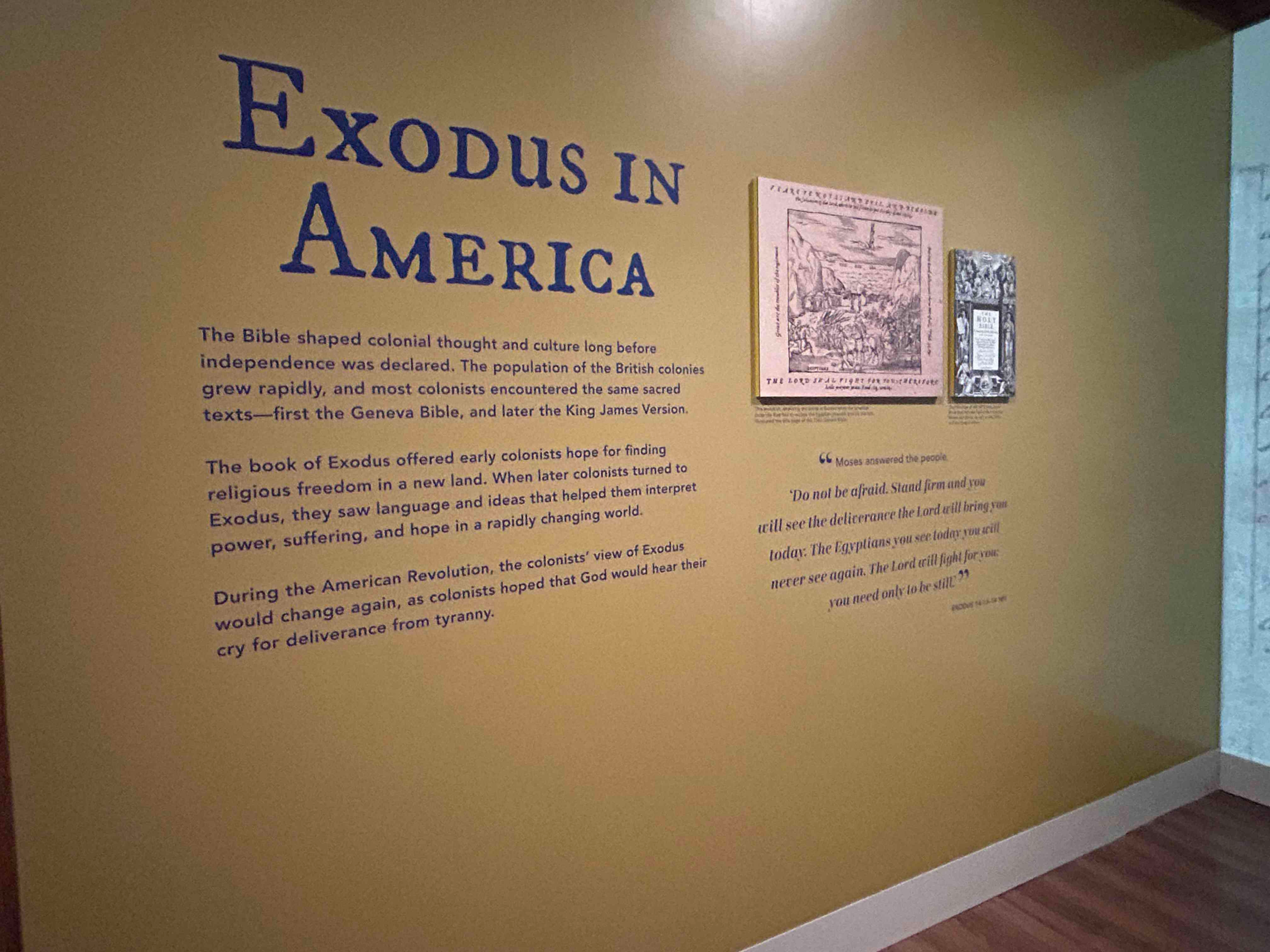
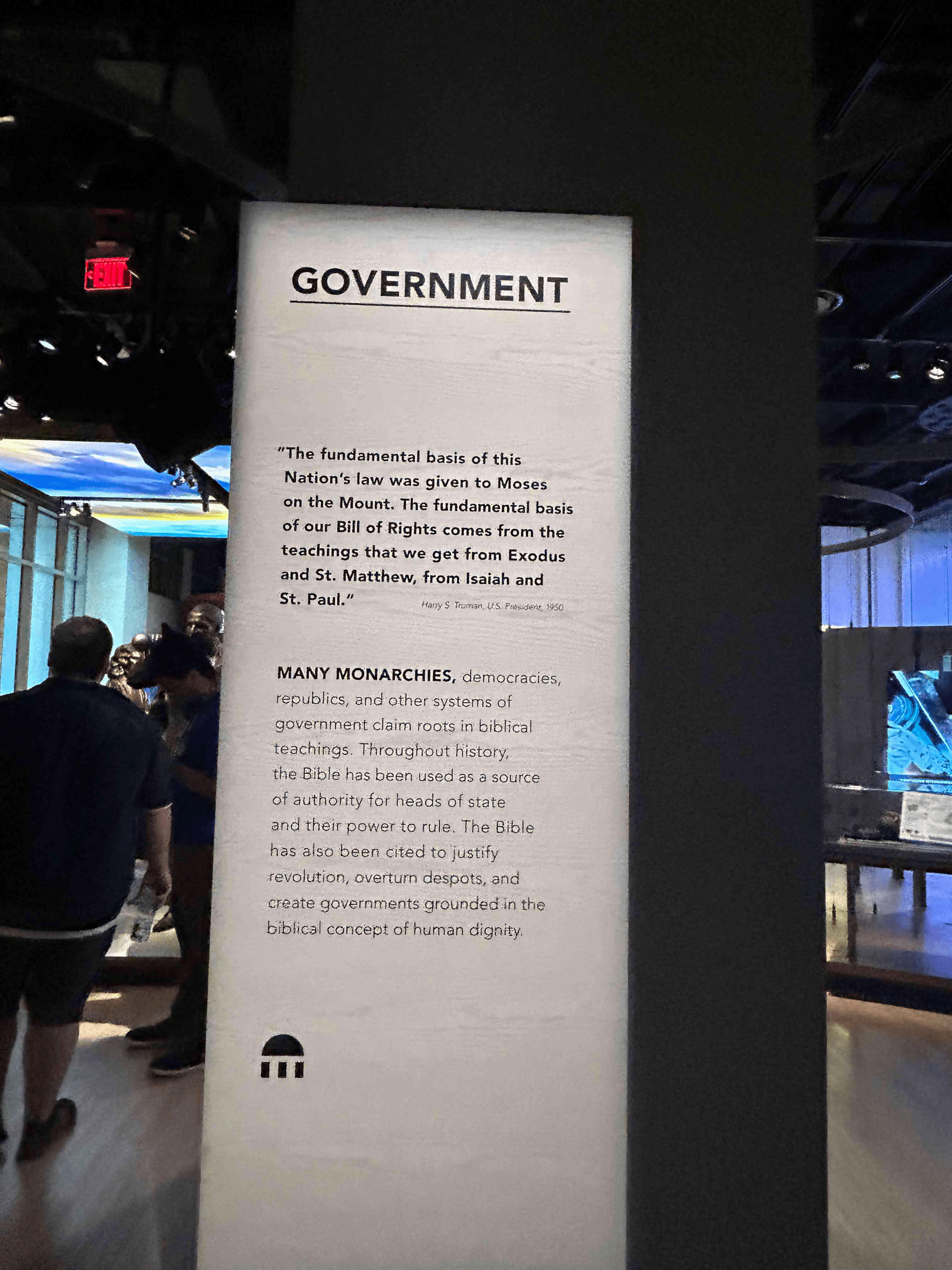
We started on Floor 2, “Impact on America,” which walked through many ways the Bible has intersected with American history, government, education, reform movements, culture, and everyday life.
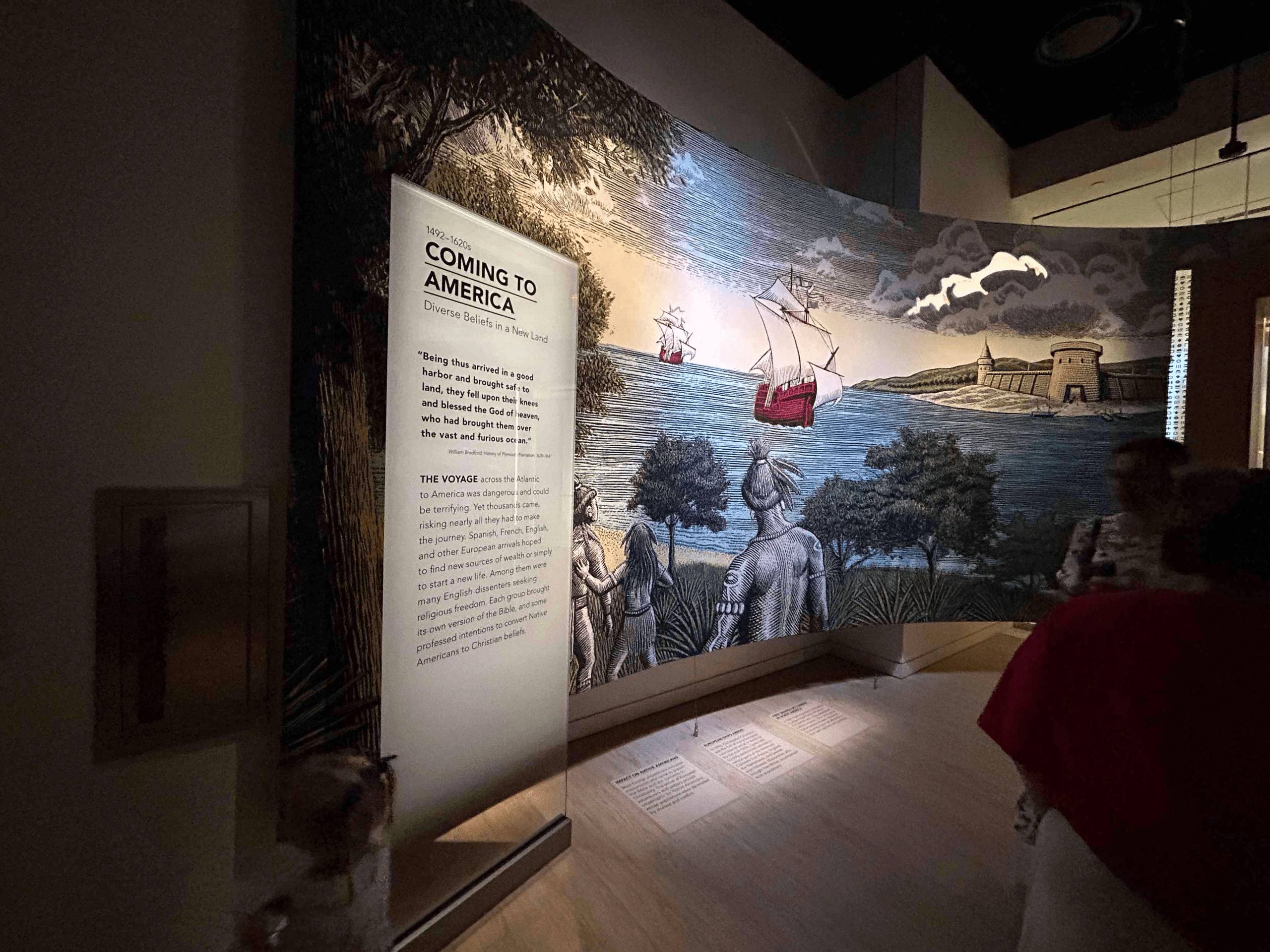
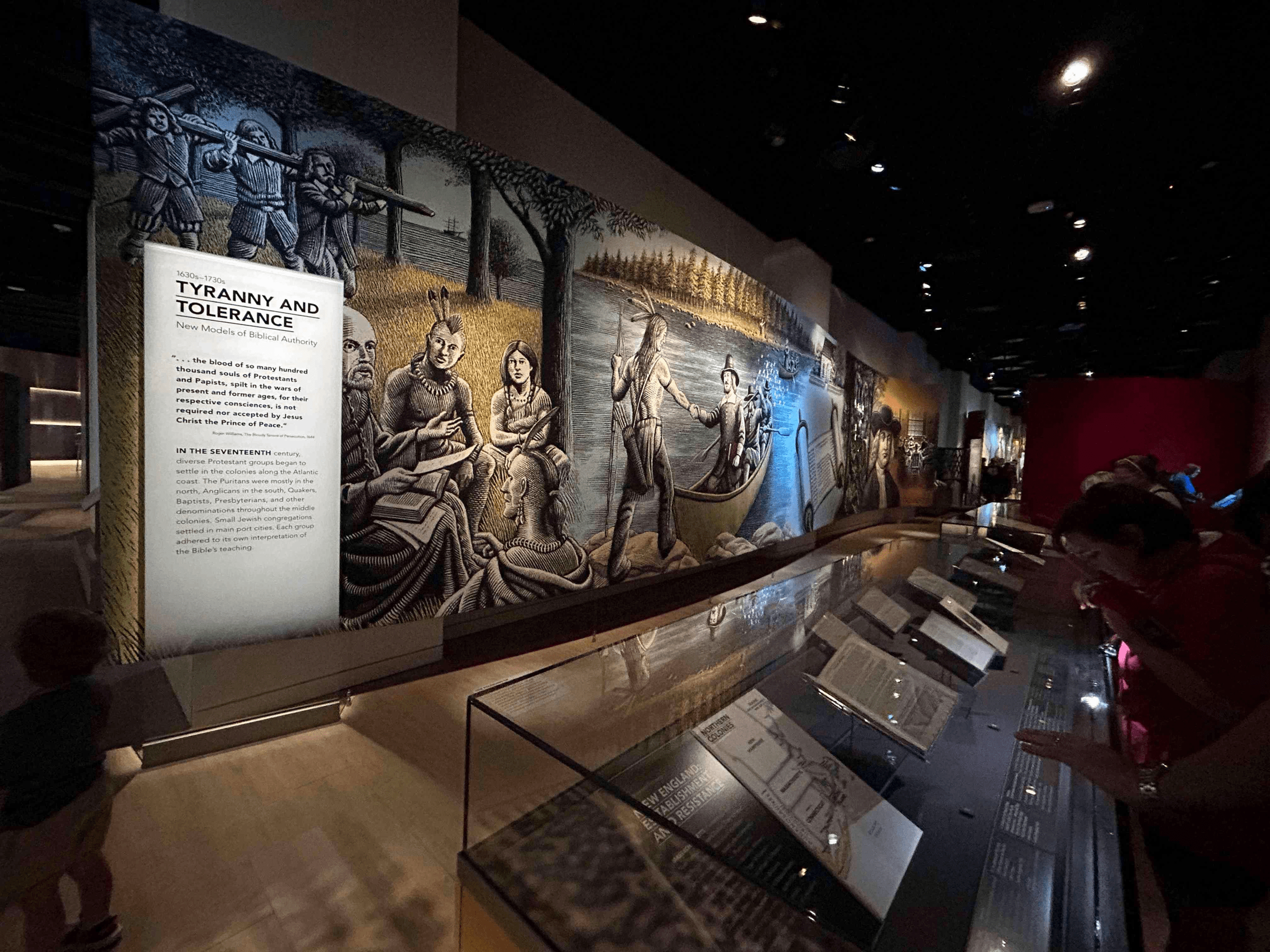
There was a lot to take in.
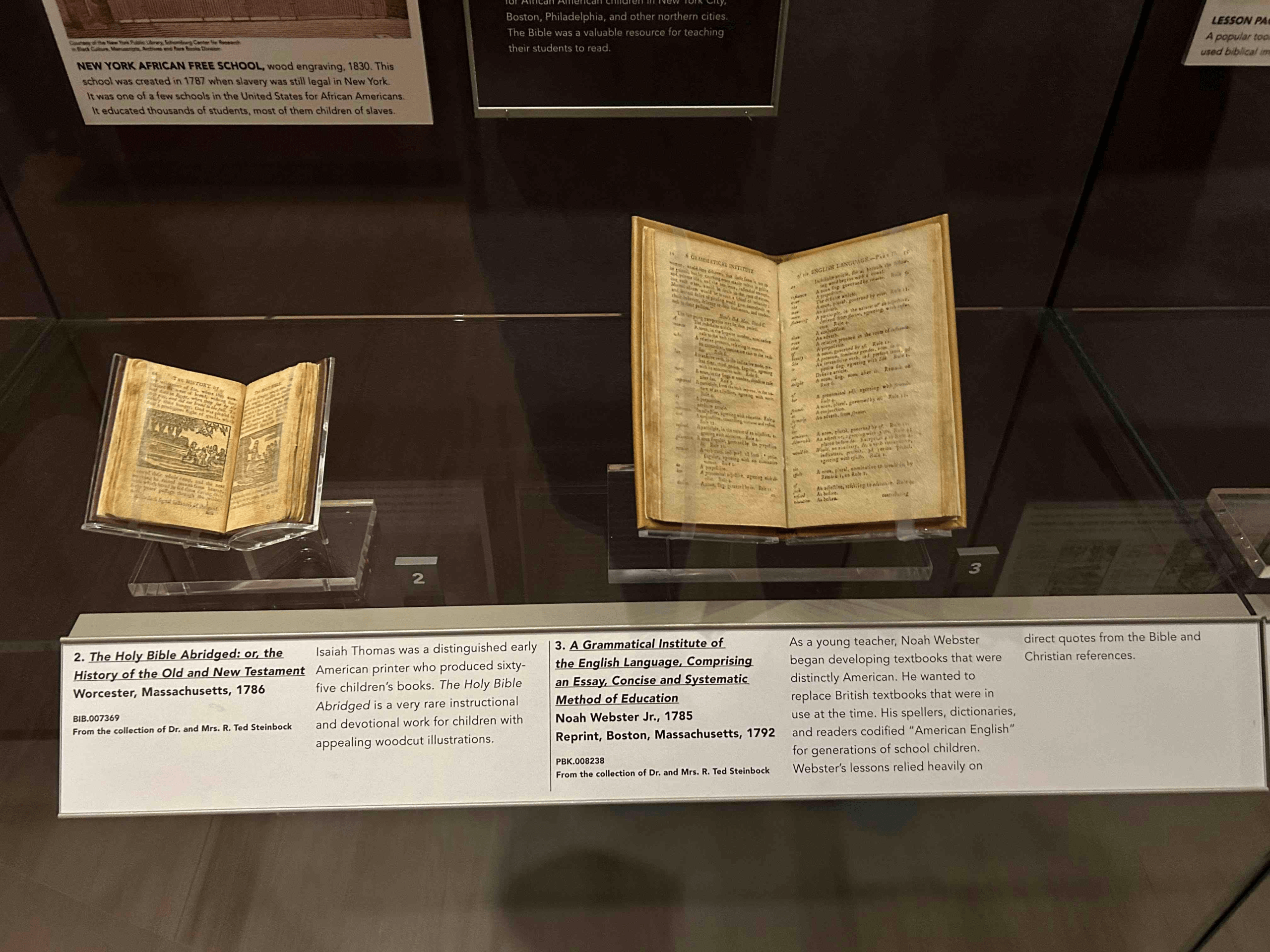
One of the first displays that stood out was the Liberty Bell exhibit, presented as a symbol of independence. Nearby were early American Bibles and historic printed editions that helped show how Scripture was read, published, taught, and carried into daily life during the early years of the country.
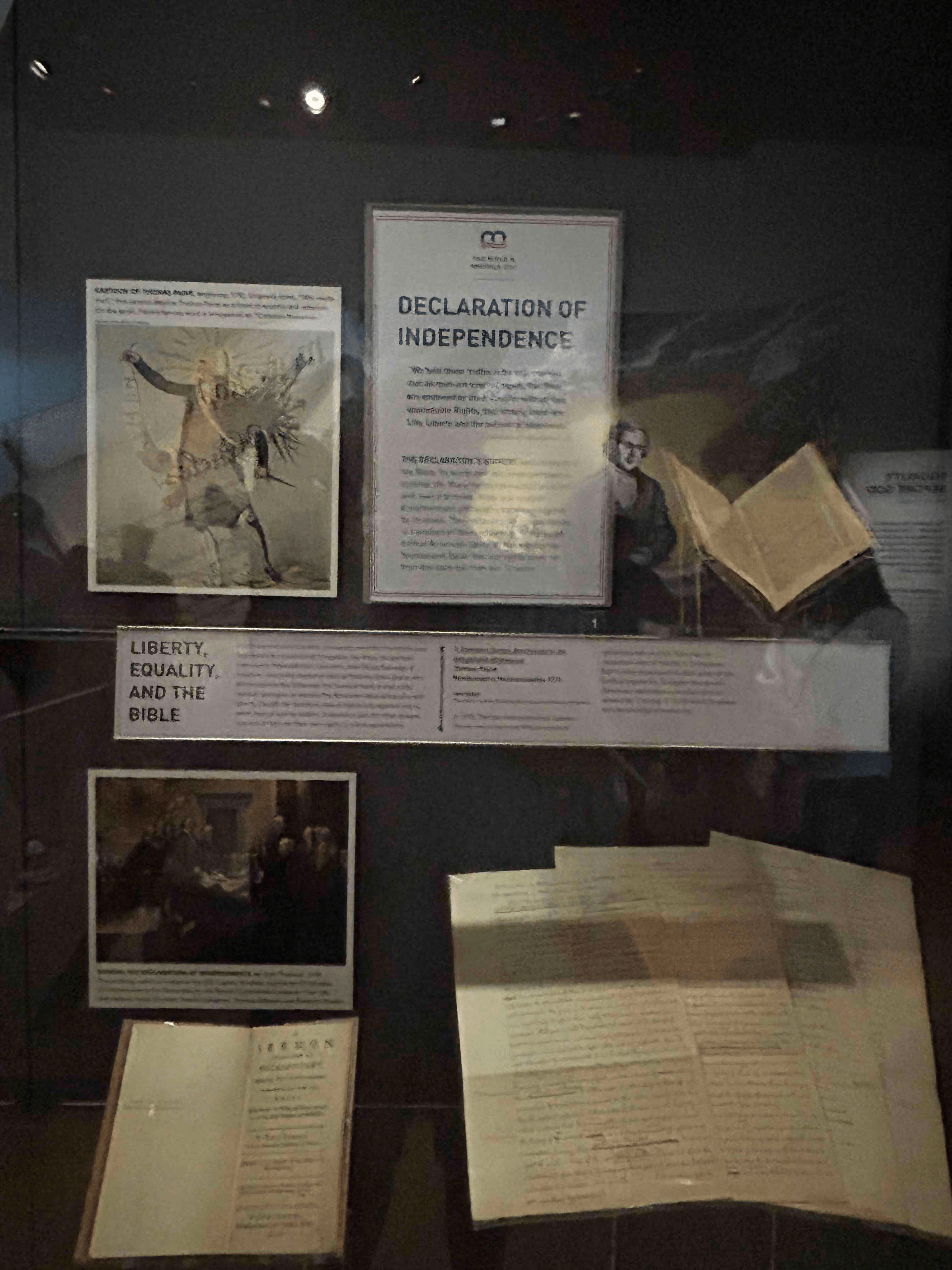
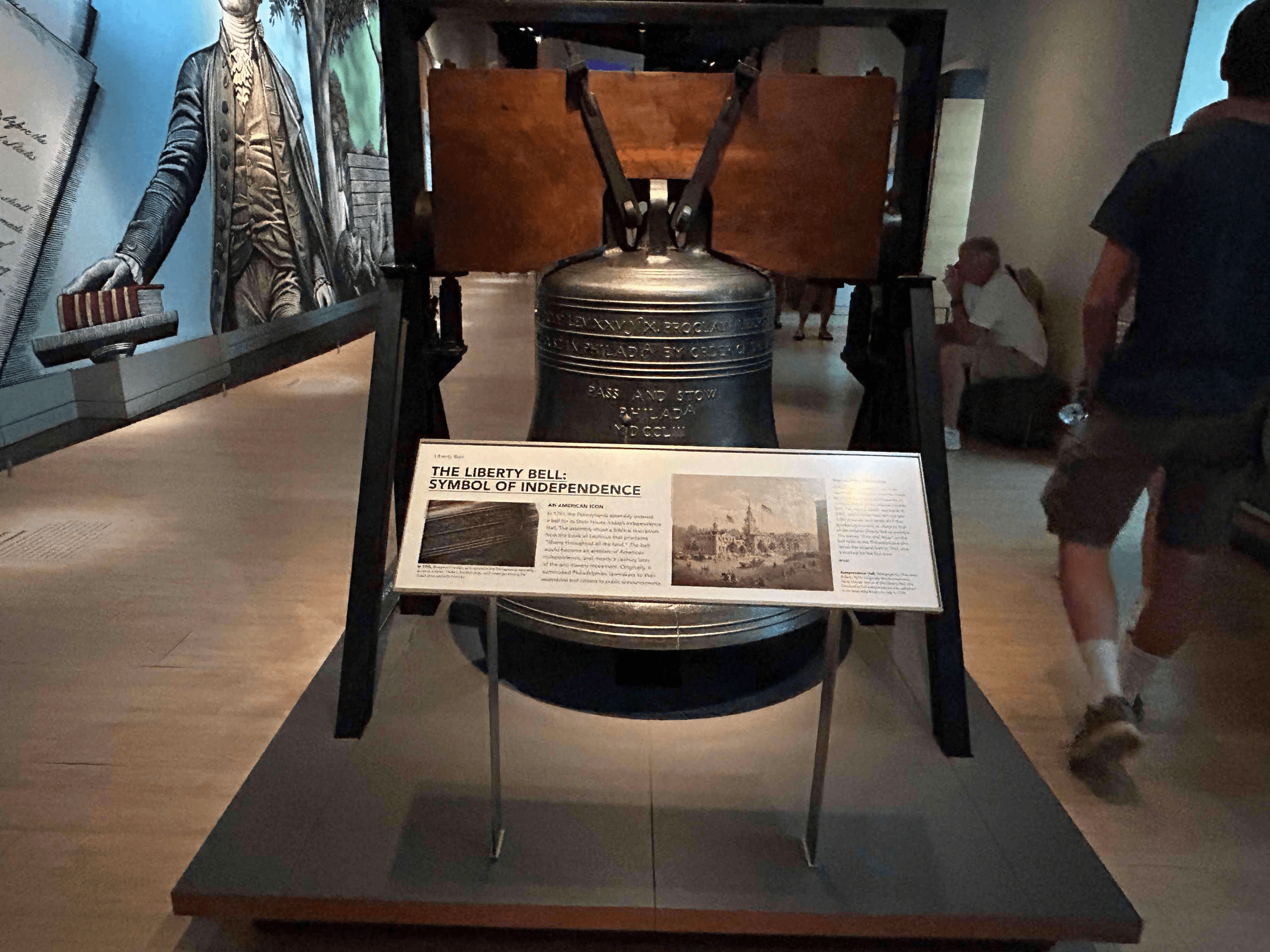
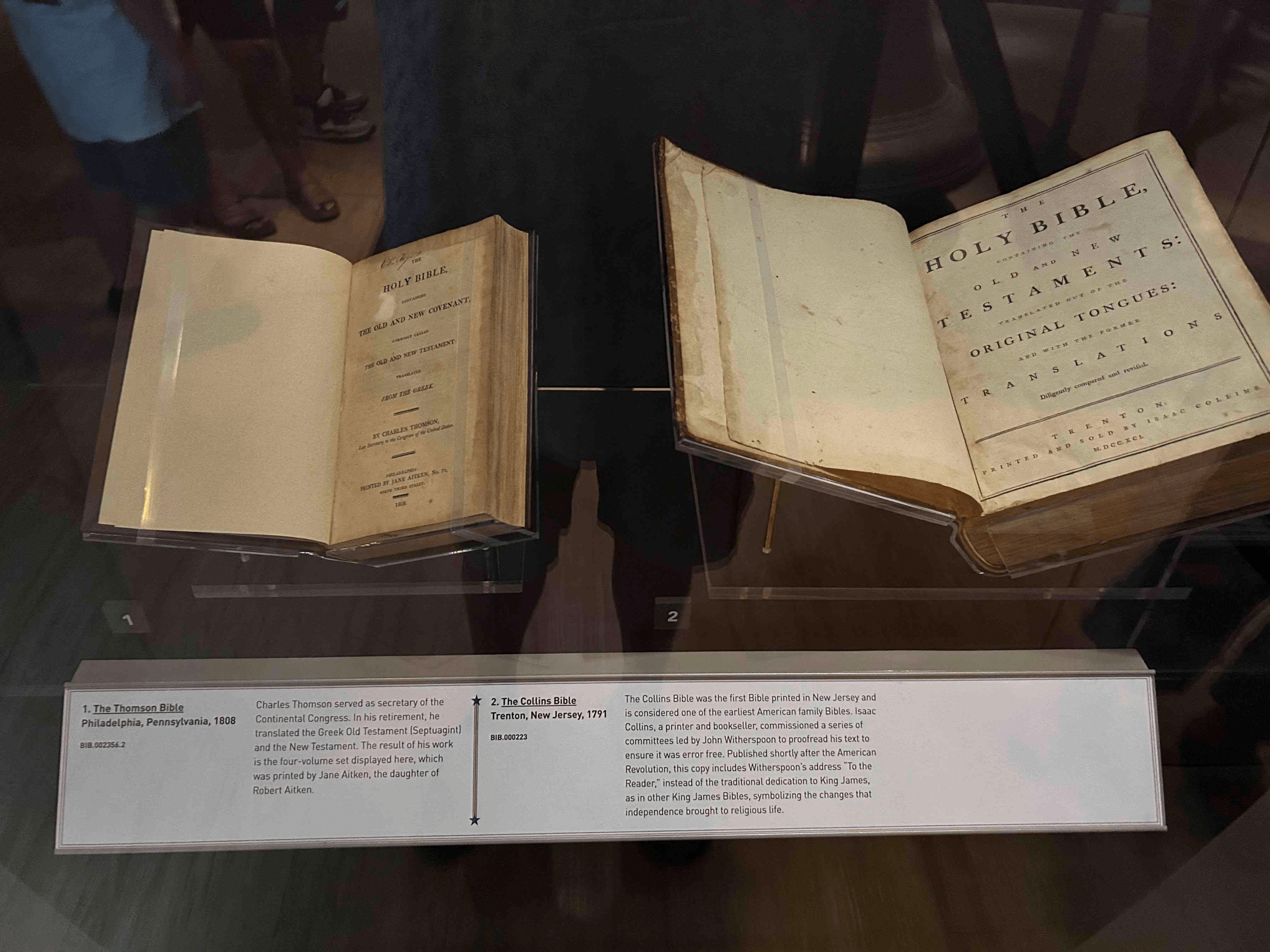
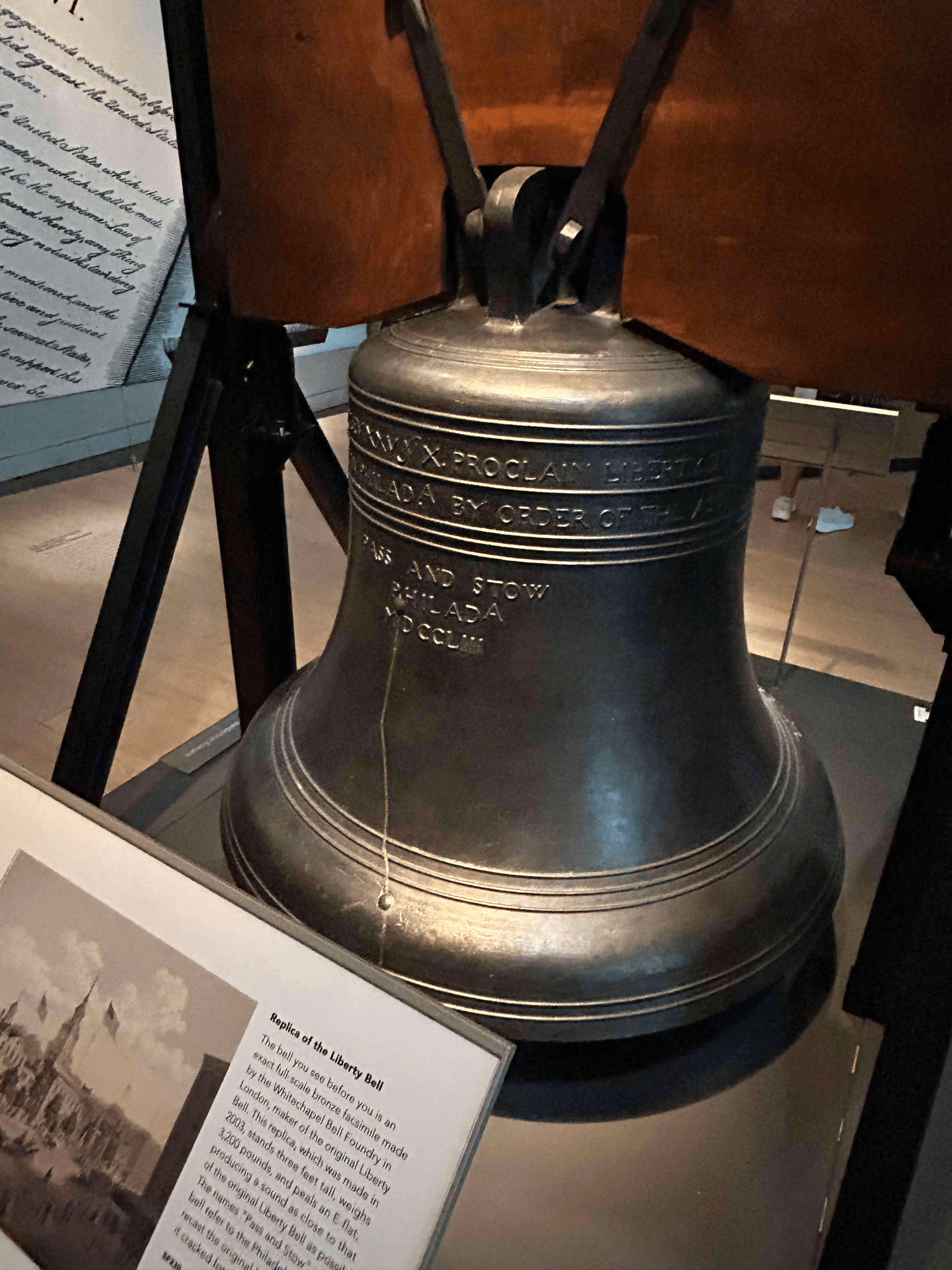
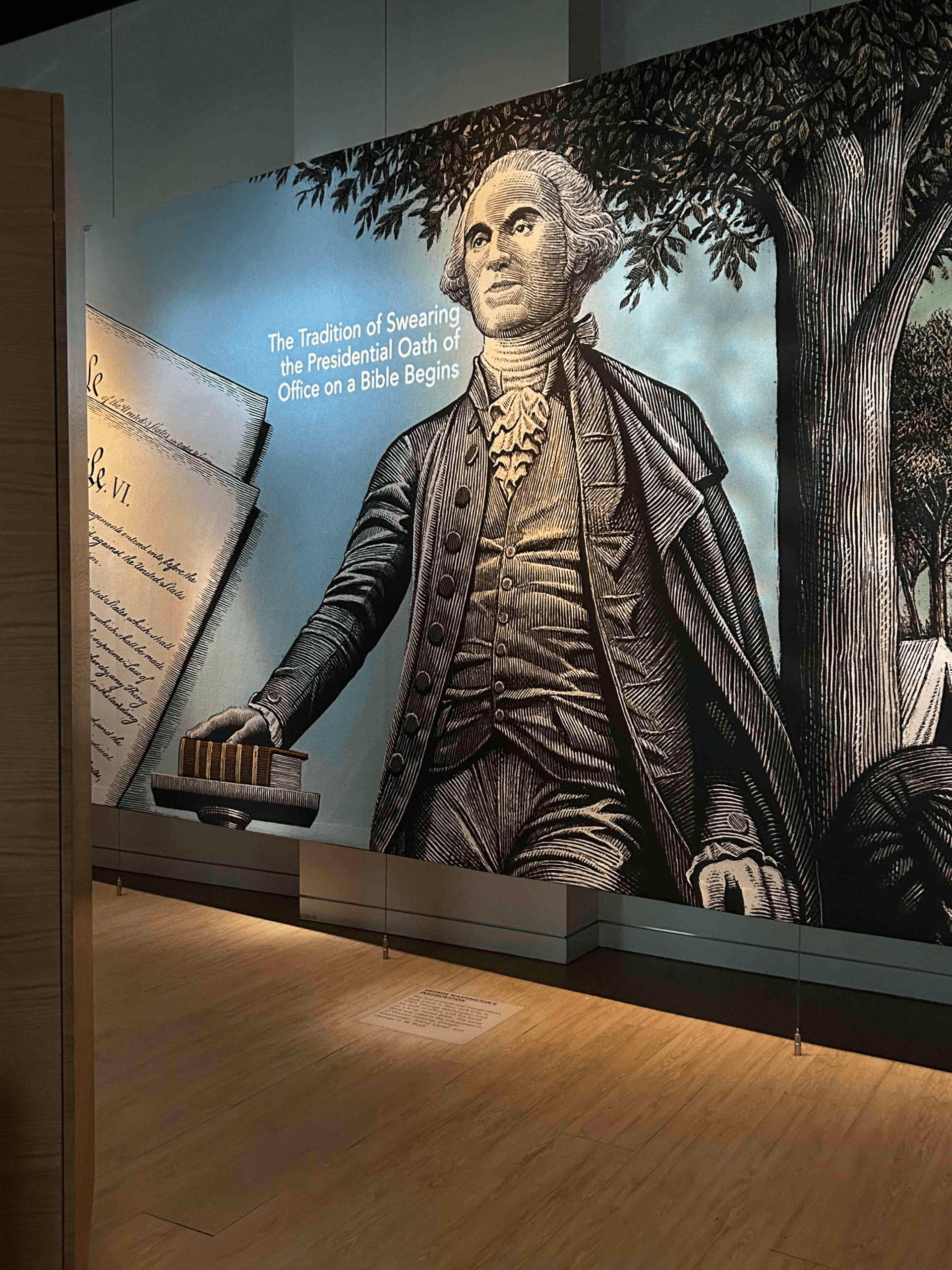
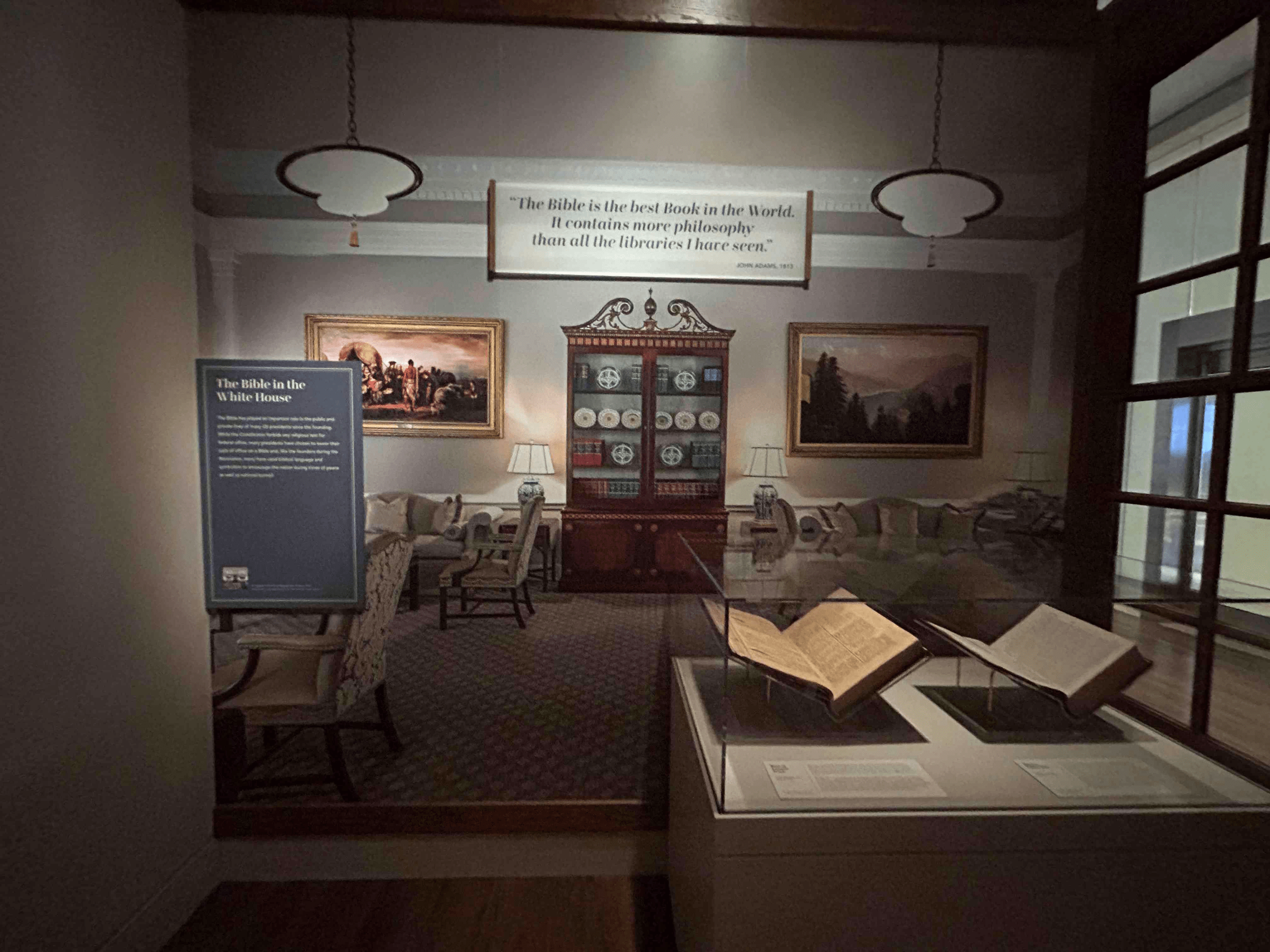
The exhibit also connected the Bible to American leadership and government. A large wall display showed George Washington and explained the tradition of taking the presidential oath of office on a Bible. There were also displays of Presidents’ Bibles, including Bibles connected to Grover Cleveland, Donald Trump, Jimmy Carter, and others. That section showed how many presidents have used Bibles personally and publicly, even though the Constitution does not require a religious test for office.
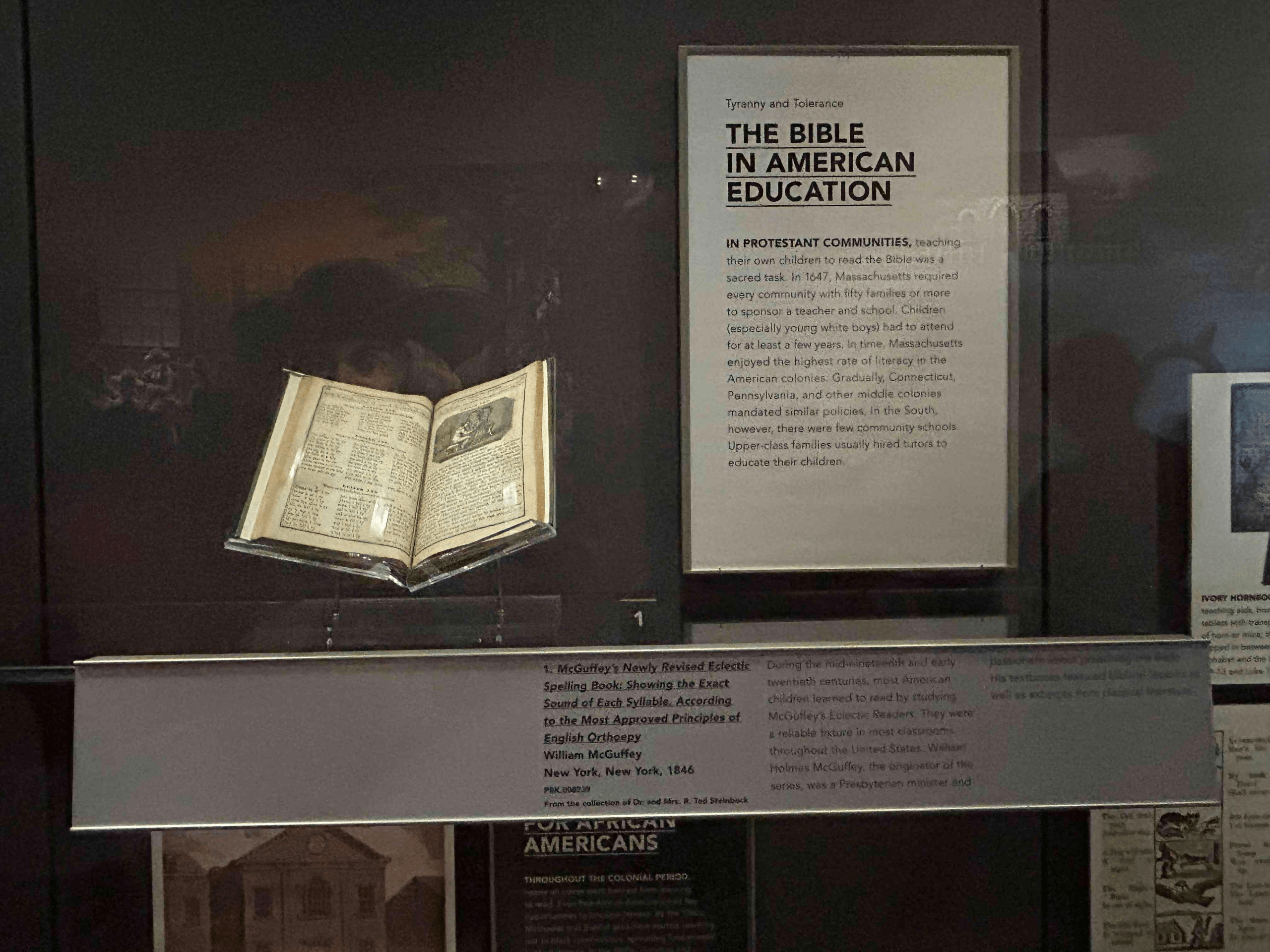
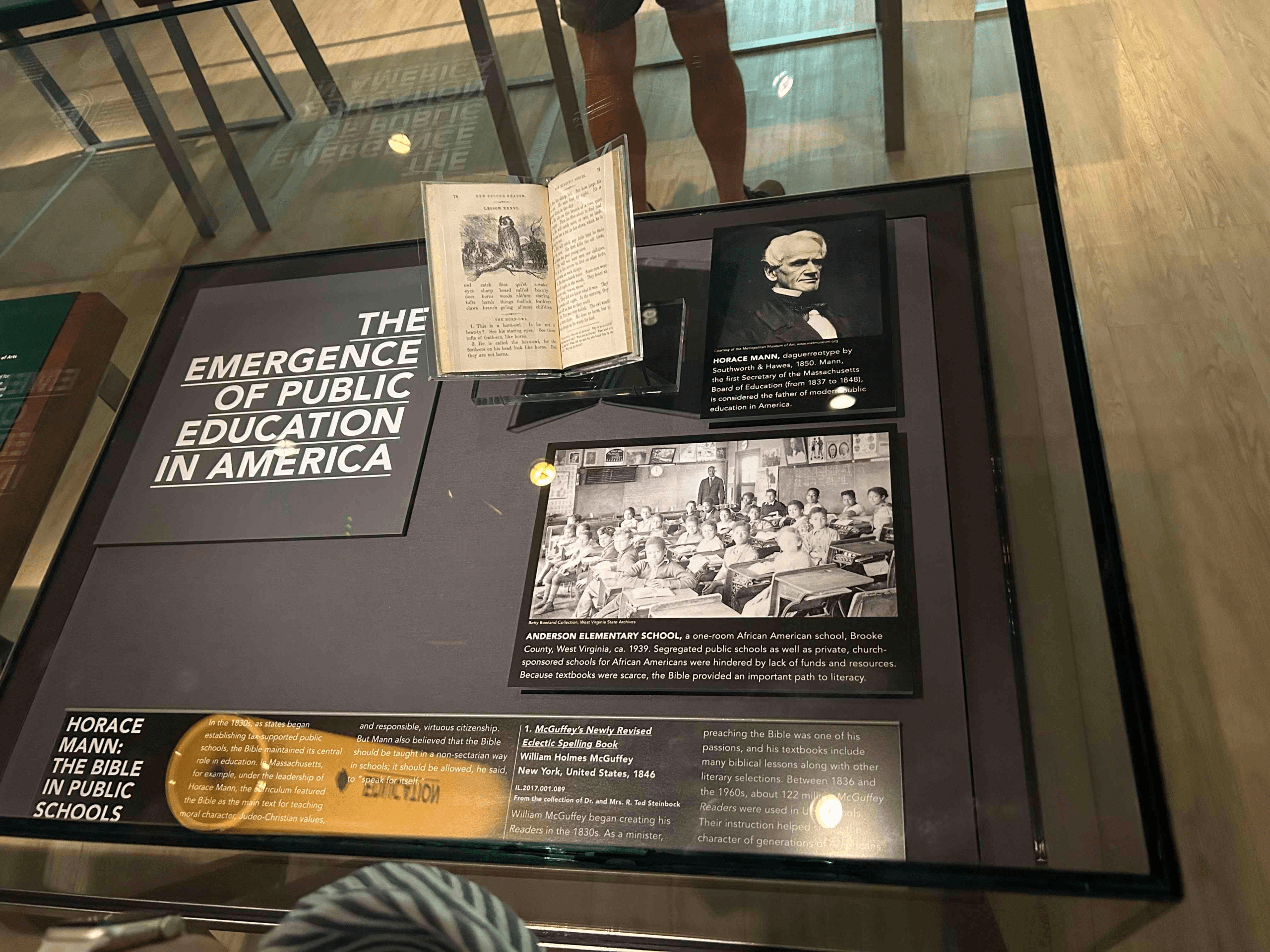
Several areas focused on the Bible’s role in education. Early schoolbooks, readers, spelling books, and instructional materials showed how learning to read and moral teaching were often connected in early American classrooms.
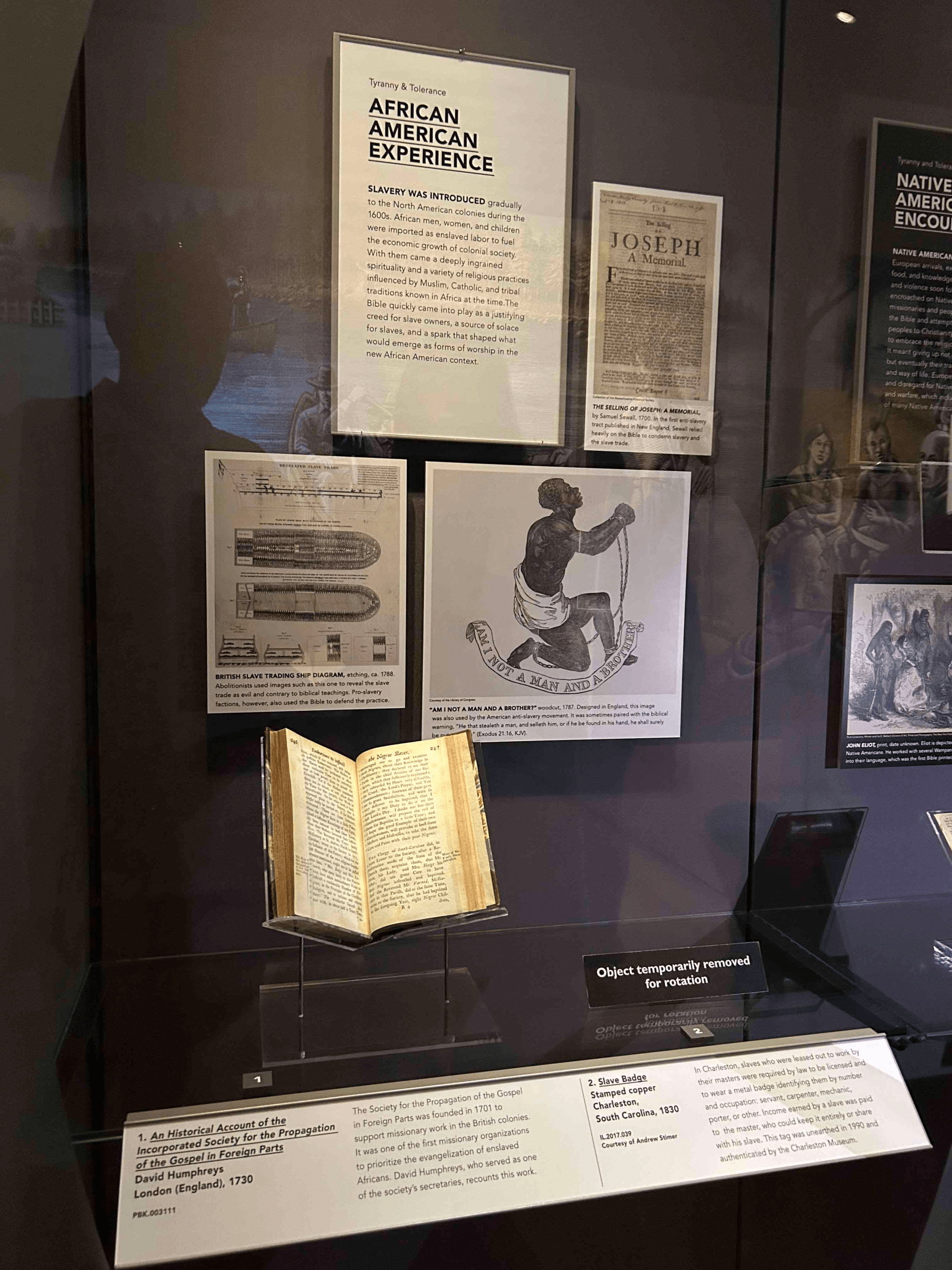
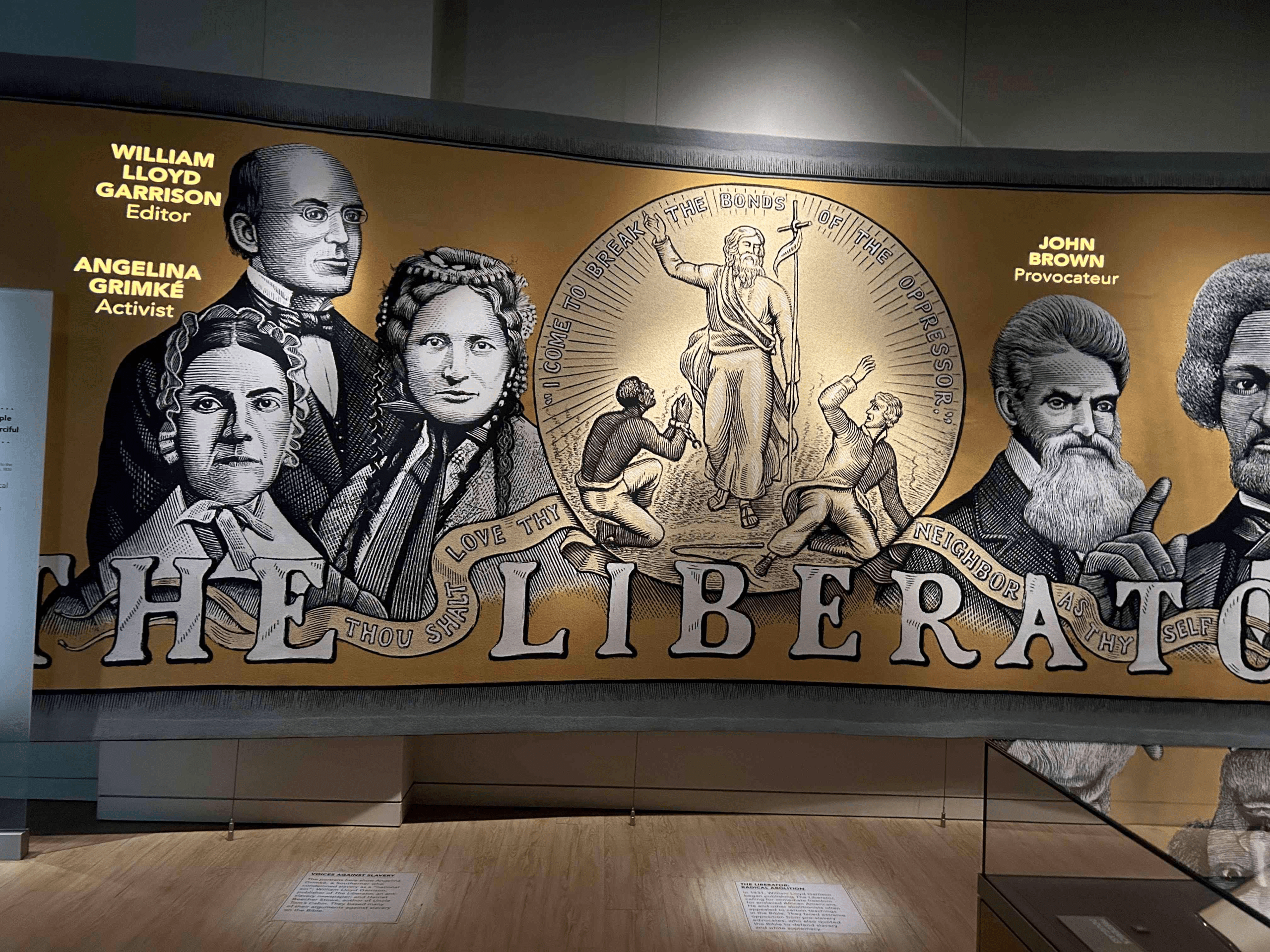
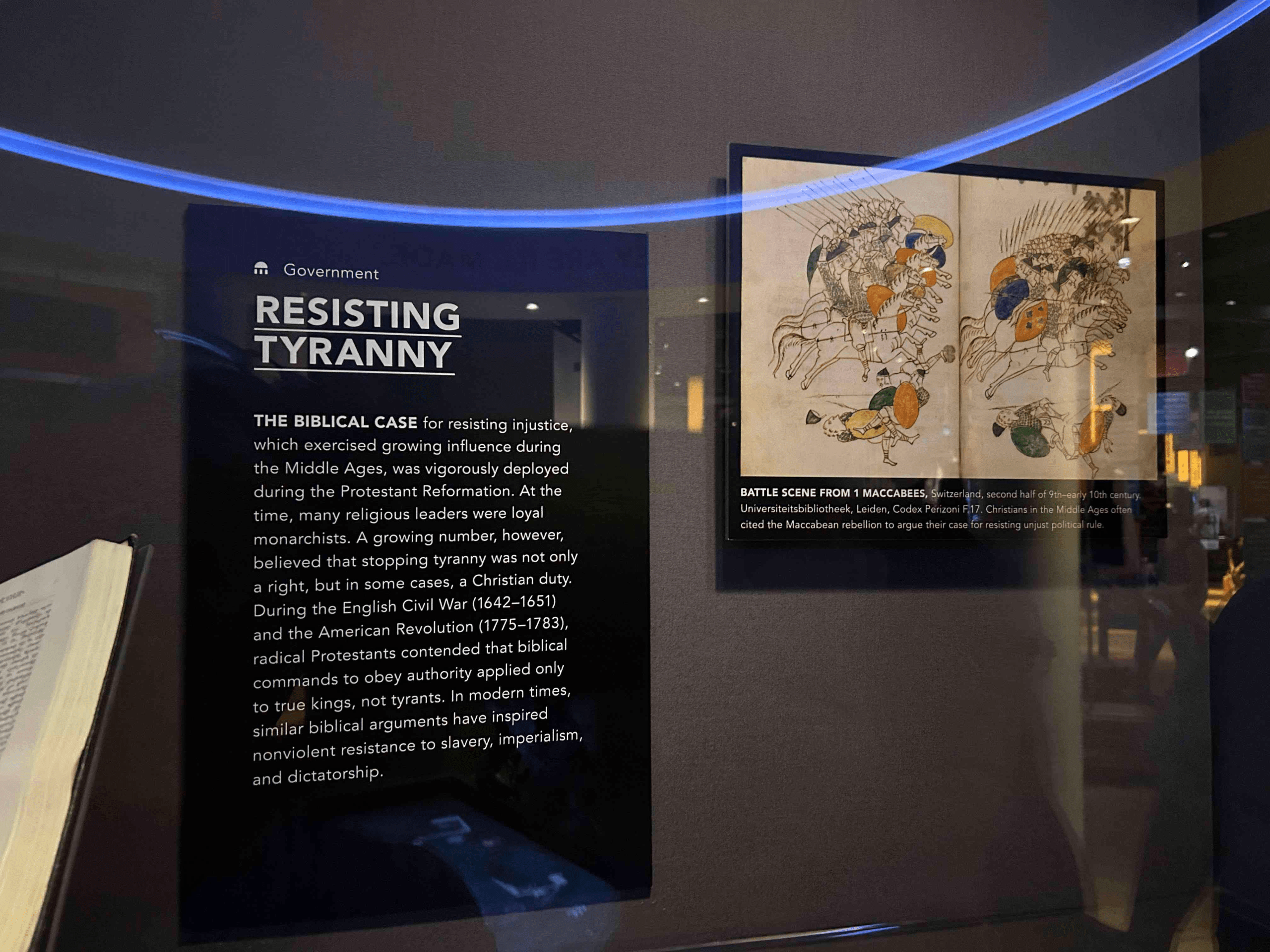
Another section showed the Bible’s complicated place in American history, especially around slavery, abolition, liberty, and reform. The exhibits included references to figures such as William Lloyd Garrison, Angelina Grimké, John Brown, Phillis Wheatley, George Whitefield, and others. Some displays showed how Scripture was used by people on different sides of major issues, while others showed how biblical language inspired calls for freedom, justice, and human dignity.
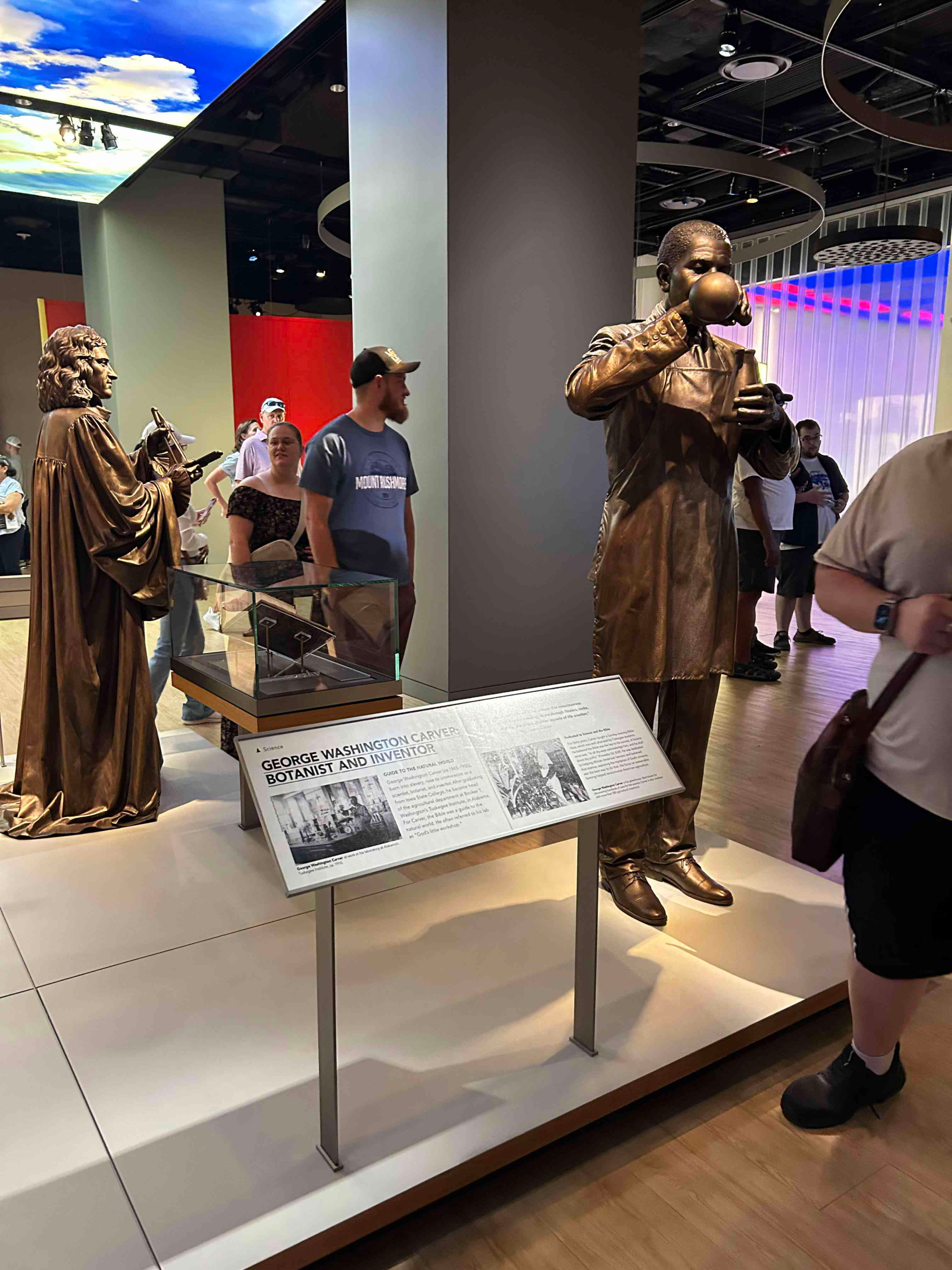
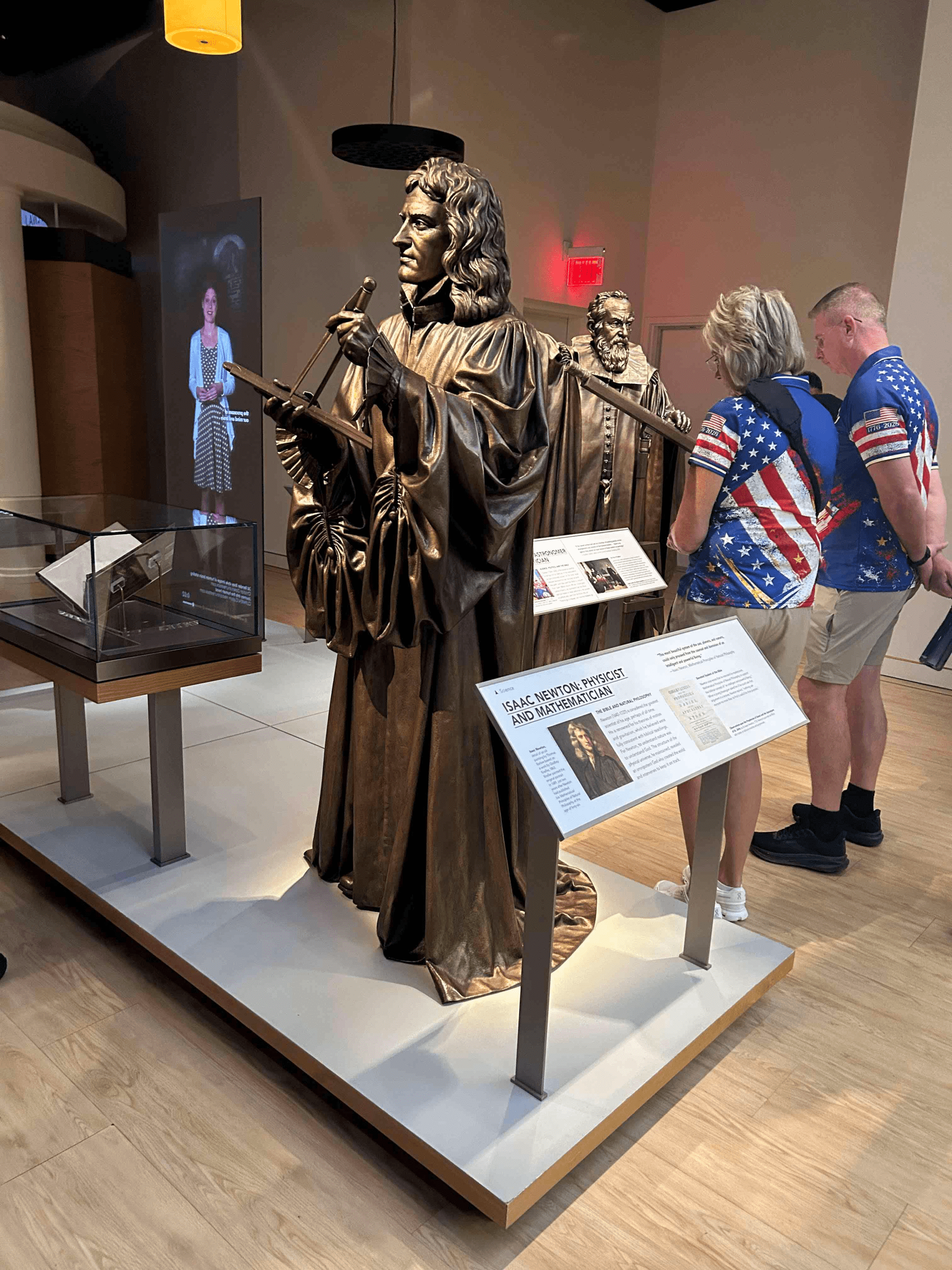
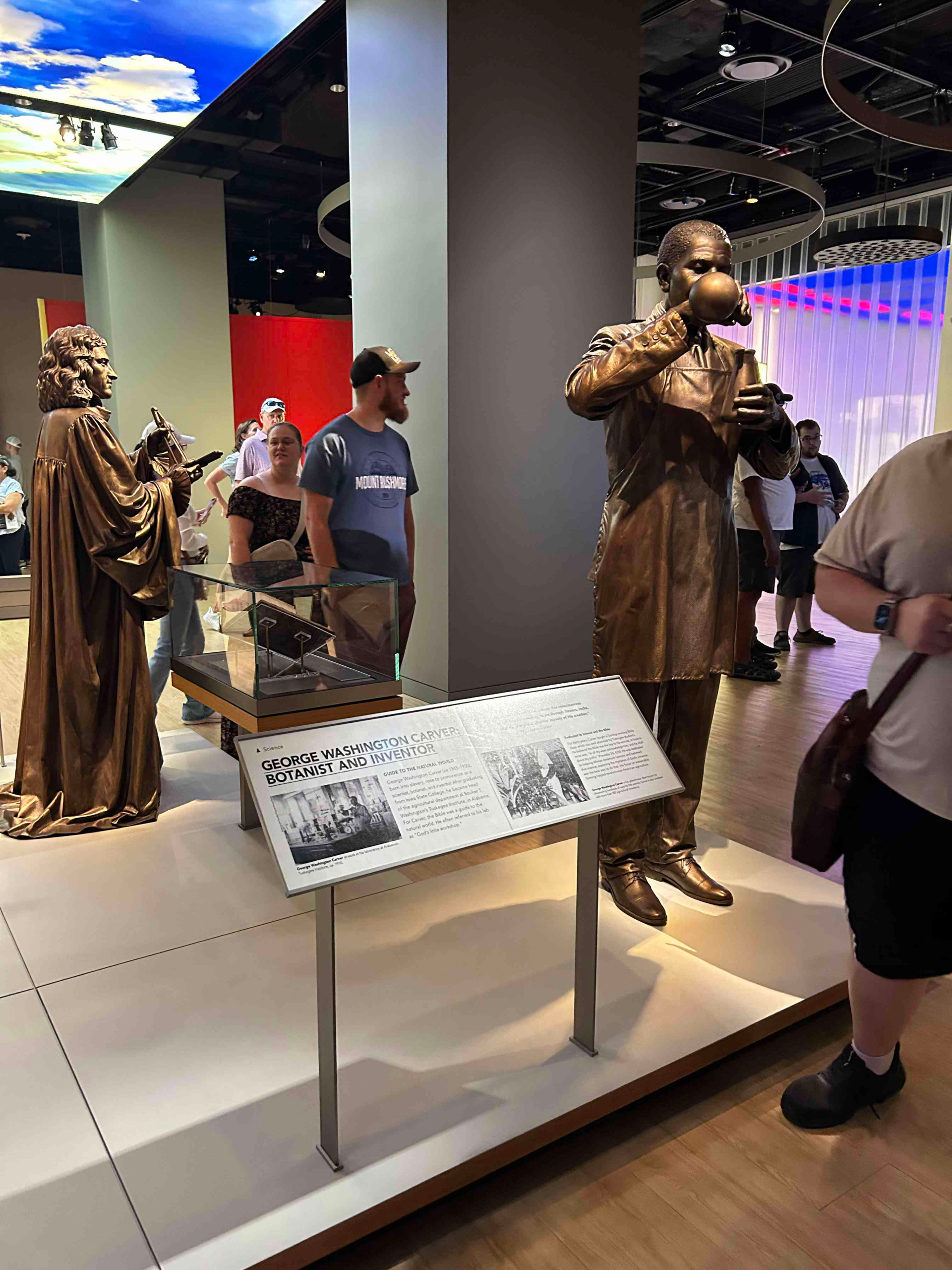
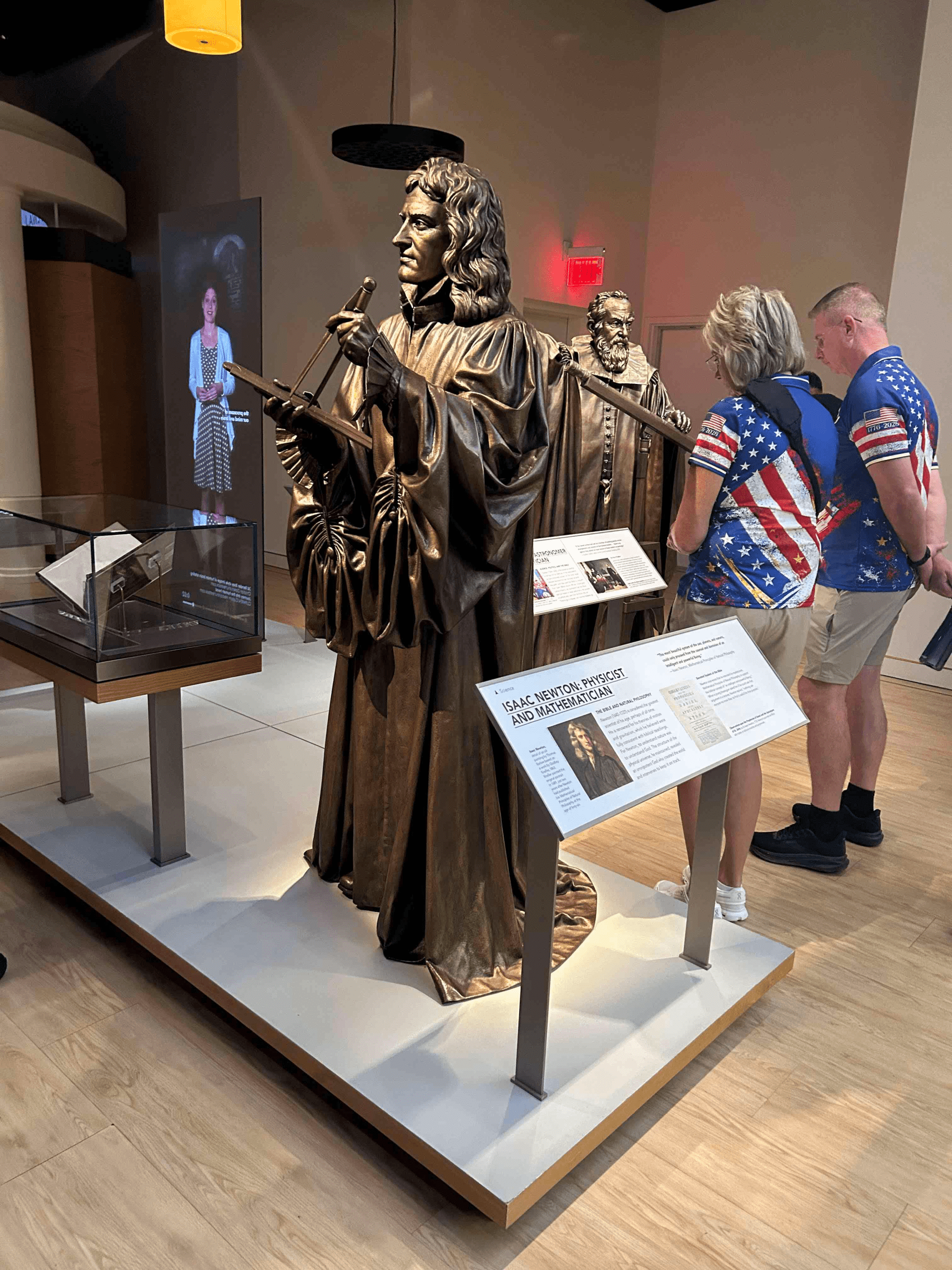
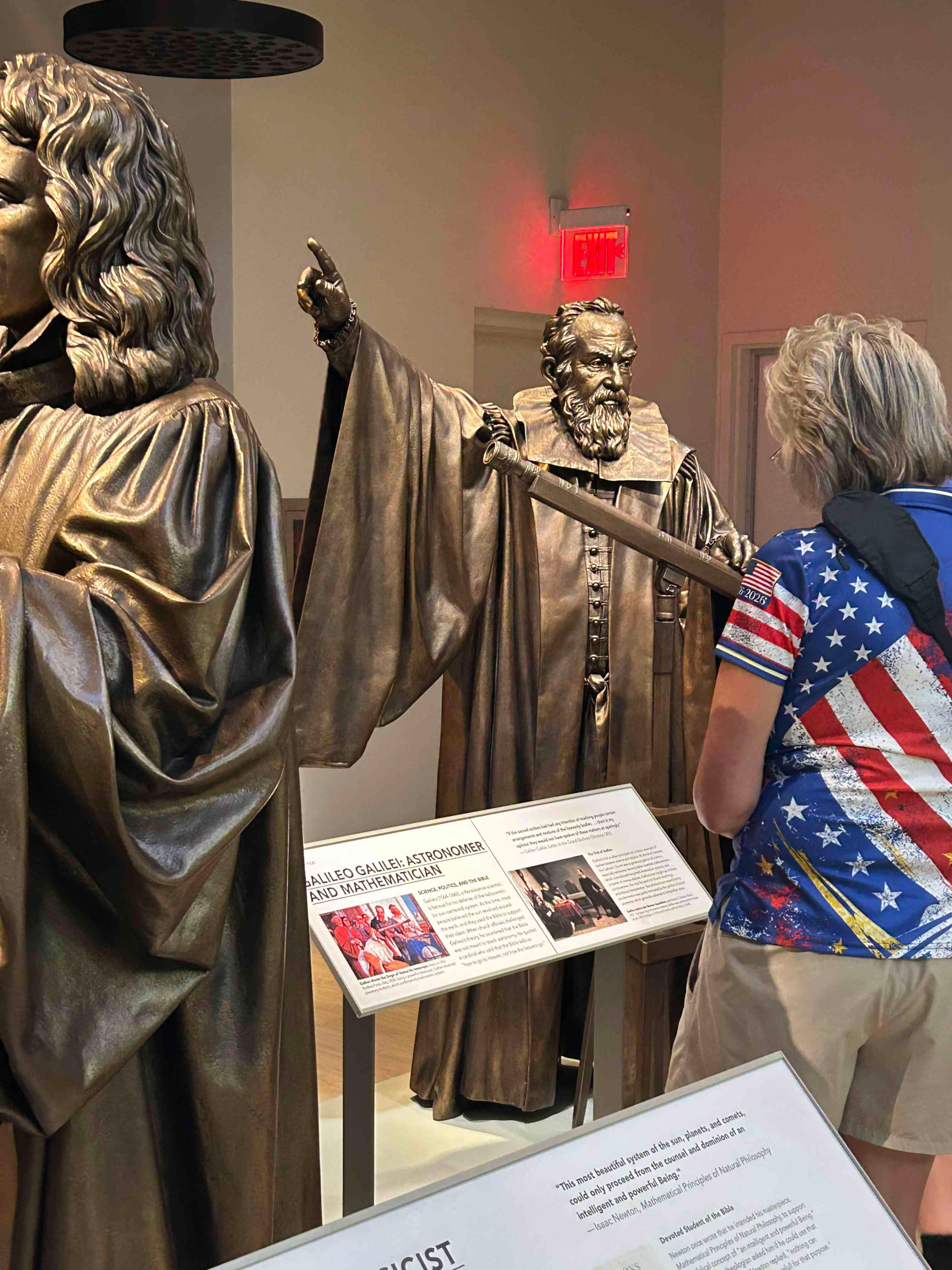
The museum also connected the Bible to science and invention through displays featuring figures such as Galileo, Sir Isaac Newton, and George Washington Carver. Those exhibits helped show how faith, study, discovery, and creativity intersected in the lives of different historical figures.
One of the more modern and colorful sections focused on the Bible in everyday language and popular culture. Hanging panels showed familiar phrases and references that come from Scripture, like “the writing on the wall,” “a time for everything,” “nothing new under the sun,” “blind leading the blind,” and “a leopard cannot change his spots.” Other panels showed biblical references in music, advertising, sports, comics, movies, shopping bags, hot cross buns, and even signs in national parks.
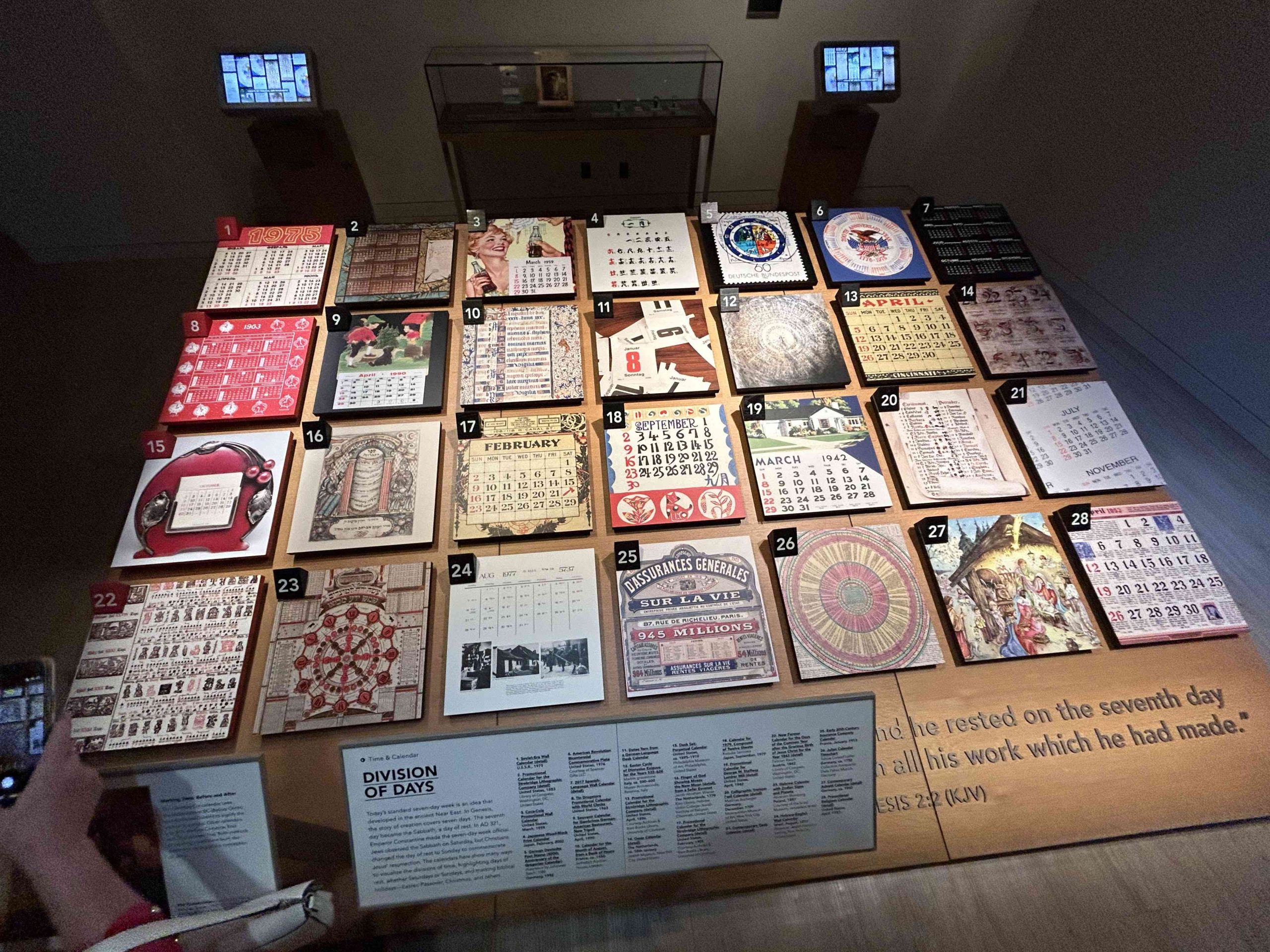
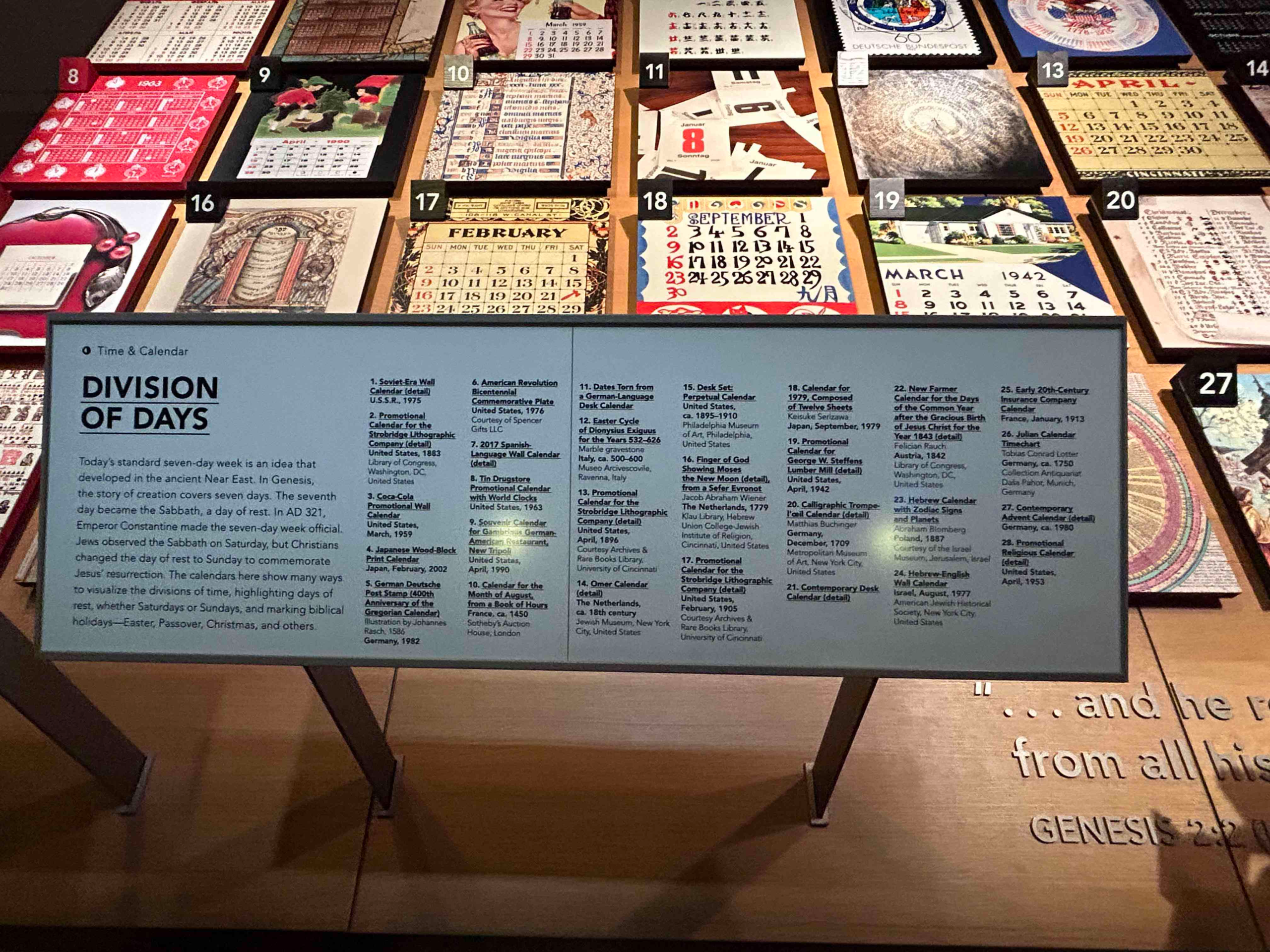
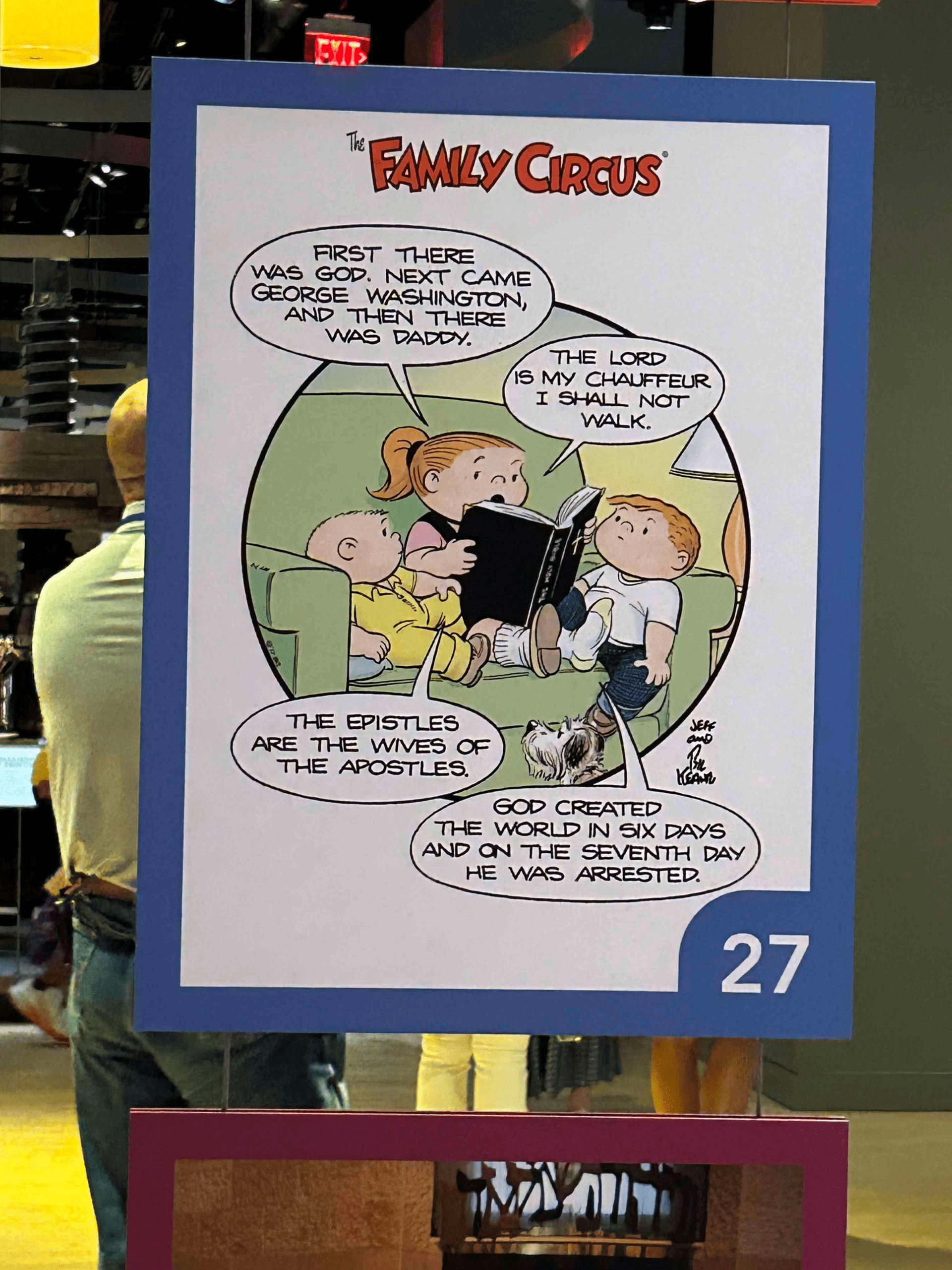
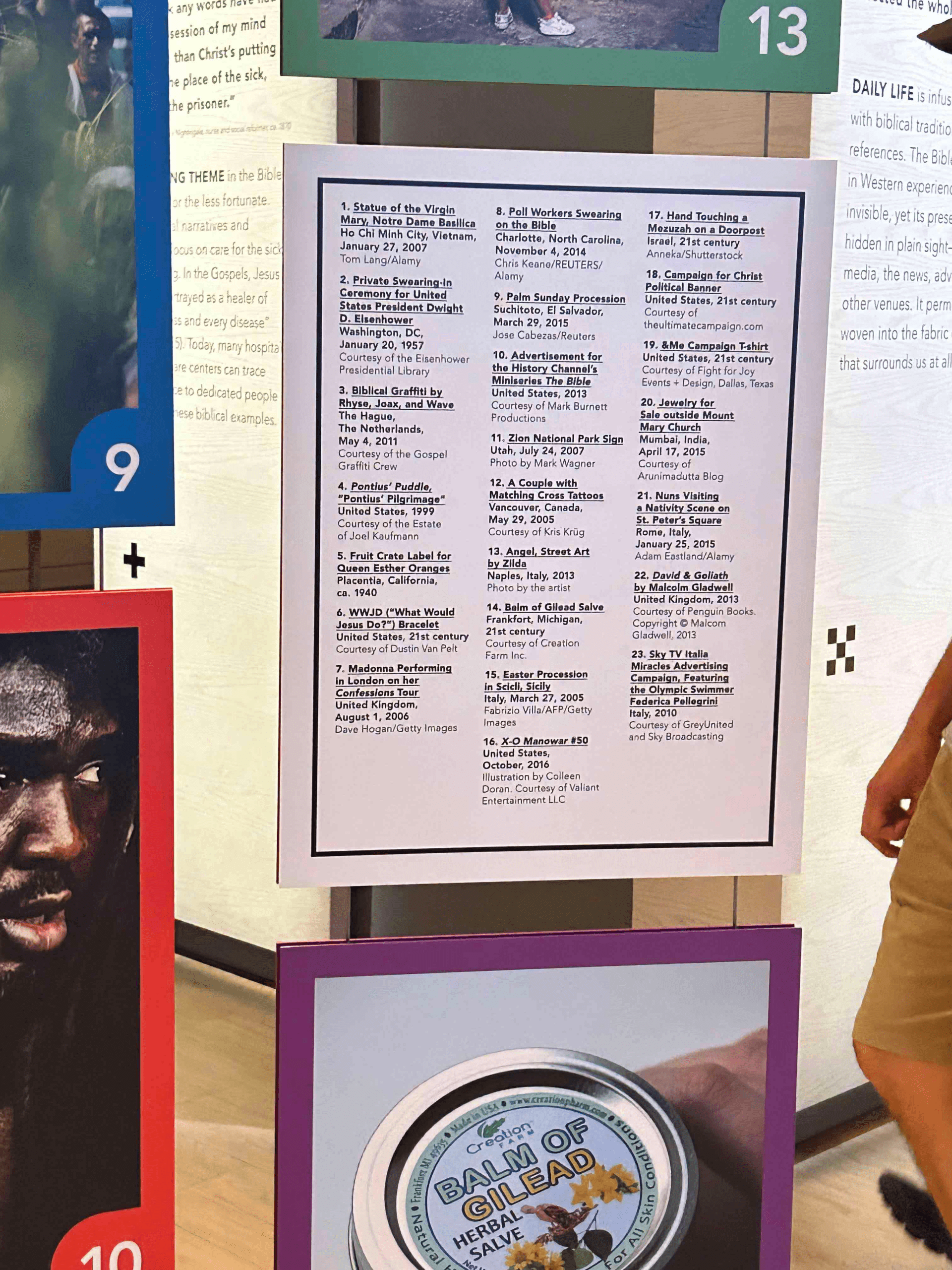
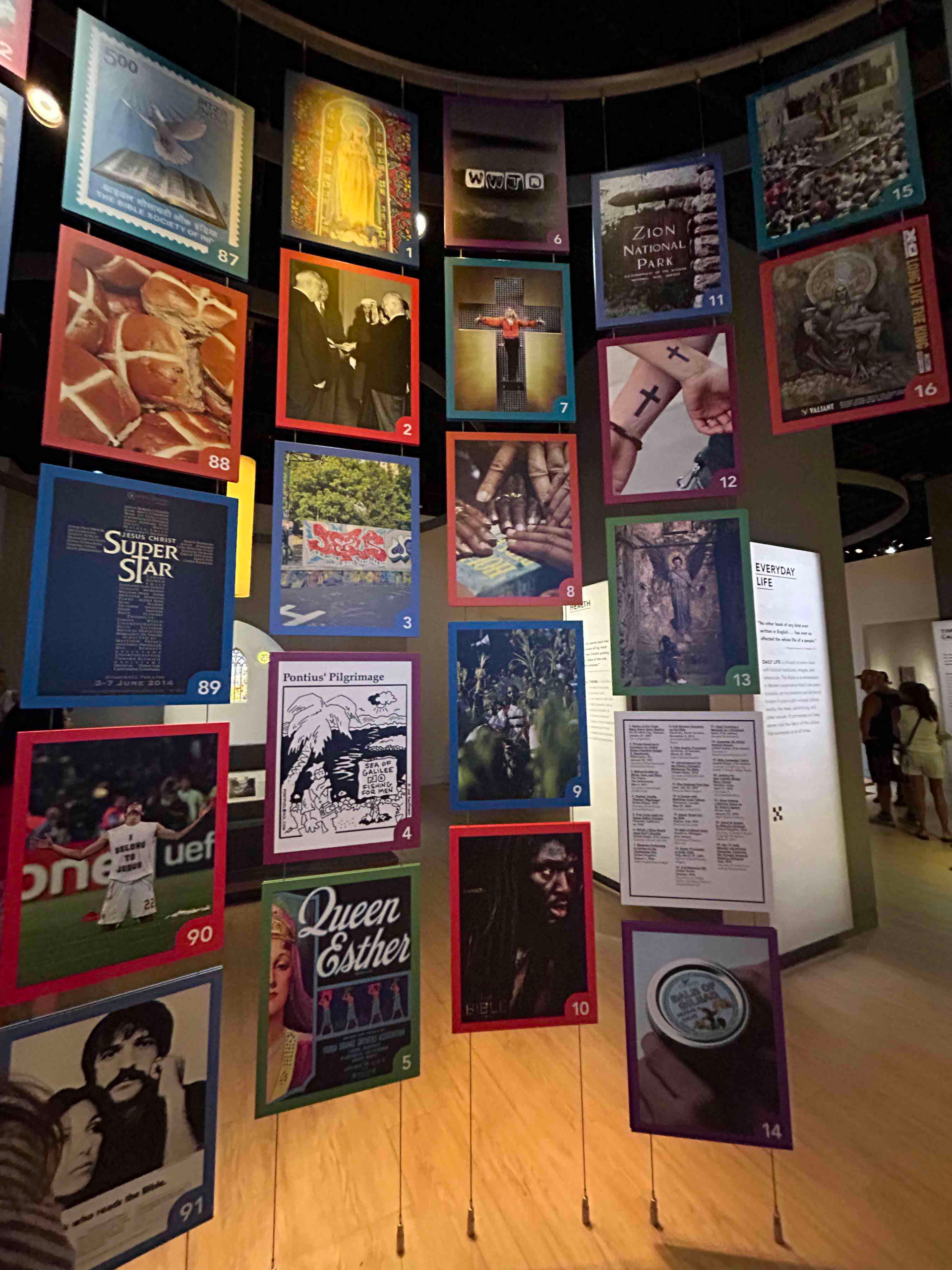
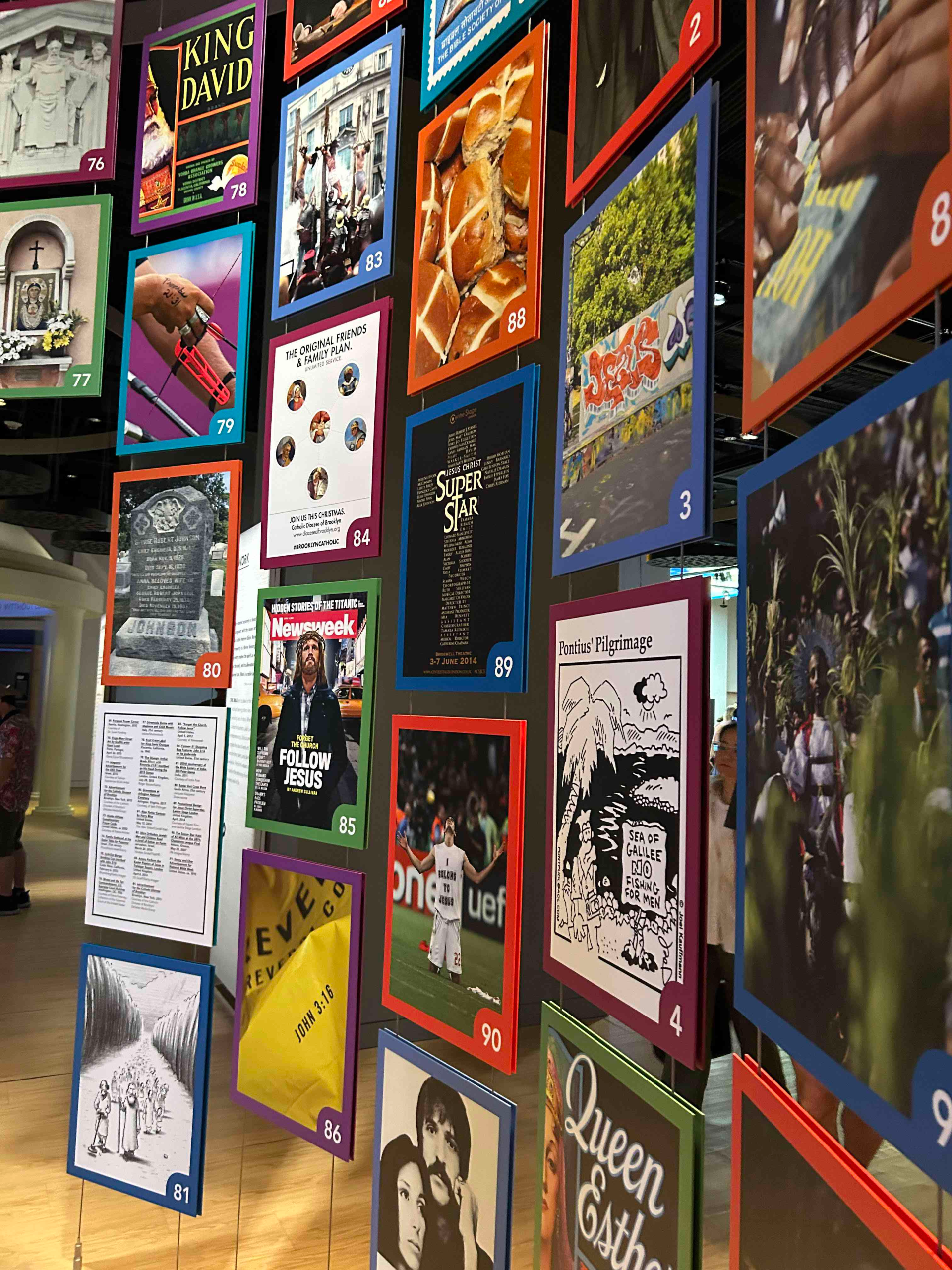
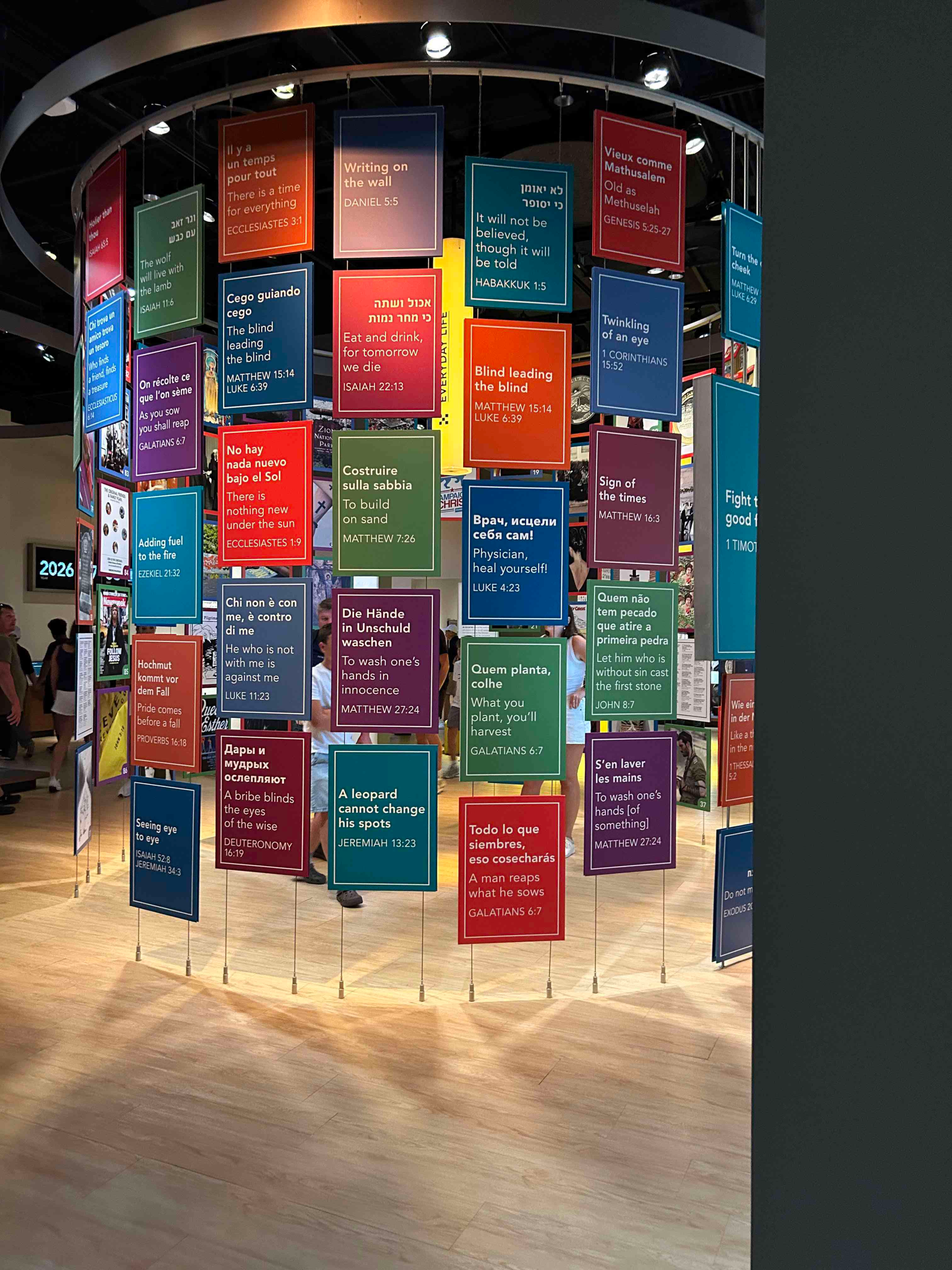
It was interesting to see how many expressions and references are woven into everyday life, sometimes in places you might not even notice.
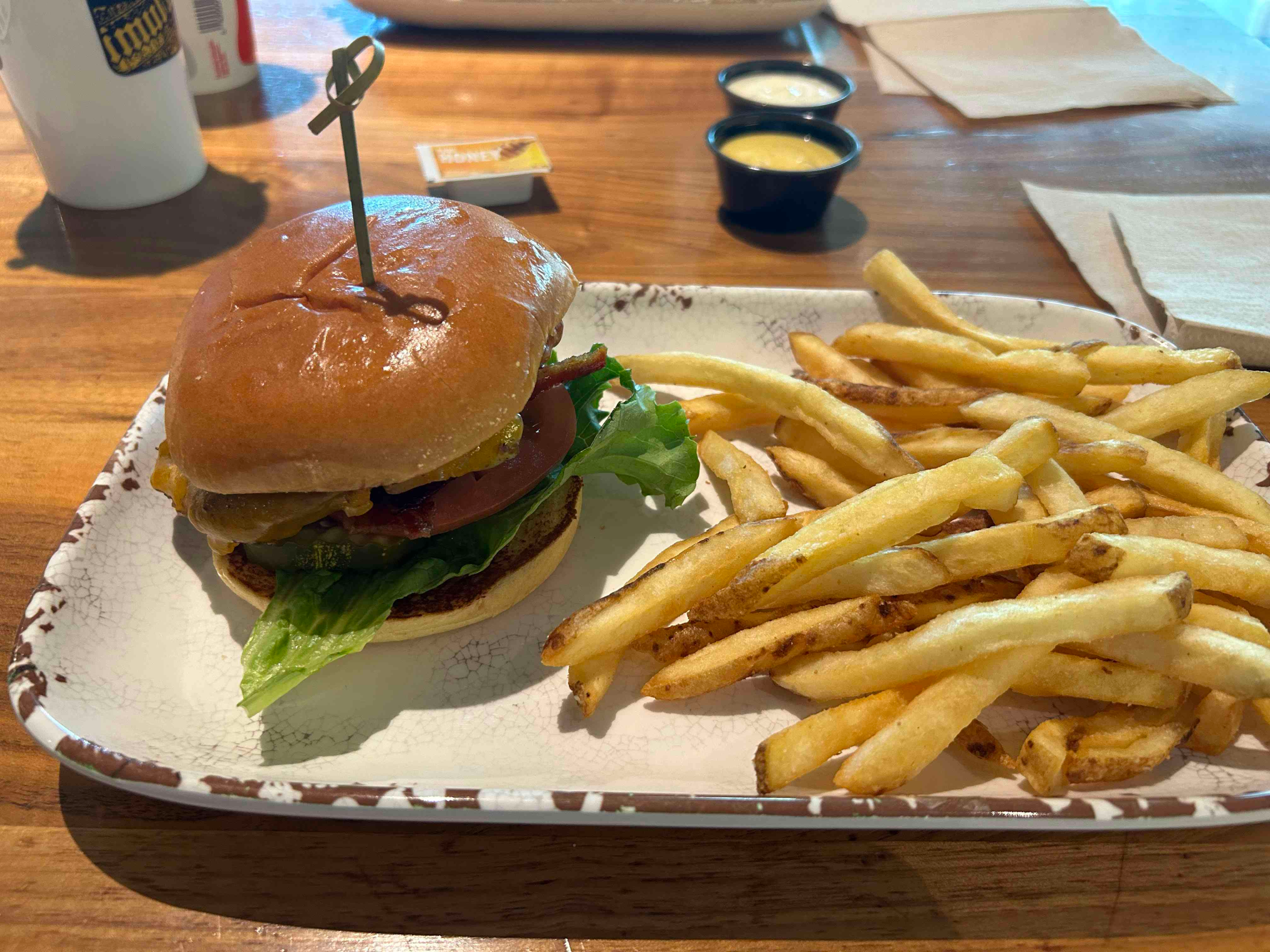
For lunch, we ate at Manna, the museum’s restaurant. While we were eating, we kept hearing jets overhead. They were loud, close, and hard to ignore.
At first, we were not completely sure what was happening, but we later found out they were practicing for the America250 celebration. Let’s just say we were very buzzed.
After lunch, we returned to finish the rest of Floor 2.
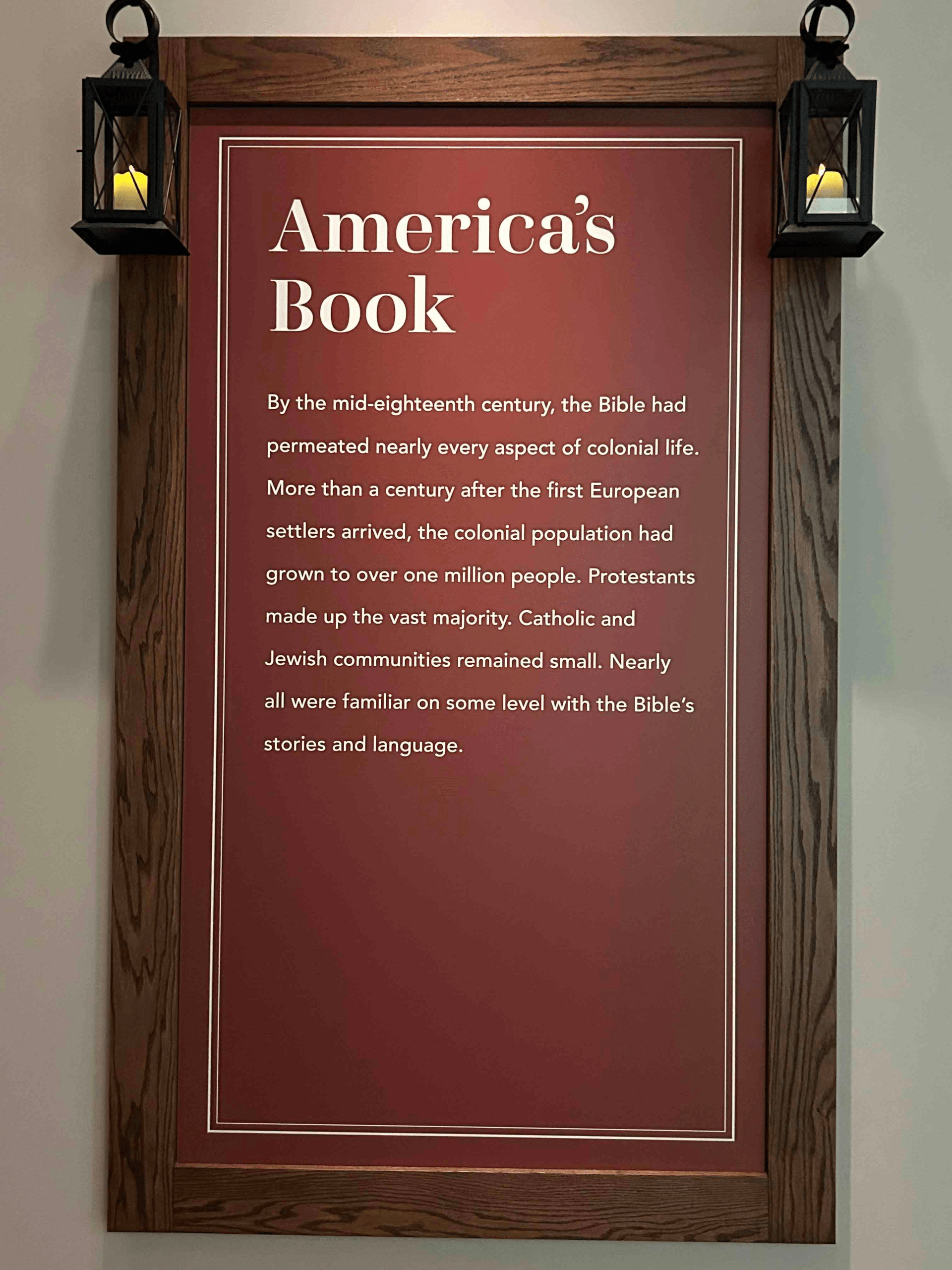
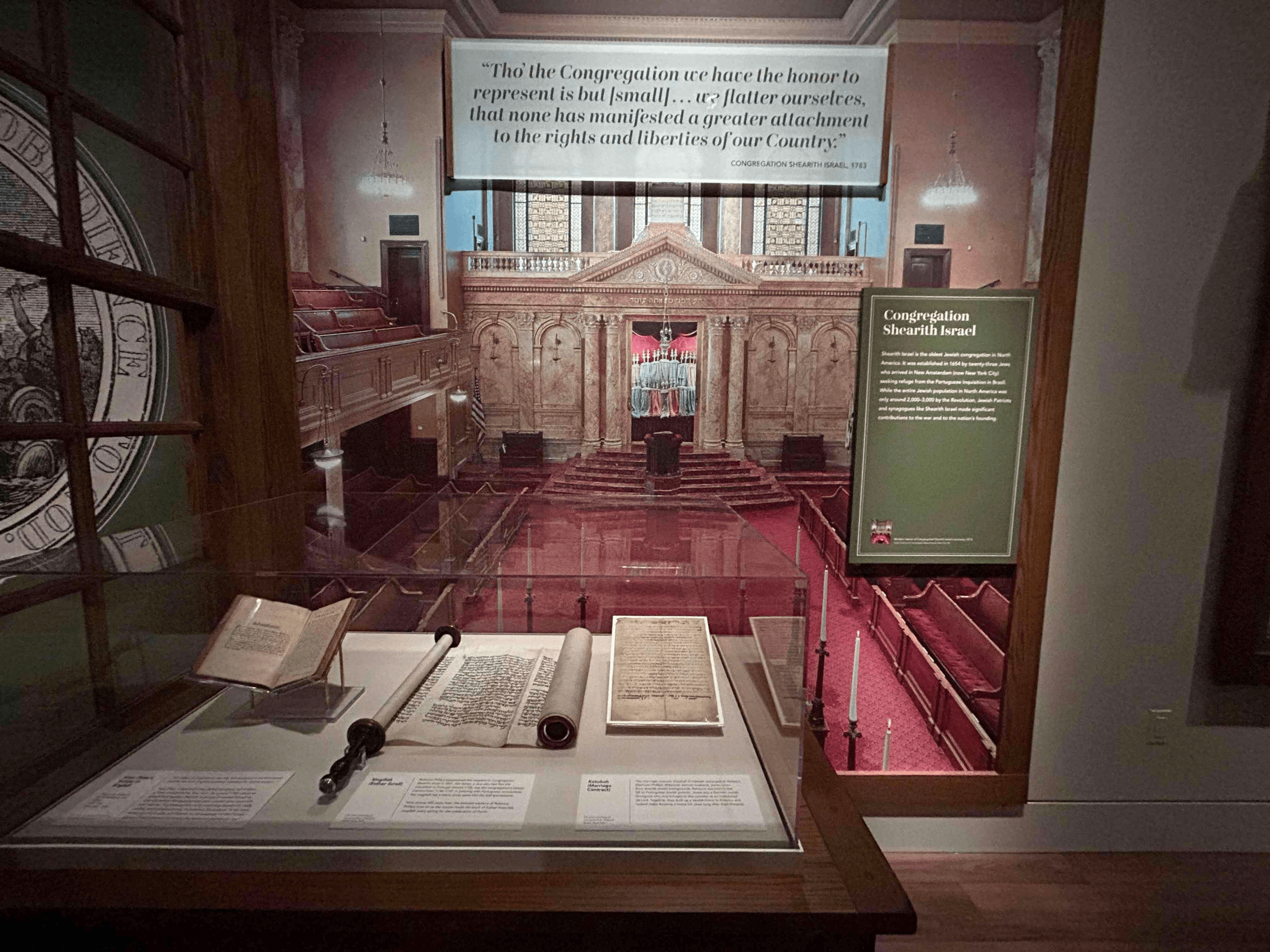
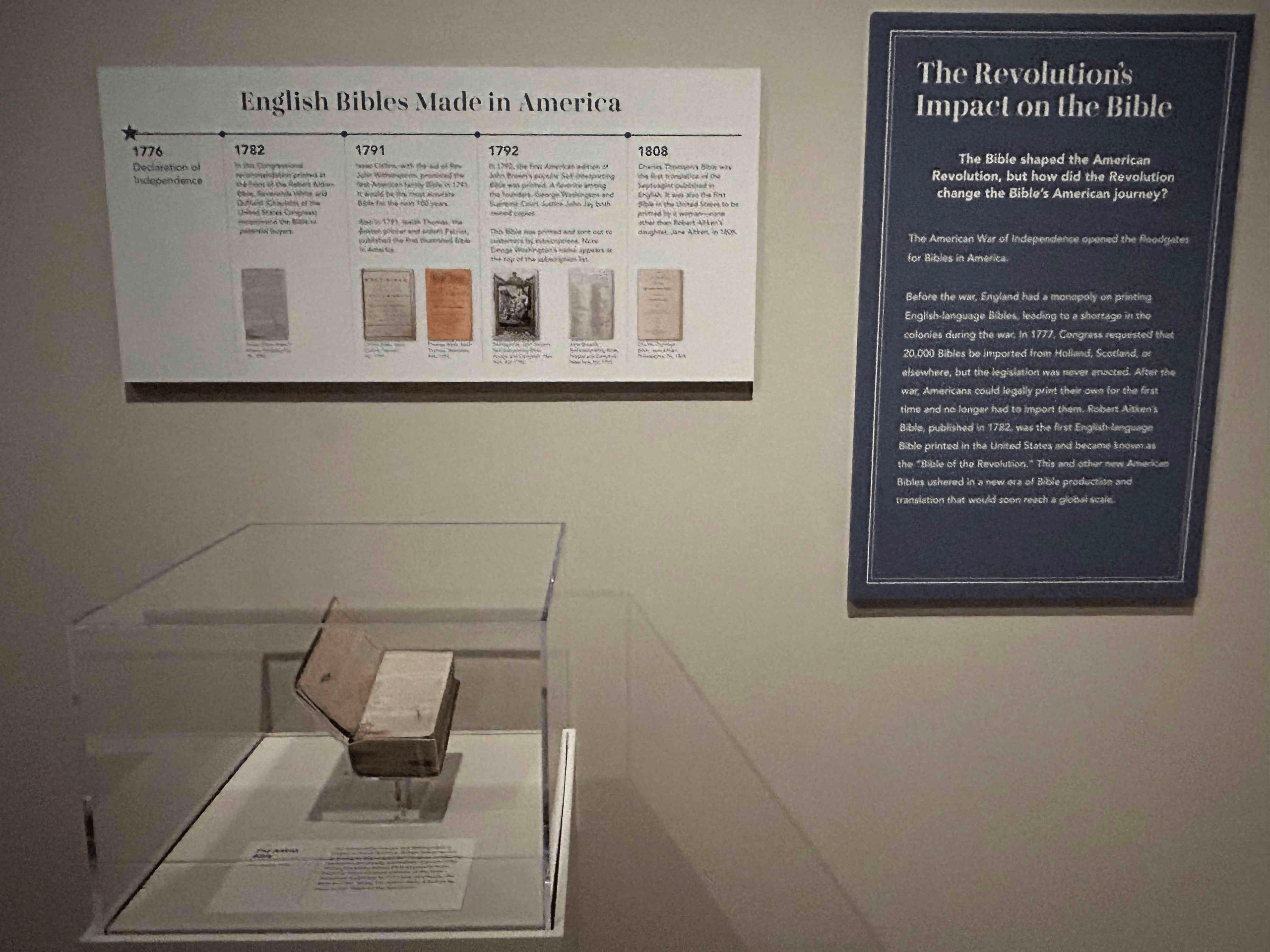
The second half of the floor continued showing the Bible’s influence through American history and beyond. We saw displays about the Bible during the Revolutionary period, the founding of the new nation, and the “American Experiment.” These exhibits connected biblical language and ideas to questions about liberty, authority, justice, responsibility, and the formation of government.
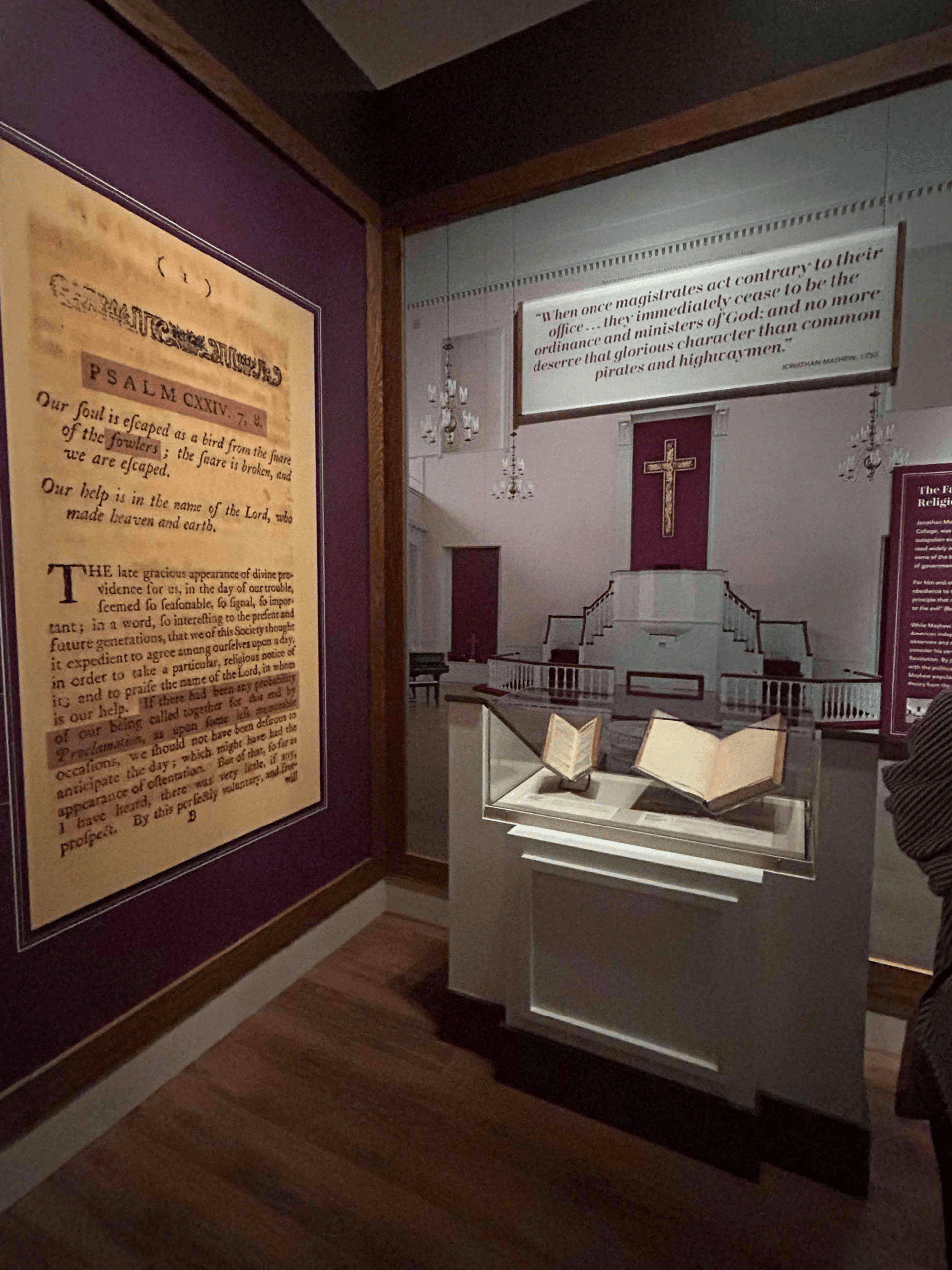
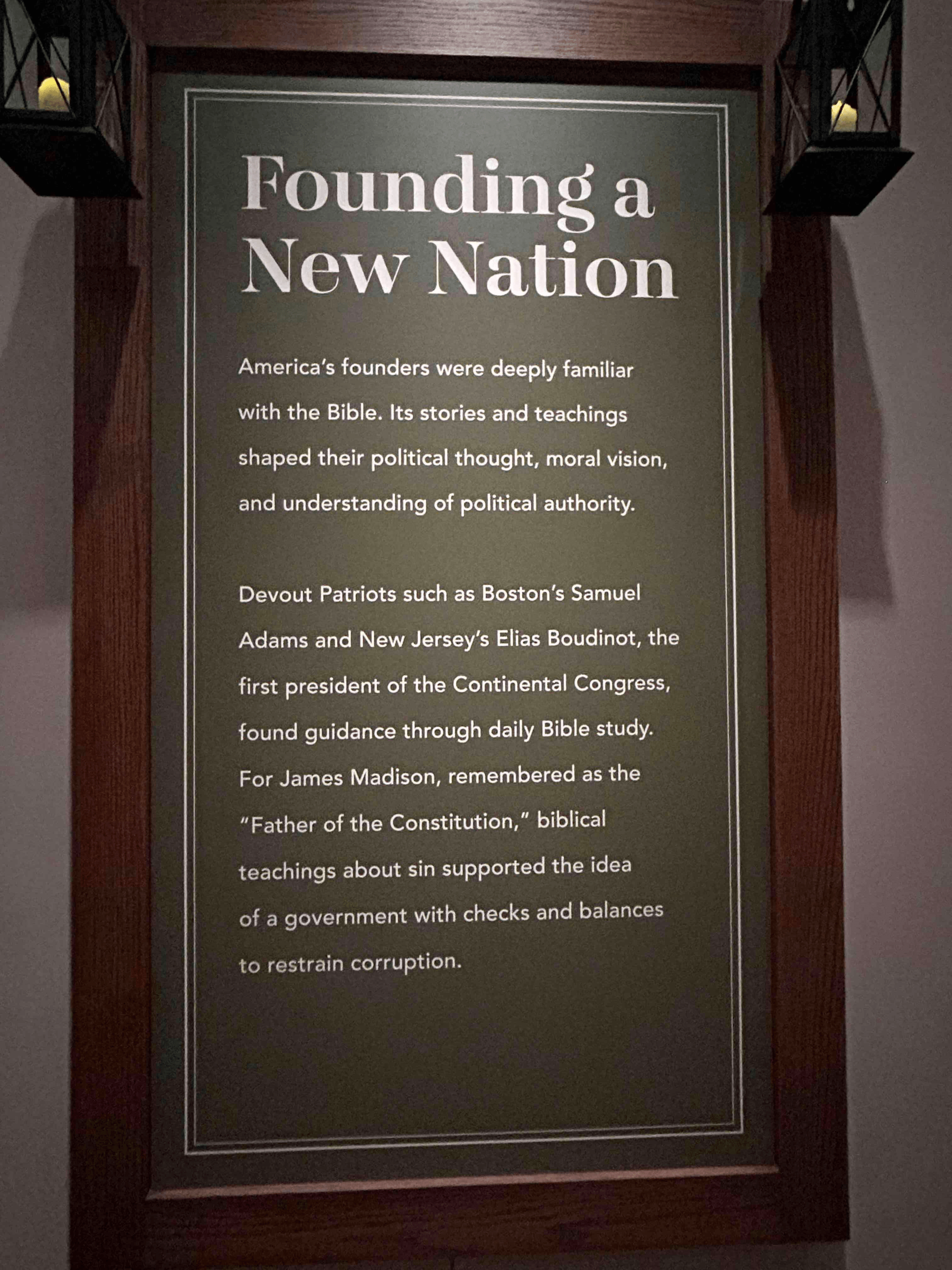
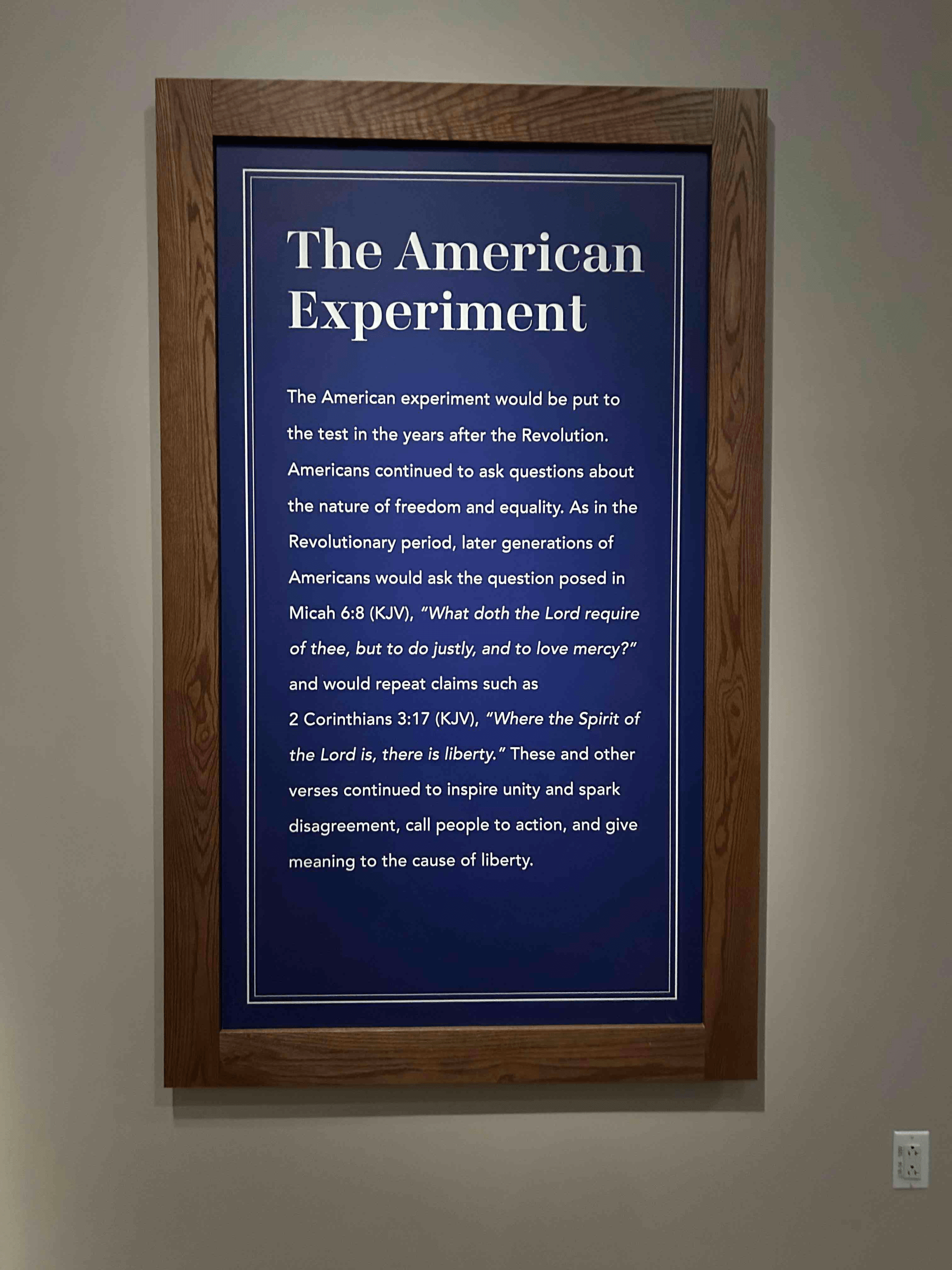
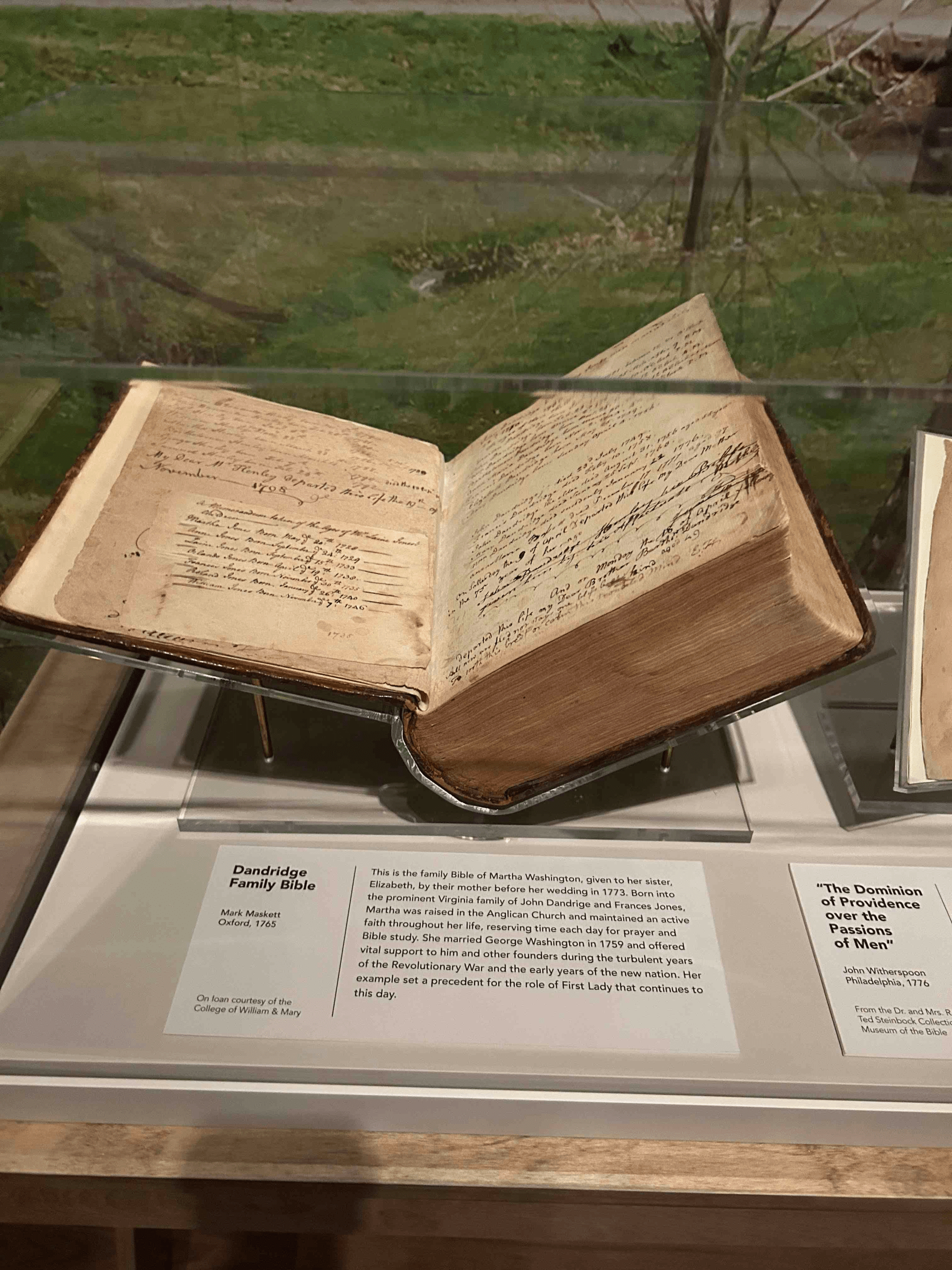
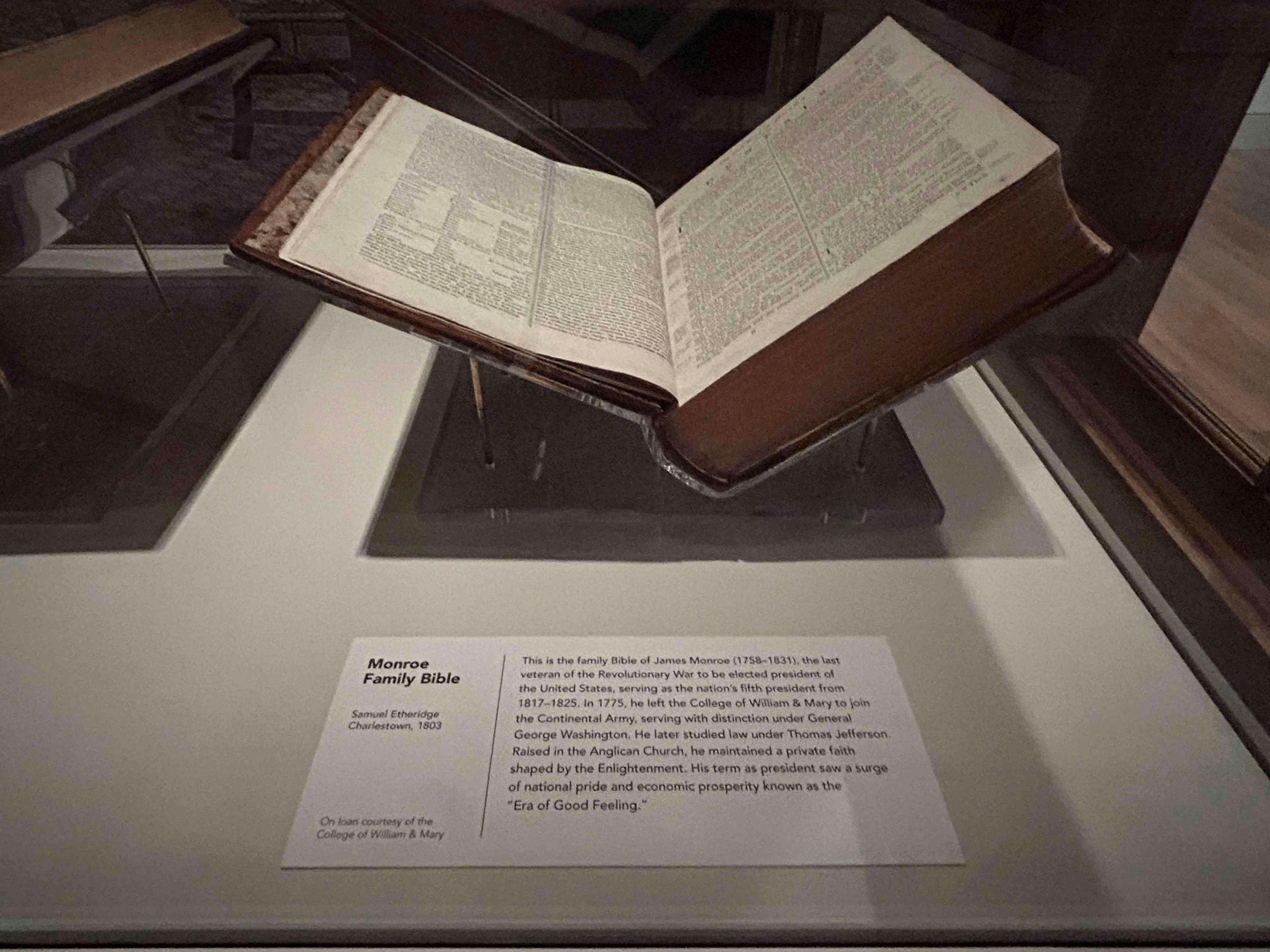
There were also displays tied to early American families and leaders, including John and Abigail Adams, Elias Boudinot, James Monroe, and Martha Washington. Seeing family Bibles and historic books connected to those names helped make the history feel a little more personal.
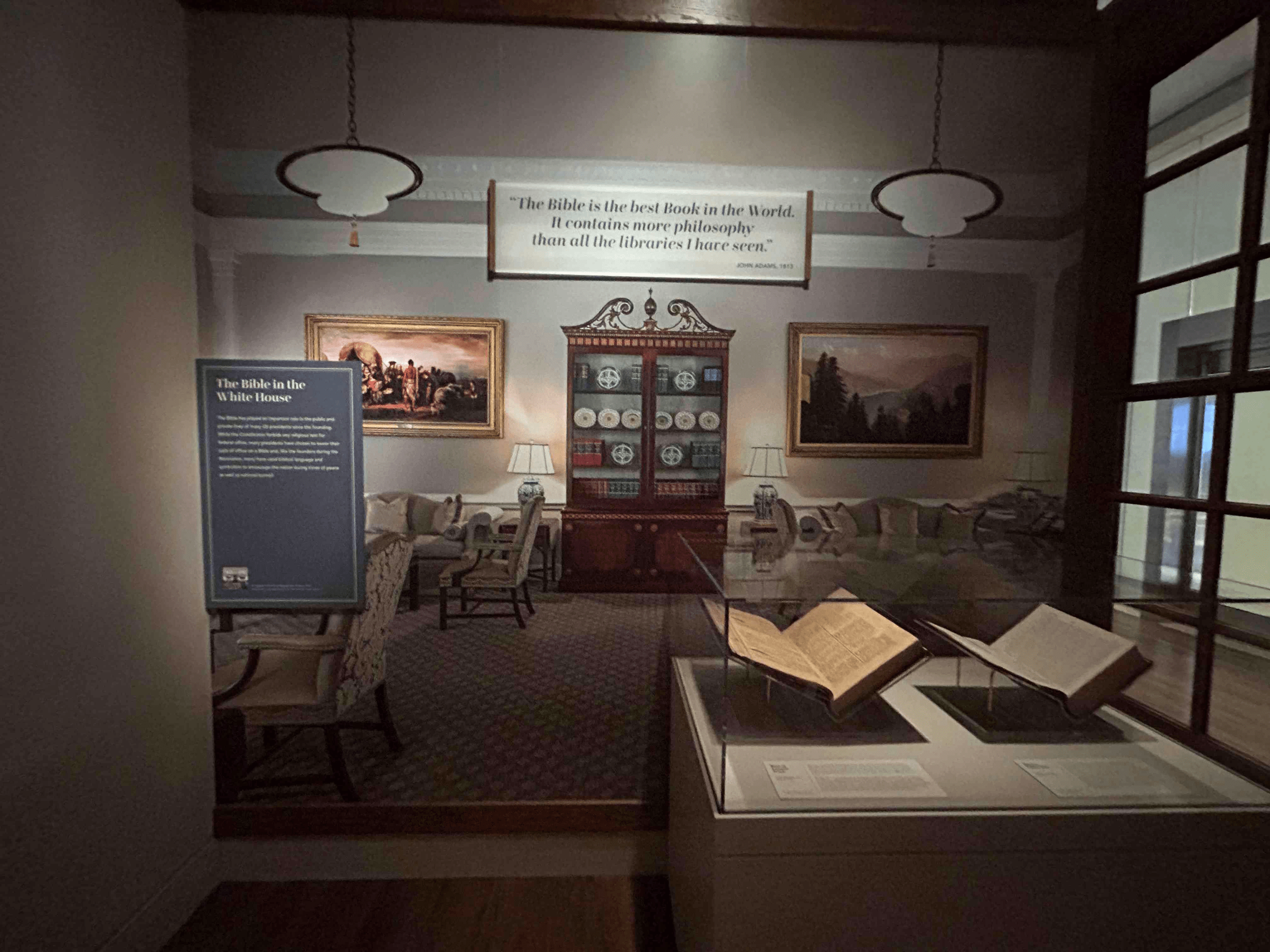
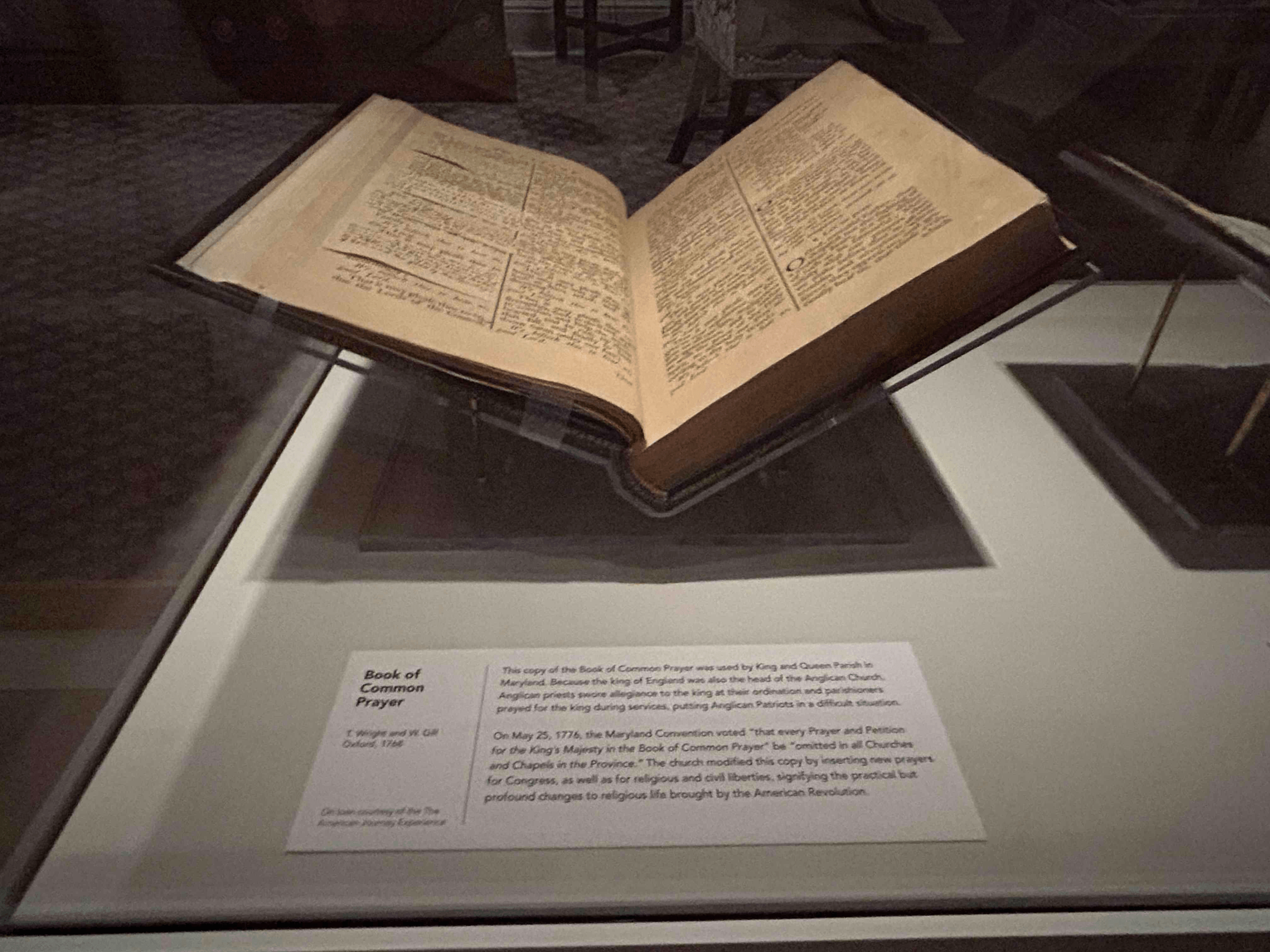
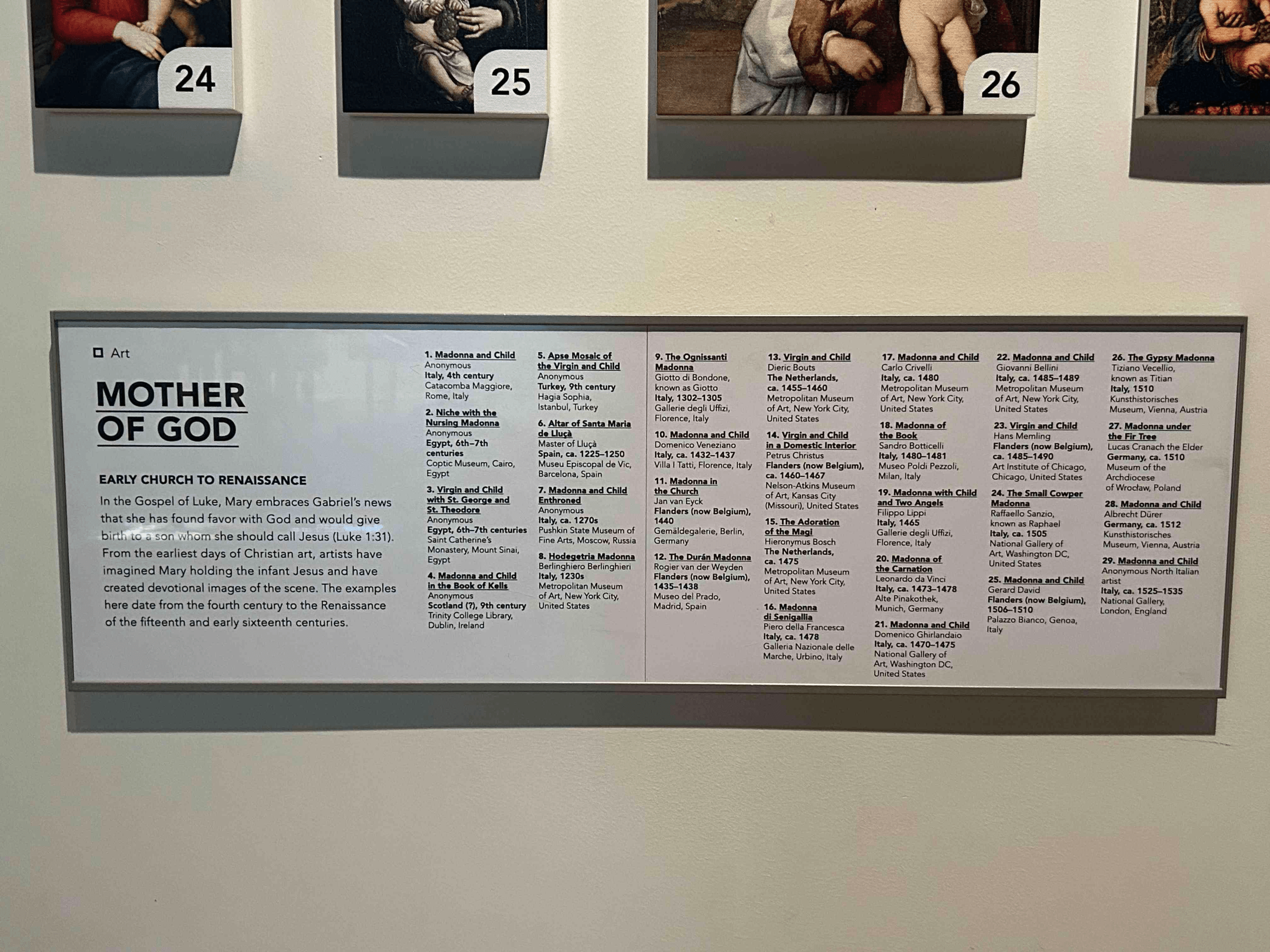
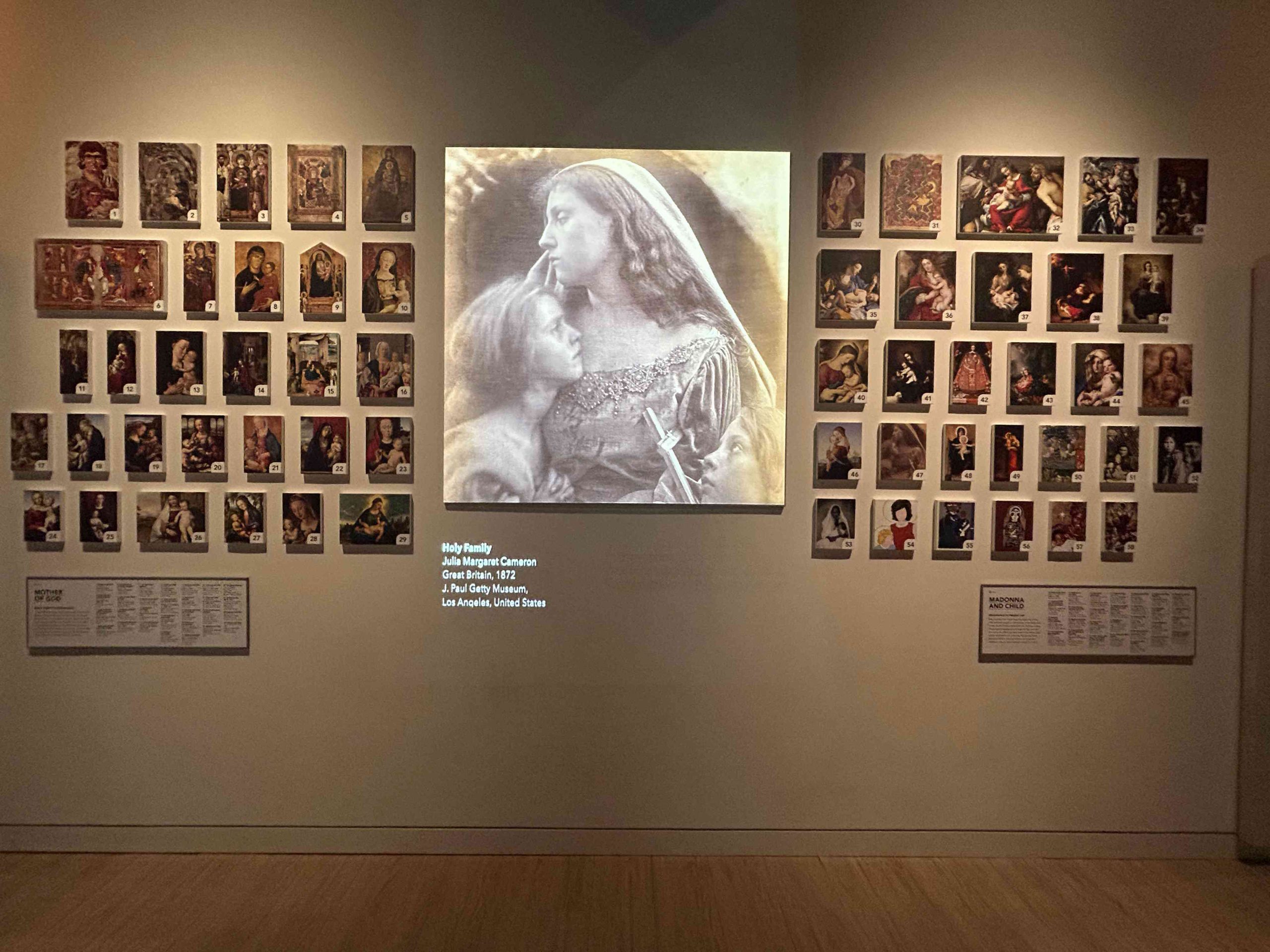
We also saw exhibits showing the Bible’s impact through art, architecture, family life, personal stories, and modern culture. One wall displayed many images of Mary and Jesus from different time periods and cultures, showing how the image of the Madonna and Child has been represented from the early church through the Renaissance and into more modern times.
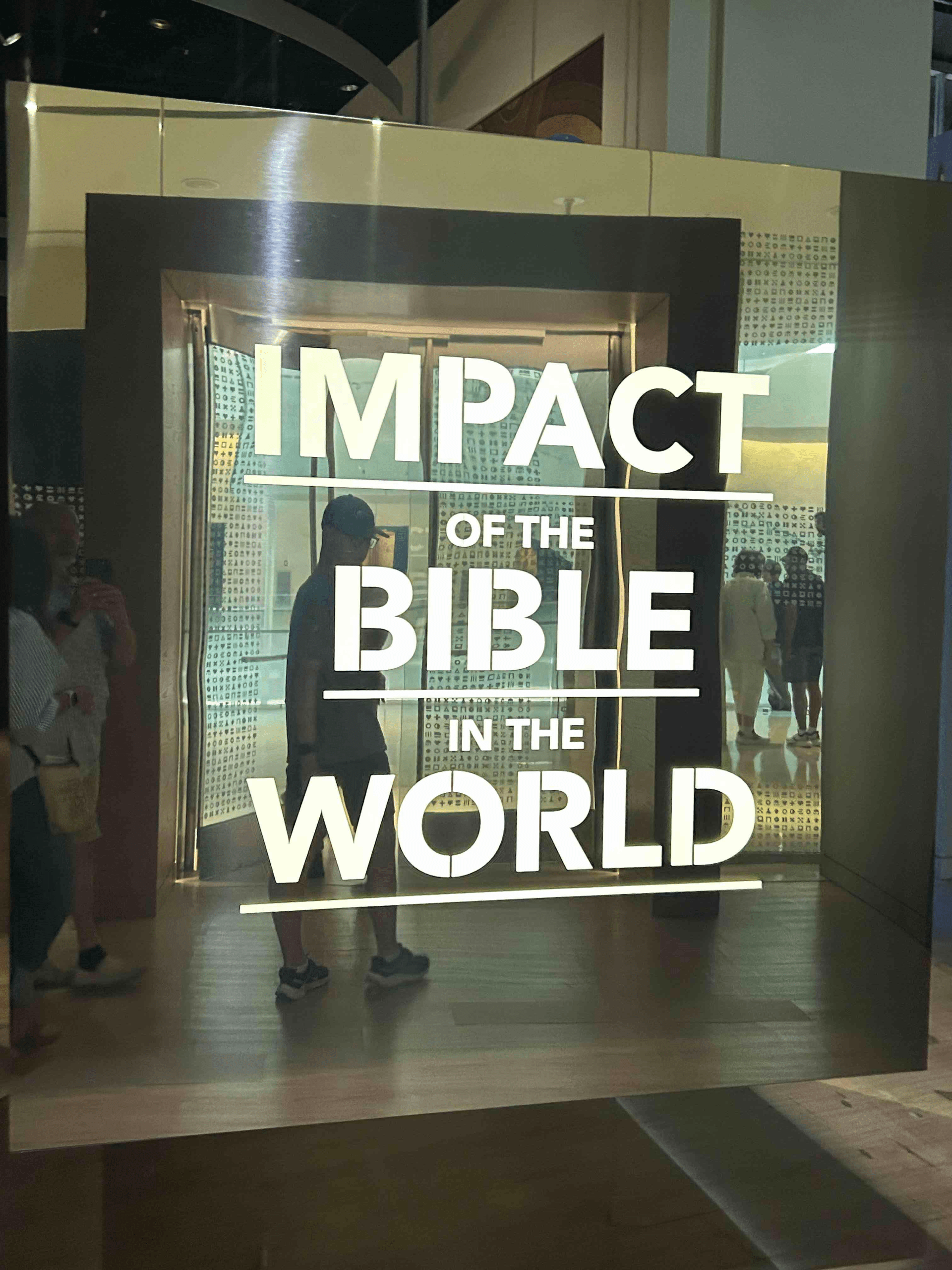
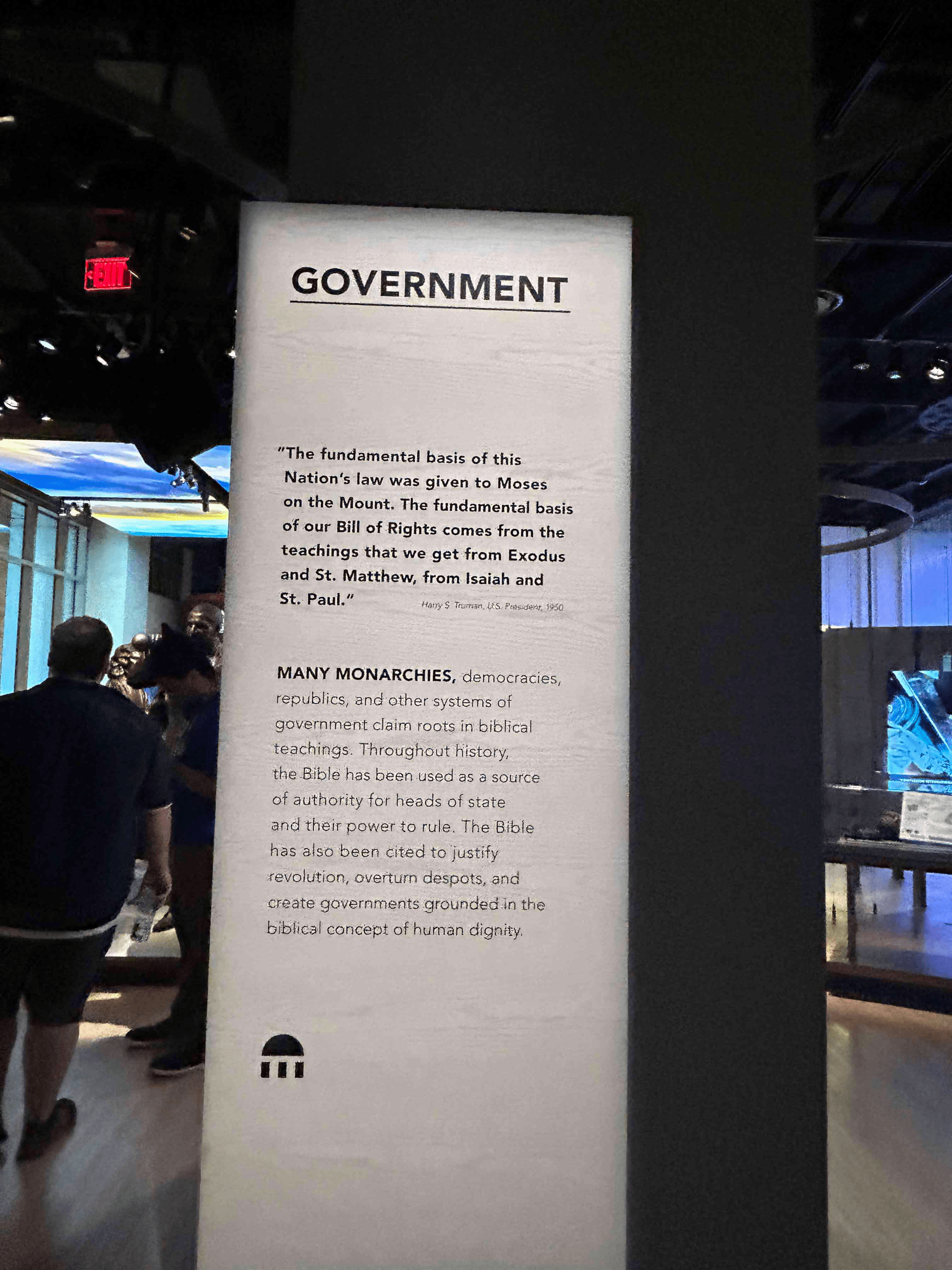
A large “Impact of the Bible in the World” display helped tie the floor together, with sections for government, education, justice, compassion, human rights, science, music, literature, art, architecture, everyday life, and more. It was a good reminder of how many areas of life and culture have been shaped by biblical language, stories, and ideas.
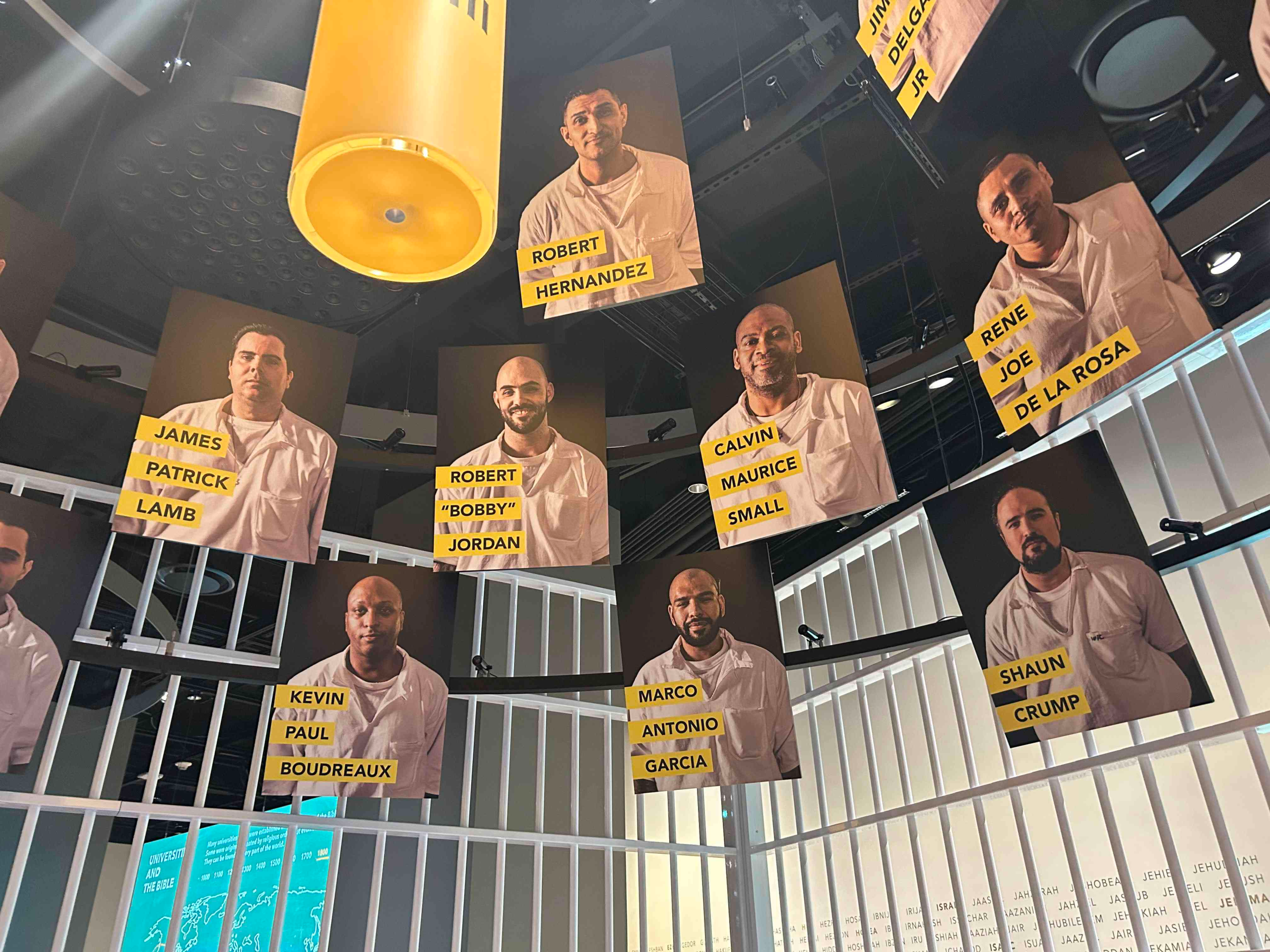
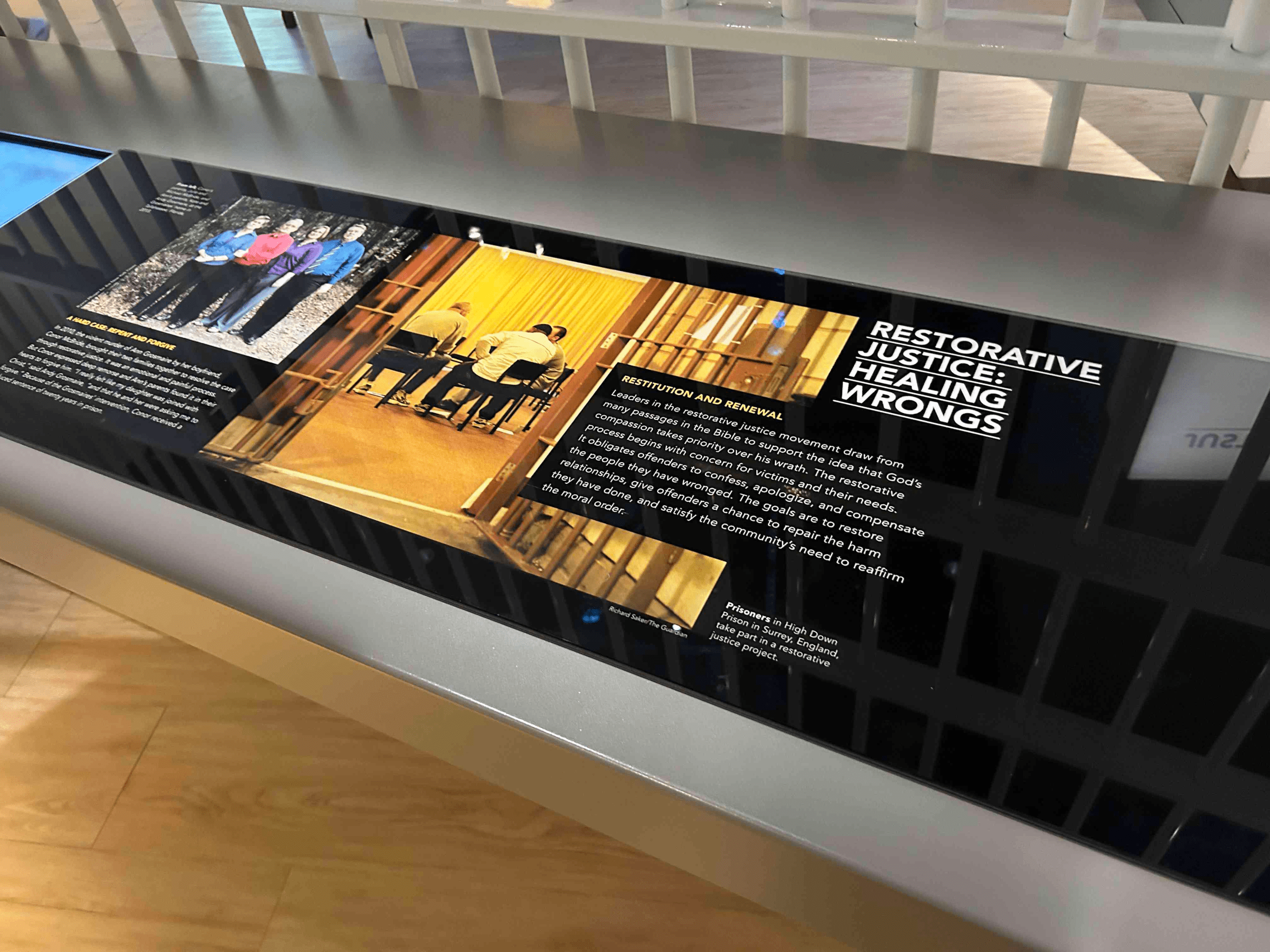
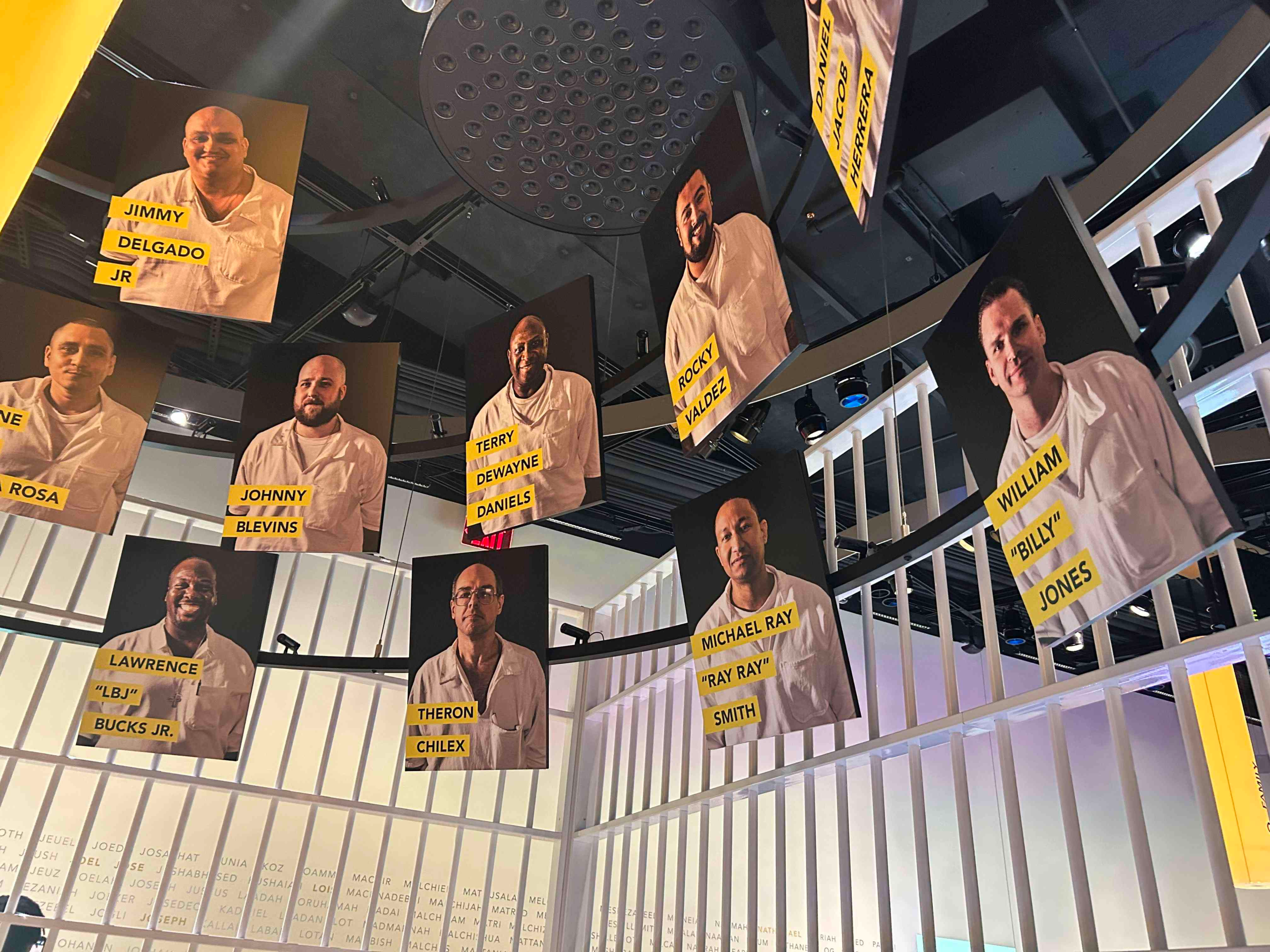
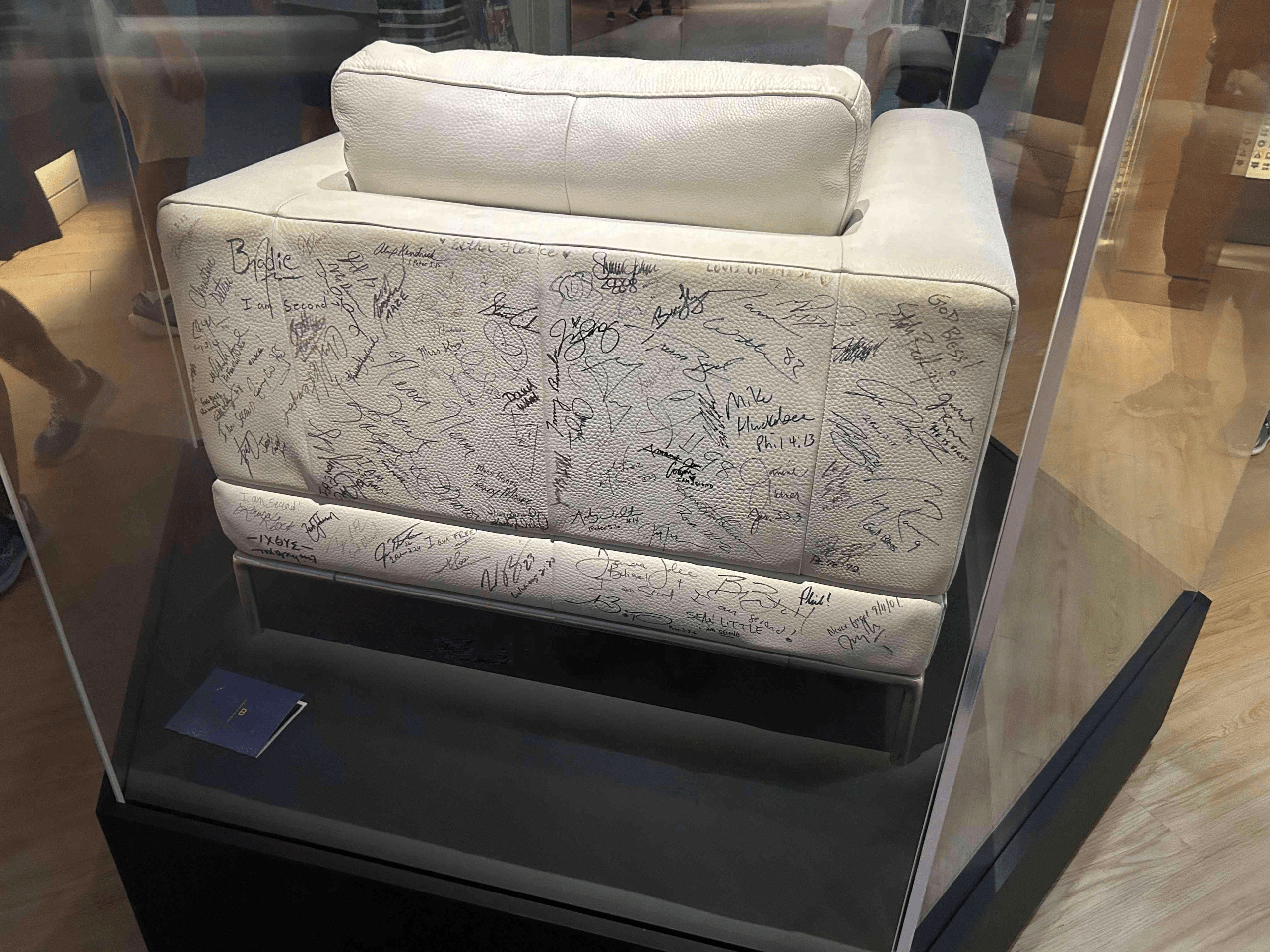
We also saw displays connected to prison ministry, restorative justice, and personal testimony, including the original I Am Second “White Chair,” signed by many of the people who had shared their stories through that ministry.
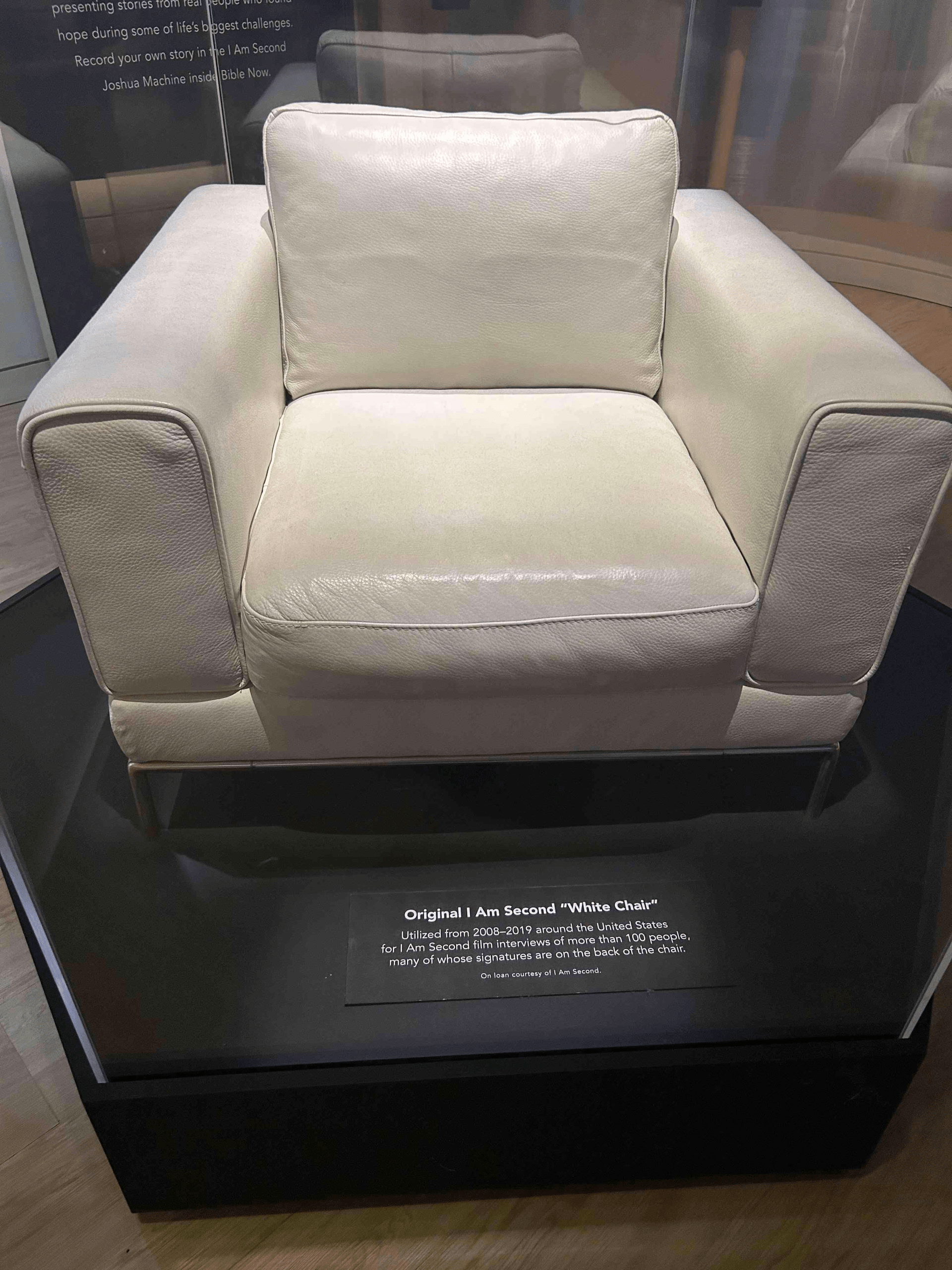
Floor 2 alone had taken a good part of the day. Some displays were inspiring, some were challenging, and many made us slow down and read a little more closely.
Before visiting the Dead Sea Scrolls, we did the Washington Revelations ride on Floor 5.
This six-minute “flight” takes you over and through several locations in Washington, D.C., highlighting biblical markings, imagery, and verses found throughout the city. According to the museum, the ride includes places like the Lincoln Memorial, the U.S. Capitol, and the Washington Monument as you discover biblical imagery and verses around Washington, D.C. It was a quick experience, but a fun way to see familiar landmarks from a different perspective before continuing through the museum.
This floor had a different feel from Floor 2. Where Floor 2 focused on the Bible’s impact in America and culture, this floor moved deeper into the history of the text itself, ancient manuscripts, religious communities, and how the Bible was preserved and passed down through time.
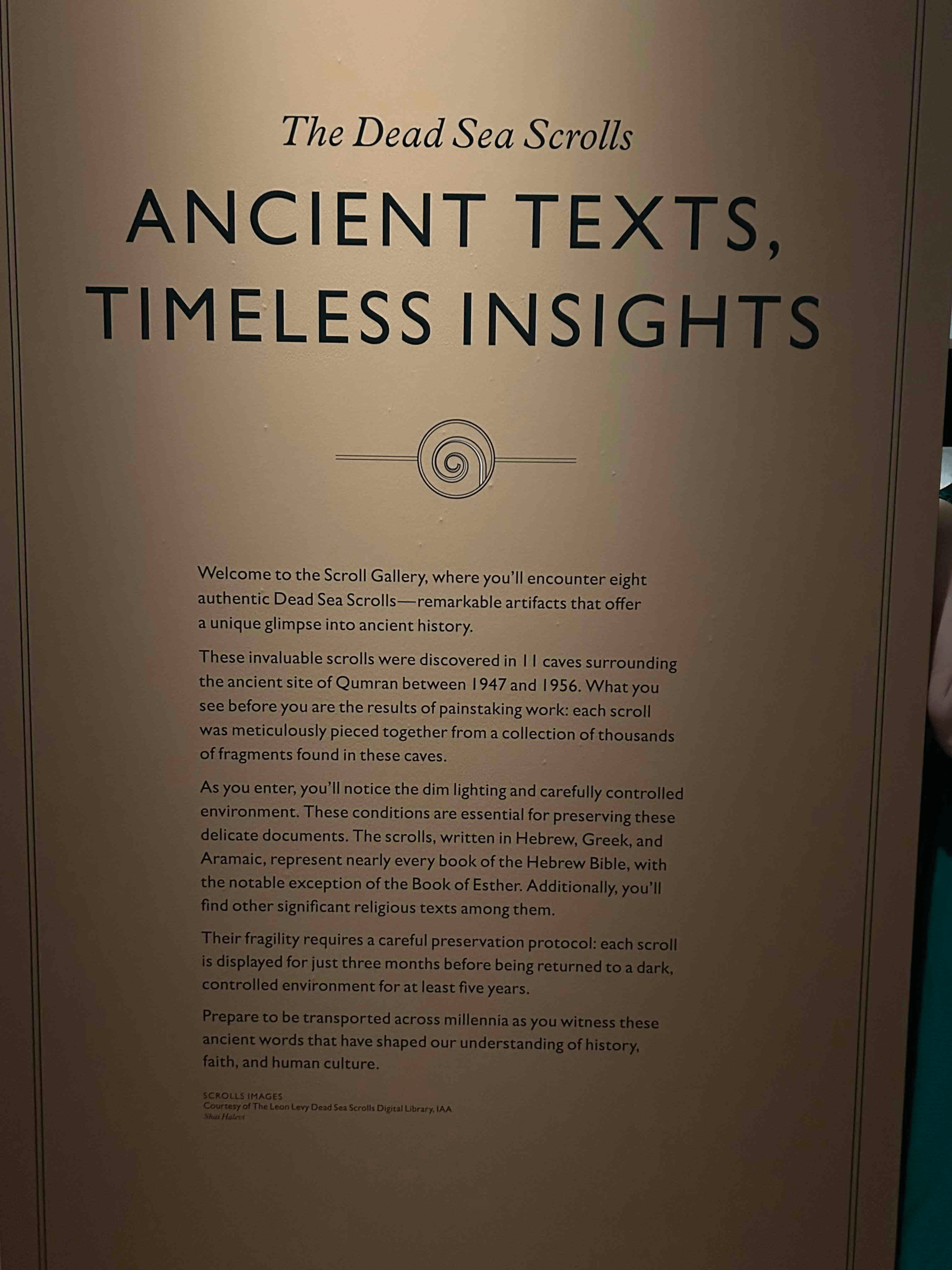
At 2:00, we visited the Dead Sea Scrolls that were on display. Seeing something with that much history attached to it was definitely one of the highlights of the visit.
Another fascinating part of the museum focused on ancient Jerusalem, the Second Temple period, and the Dead Sea Scrolls.
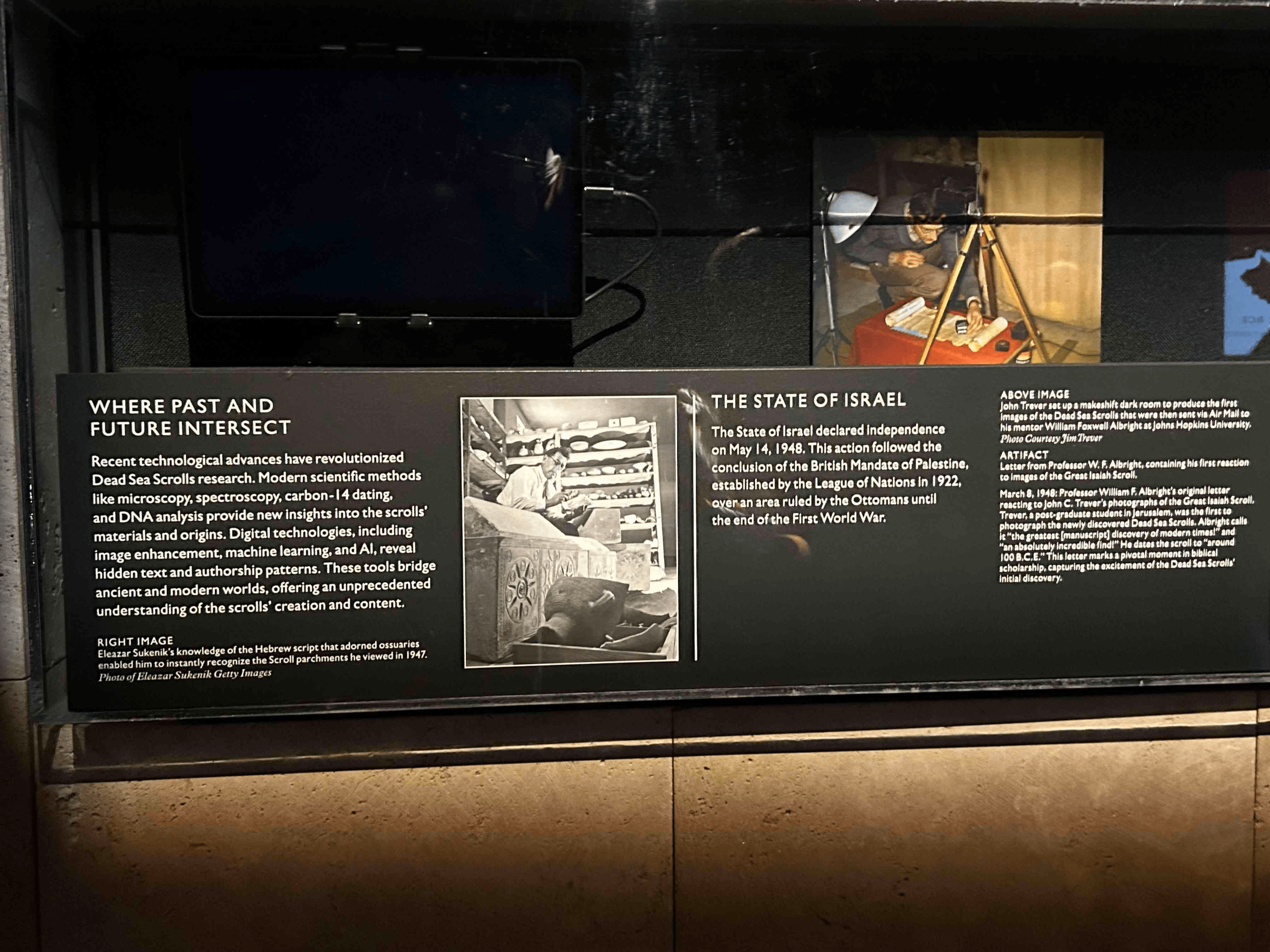
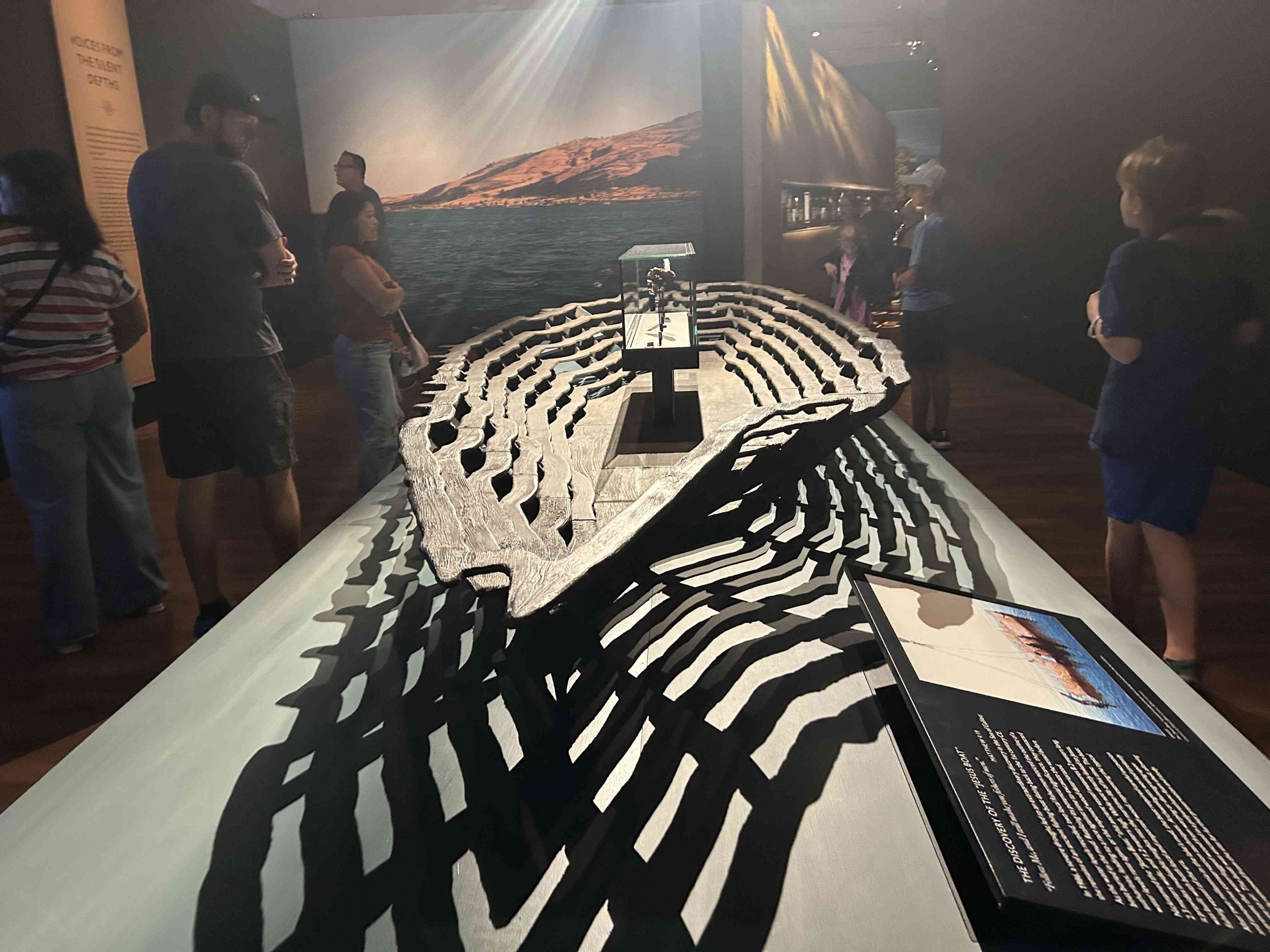
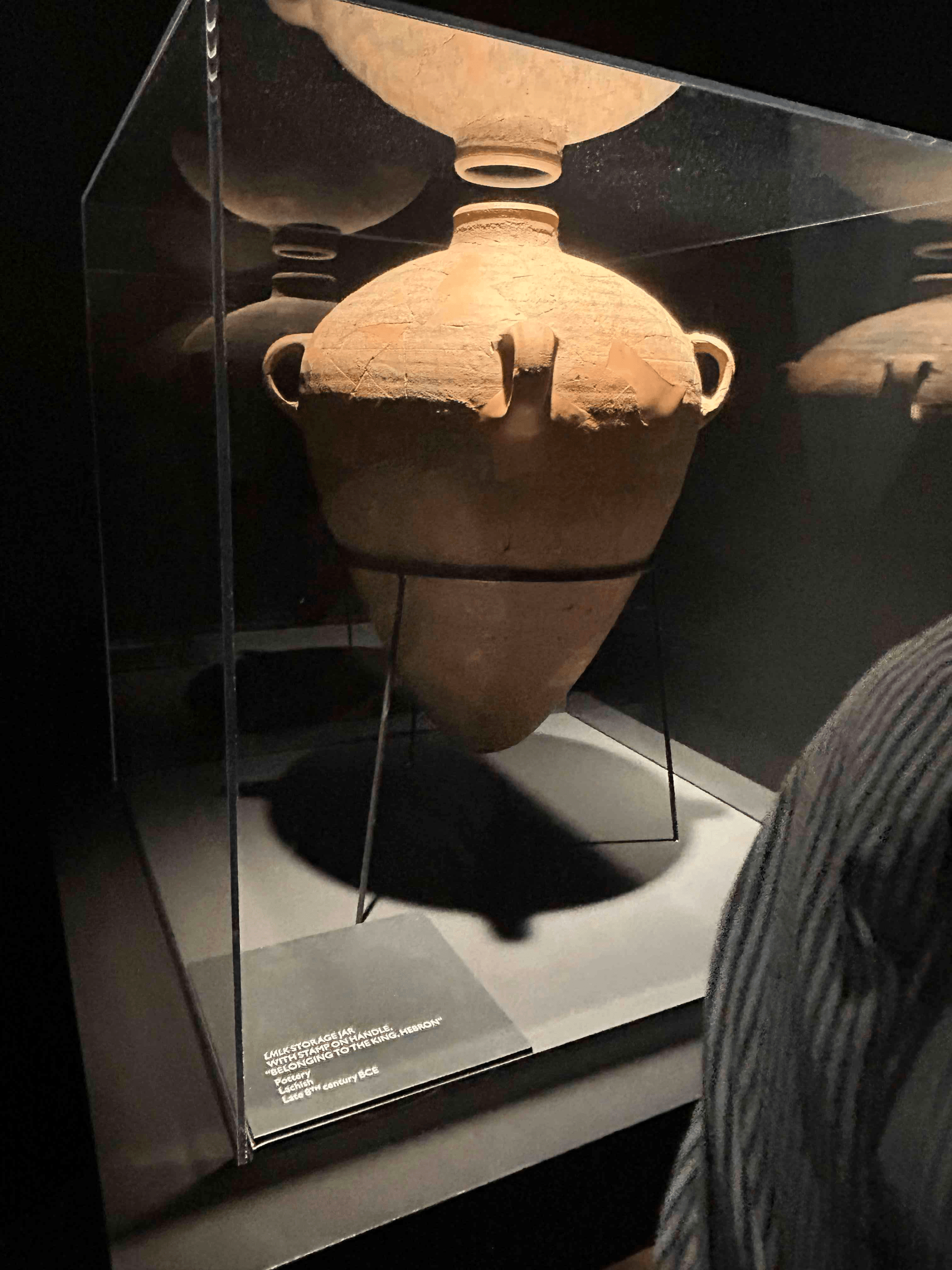
We saw displays connected to ancient Jewish worship, early Christianity, and the religious world surrounding Jerusalem and Galilee. One exhibit focused on the Magdala Stone, described as an artifact from ancient Jewish worship with carvings connected to the Jerusalem Temple. Another display walked through a “Journey to Jerusalem,” helping visitors imagine what it would have been like for pilgrims traveling from Galilee toward the holy city during the Second Temple period.
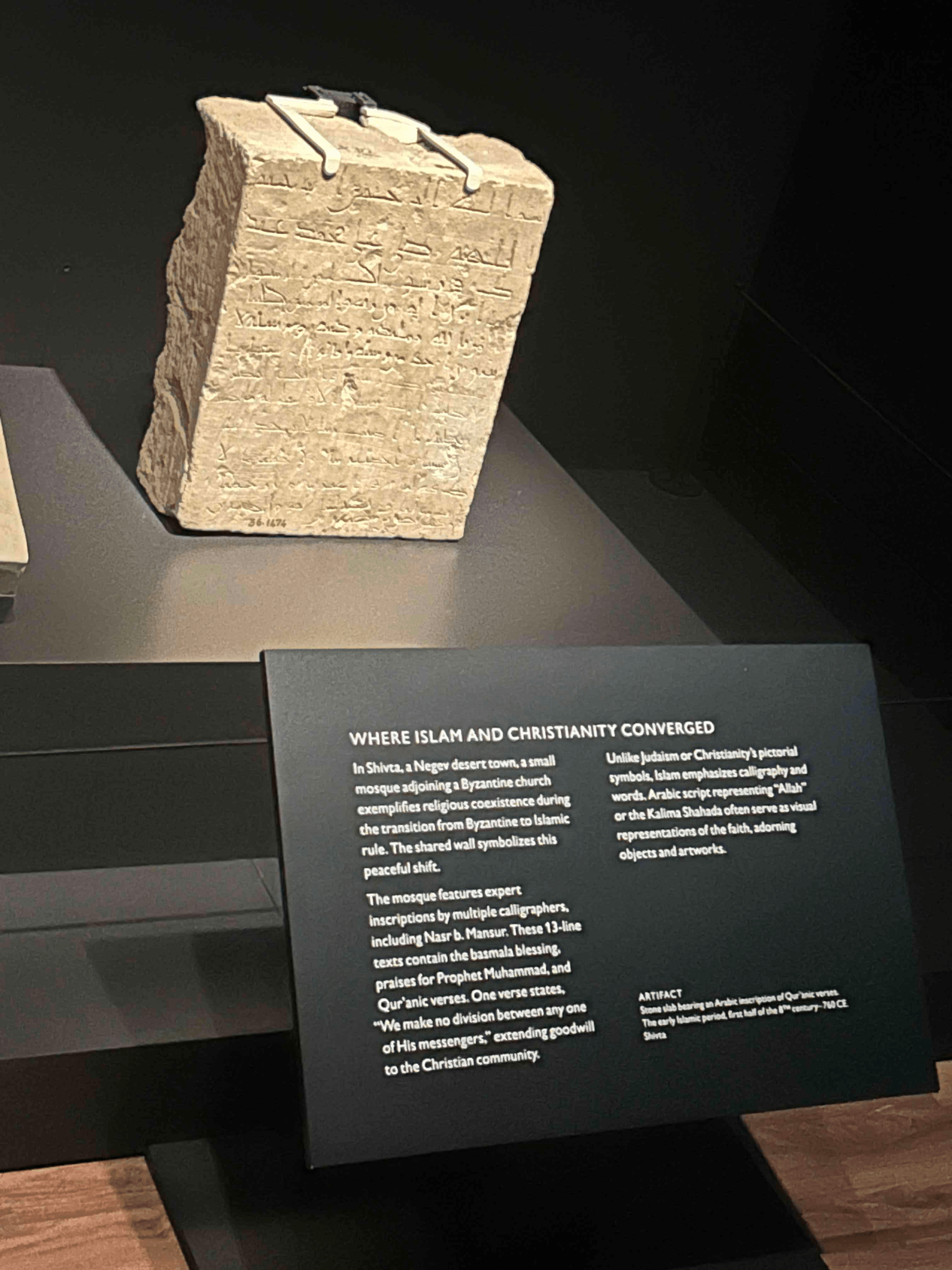
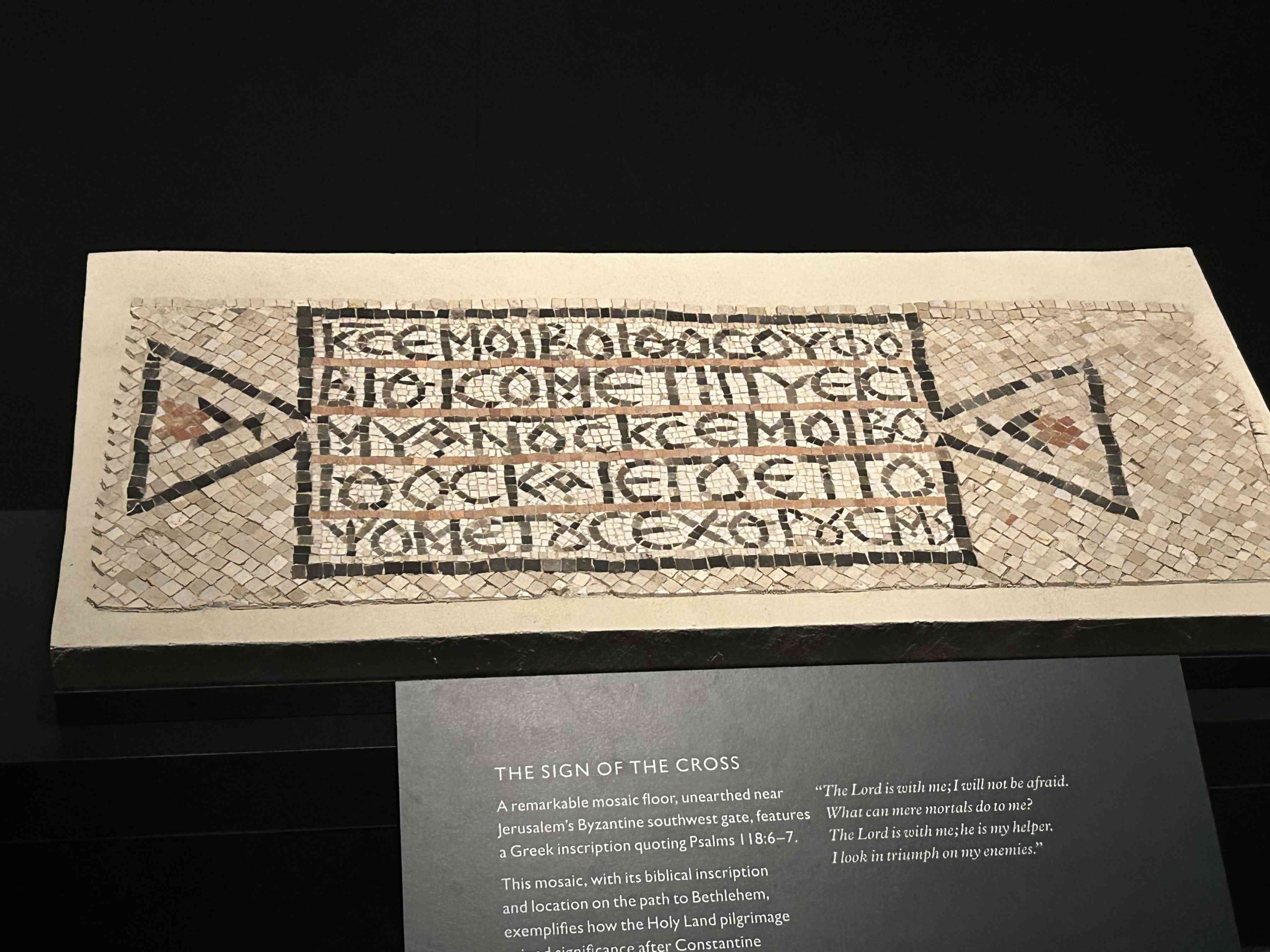
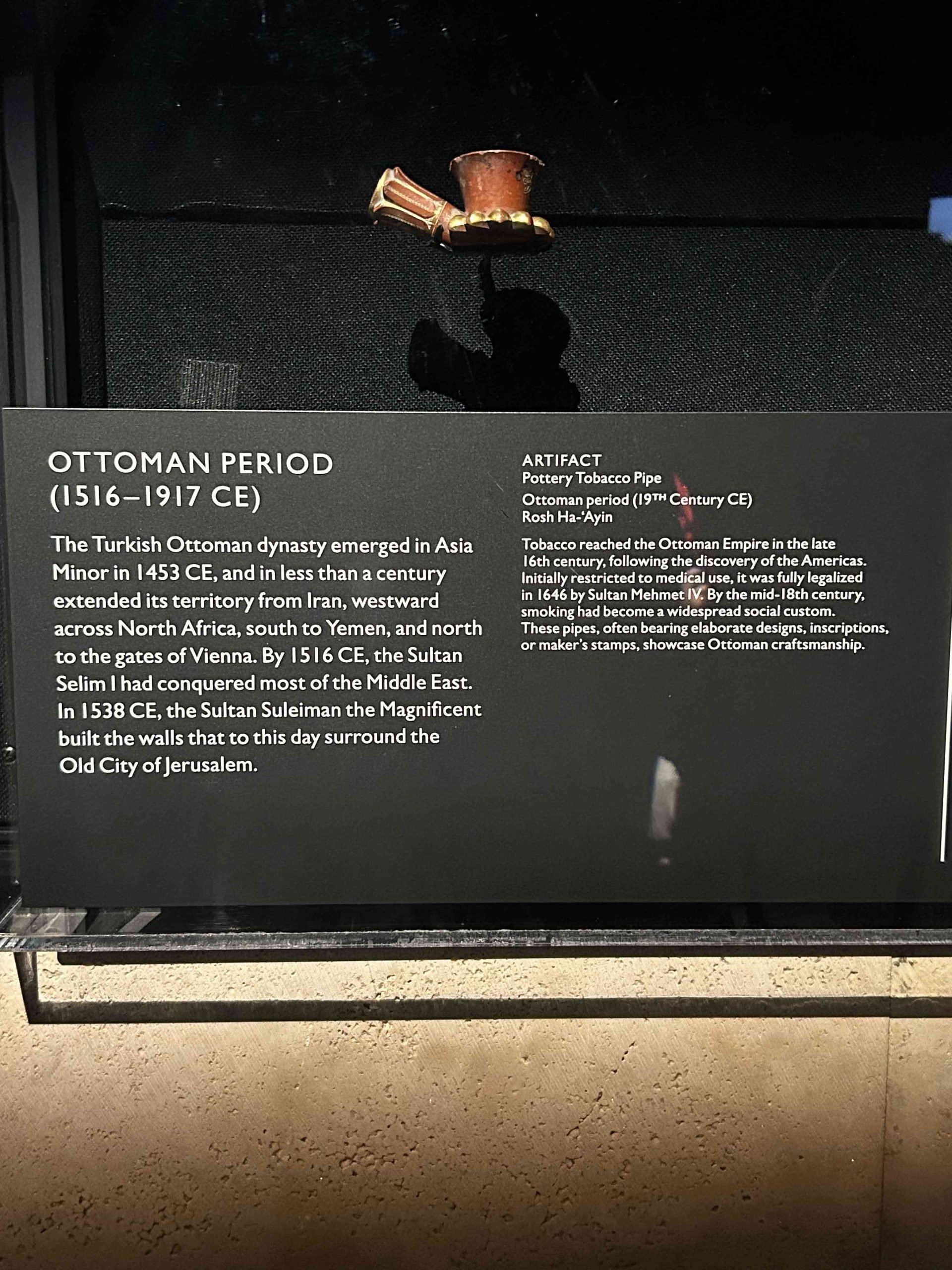
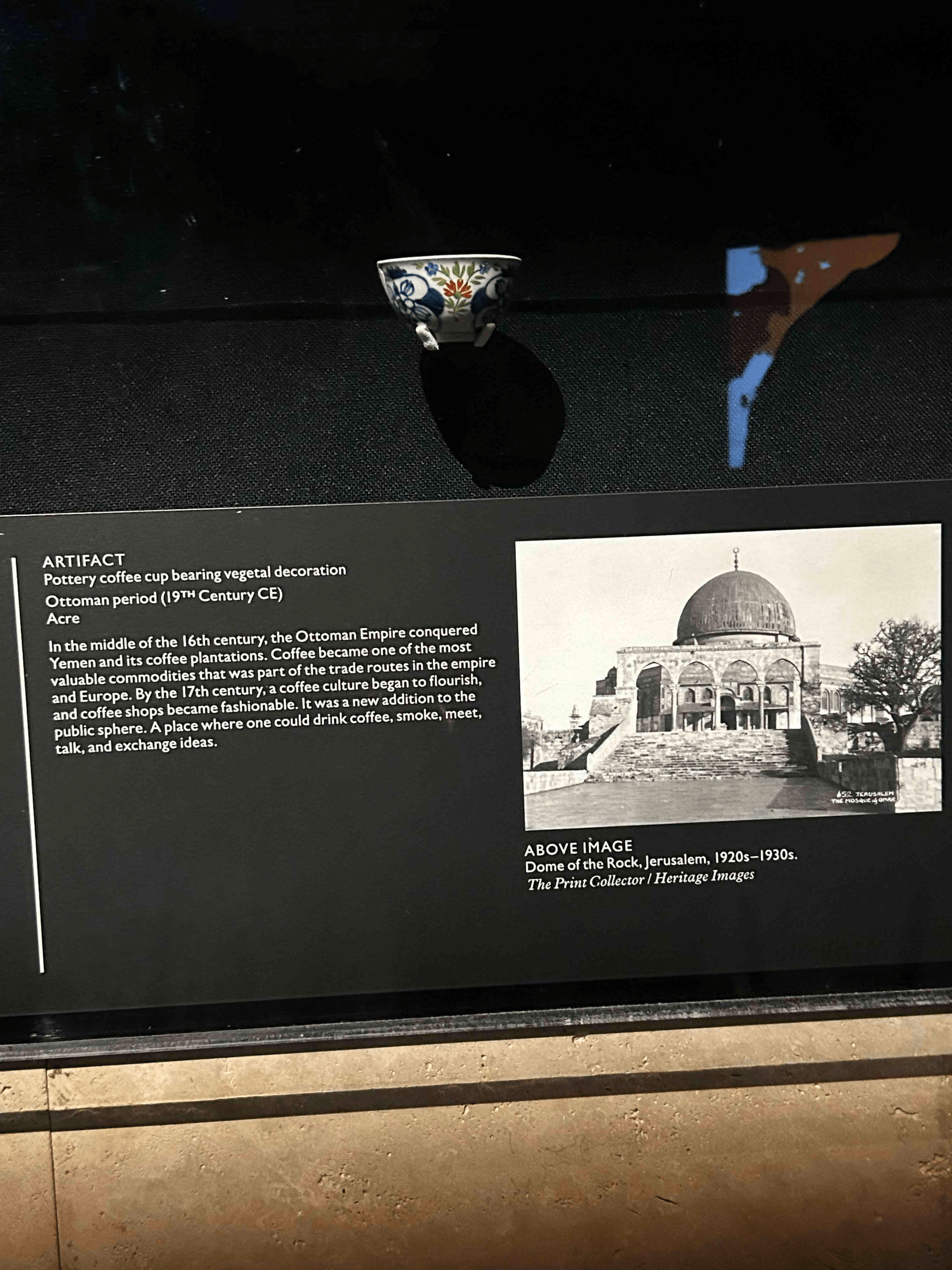
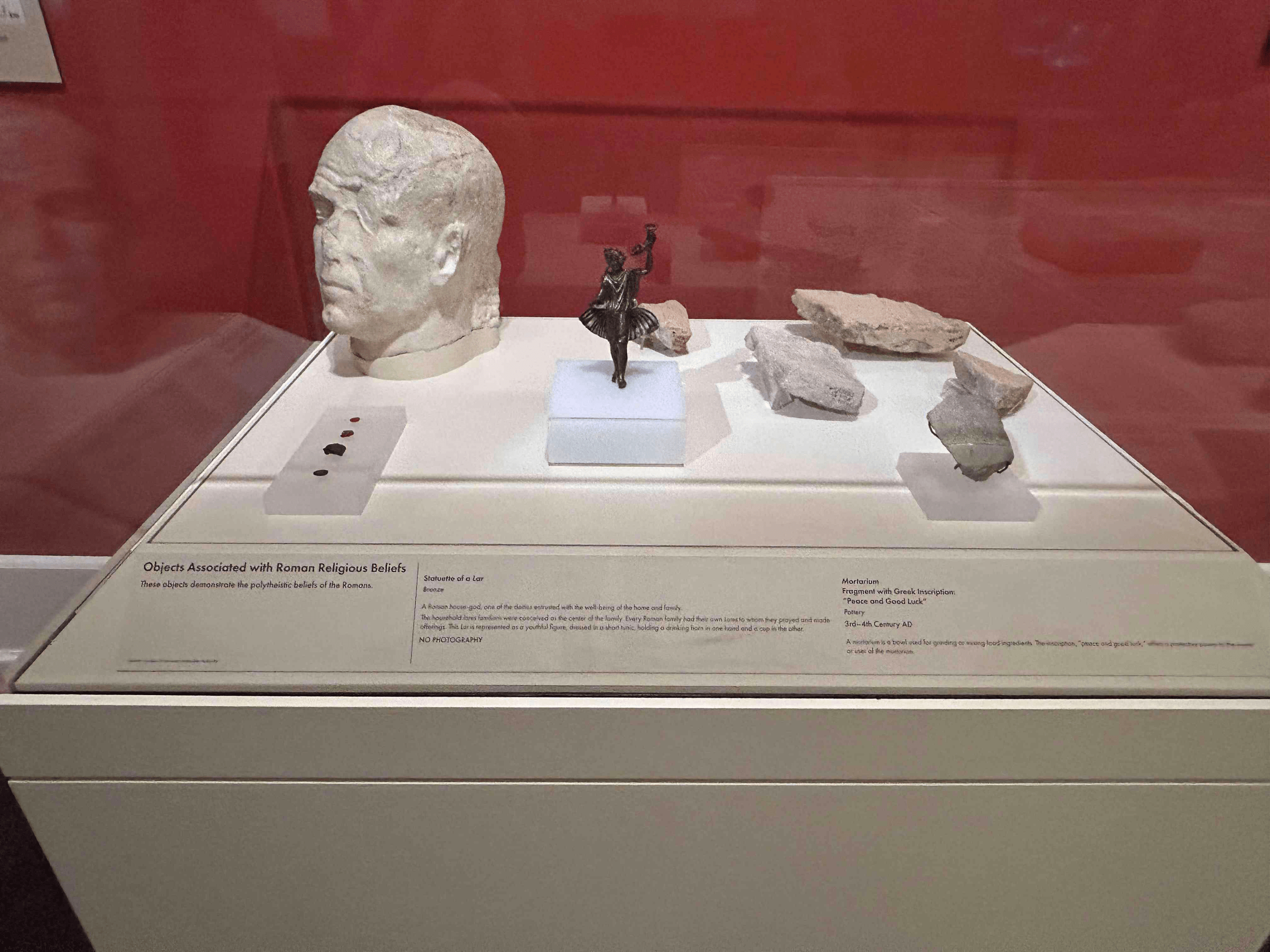
There were also artifacts from different time periods and cultures, including pottery, lamps, inscriptions, mosaics, and small fragments that helped show how faith, language, worship, and daily life intersected in the ancient world. One mosaic display, “The Sign of the Cross,” included a Greek inscription quoting from Psalms. Another artifact showed where Islam and Christianity converged in Shivta, a Negev desert town where a mosque adjoined a Byzantine church during the transition from Byzantine to Islamic rule. The shared wall symbolized a peaceful shift and showed how religious communities could coexist in that place and time.
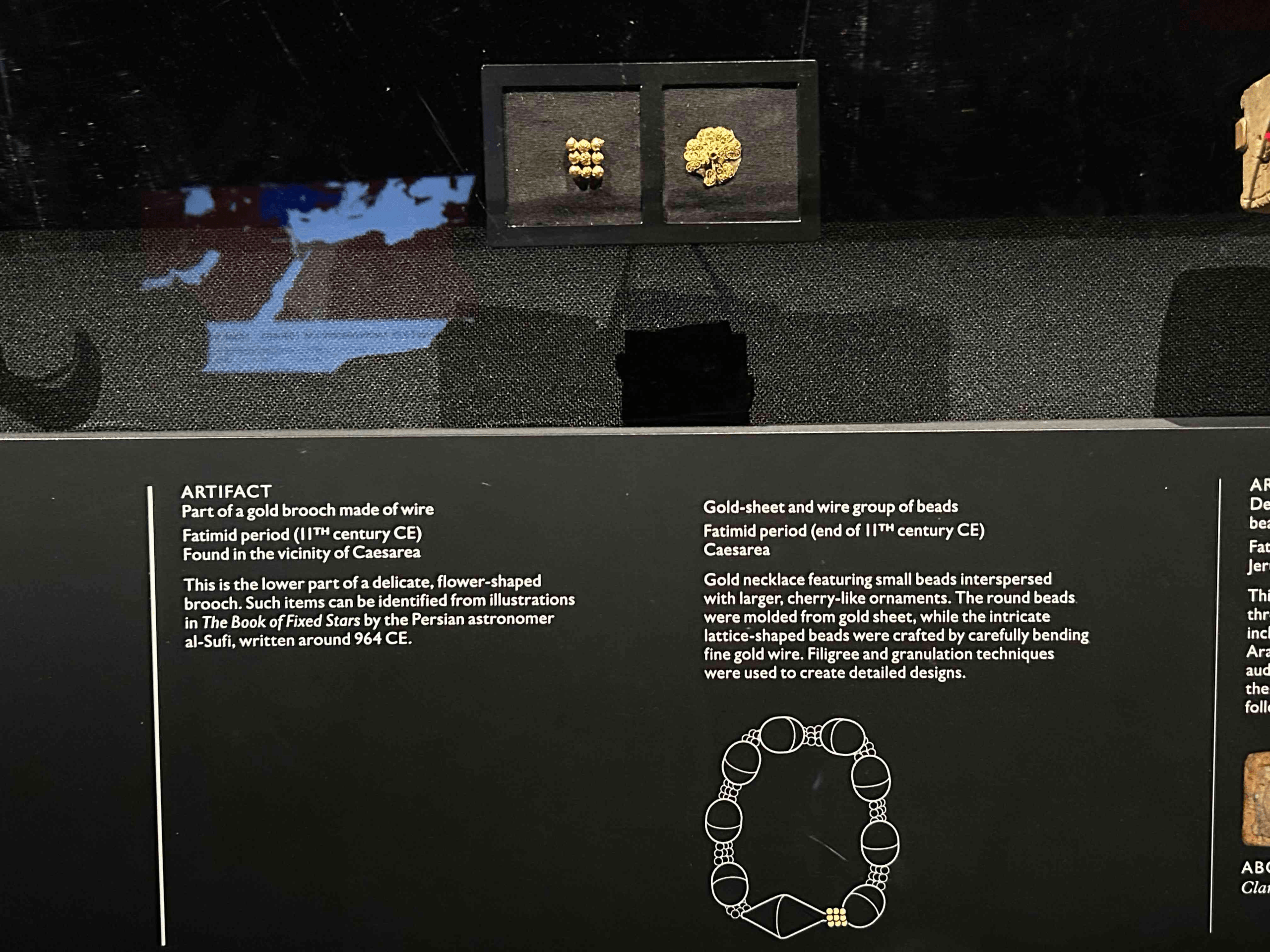
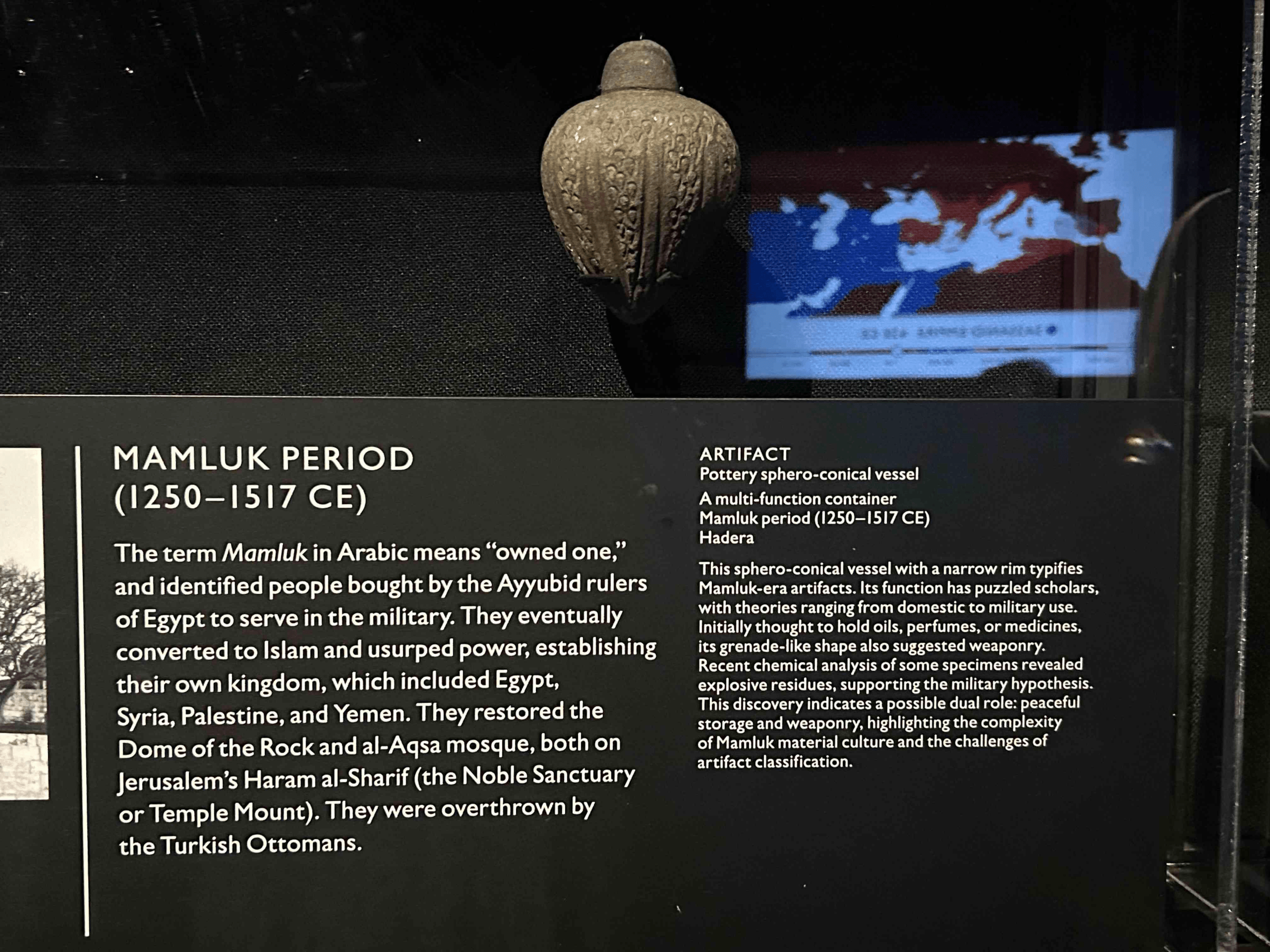
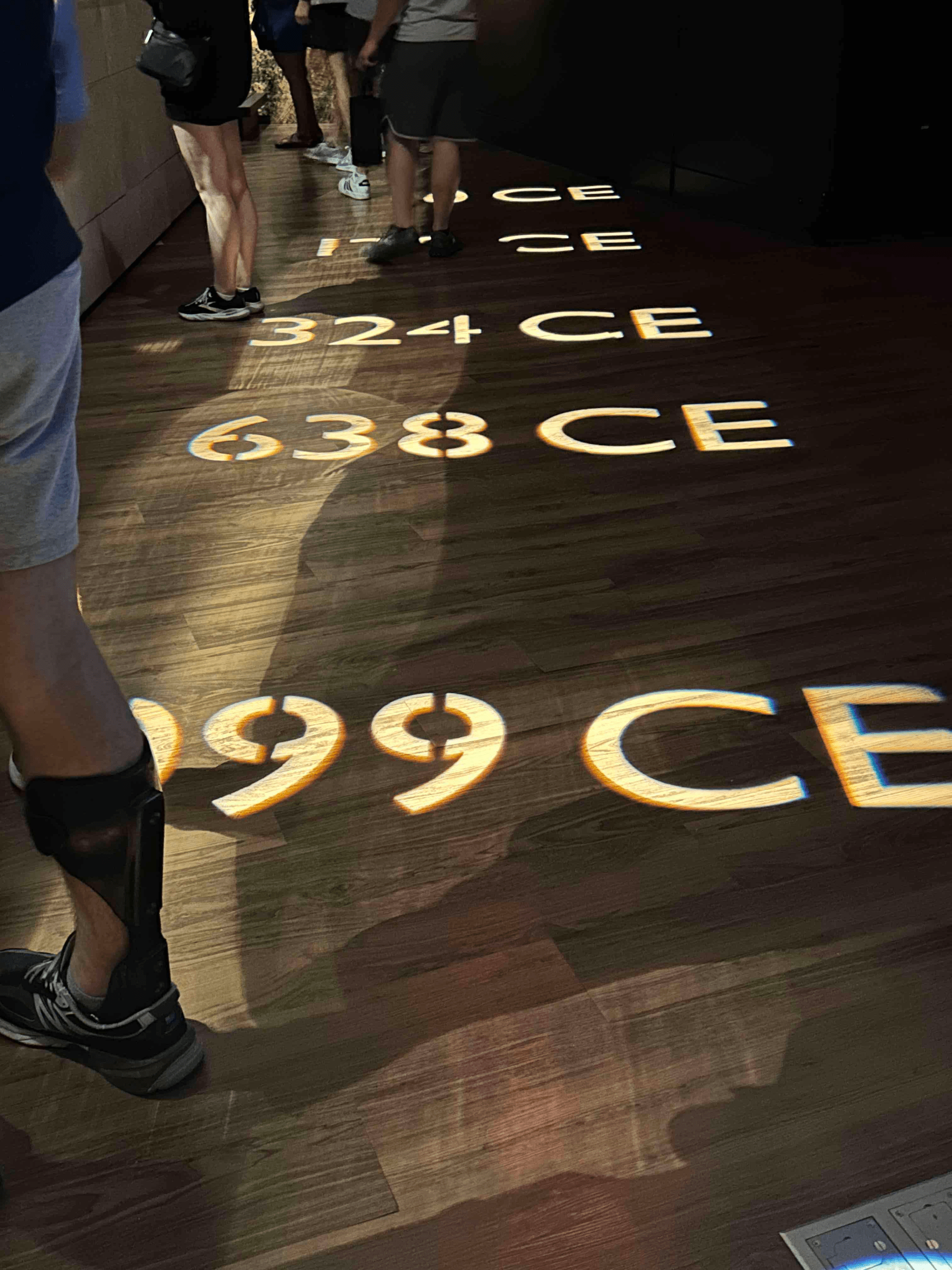
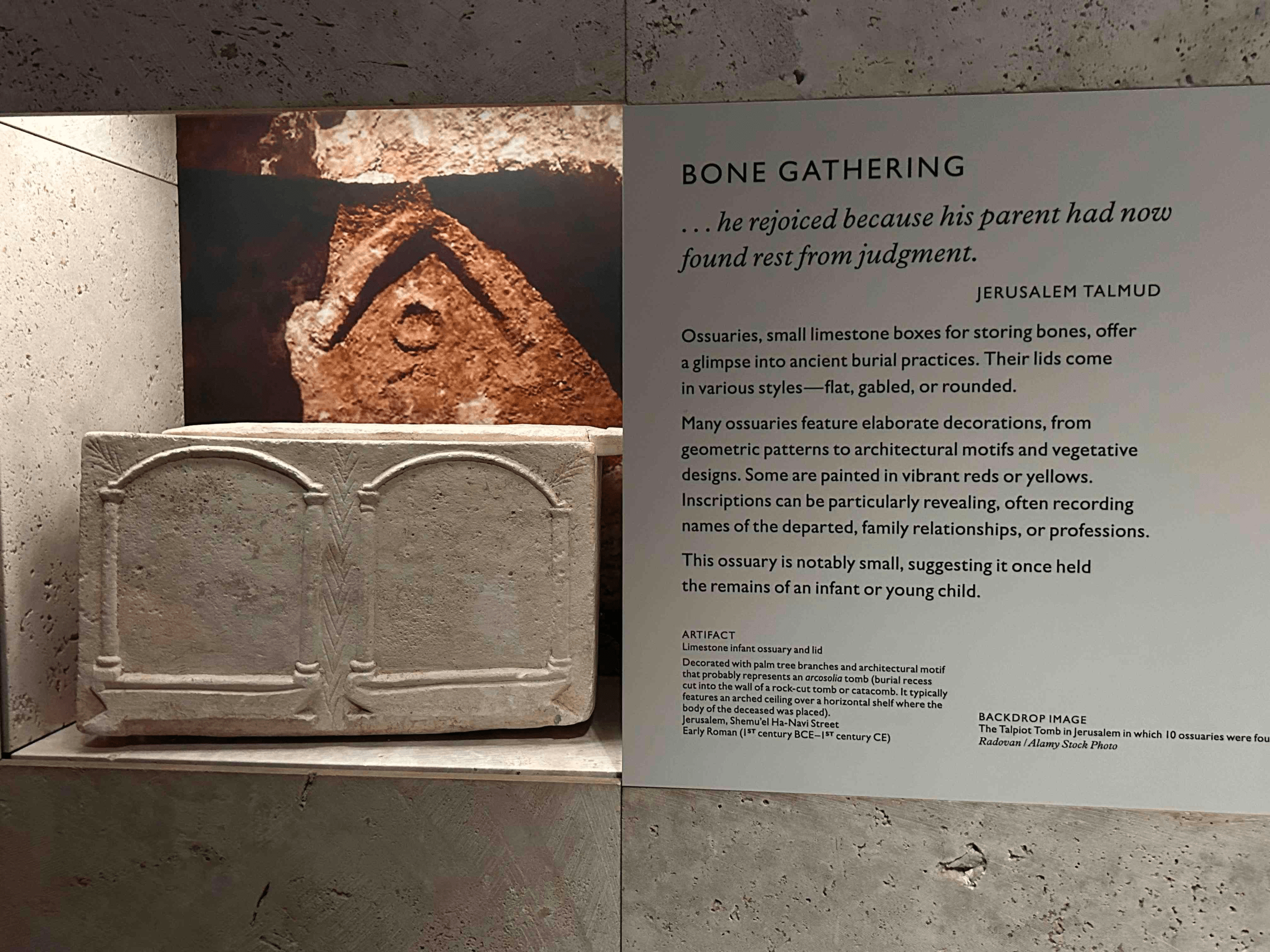
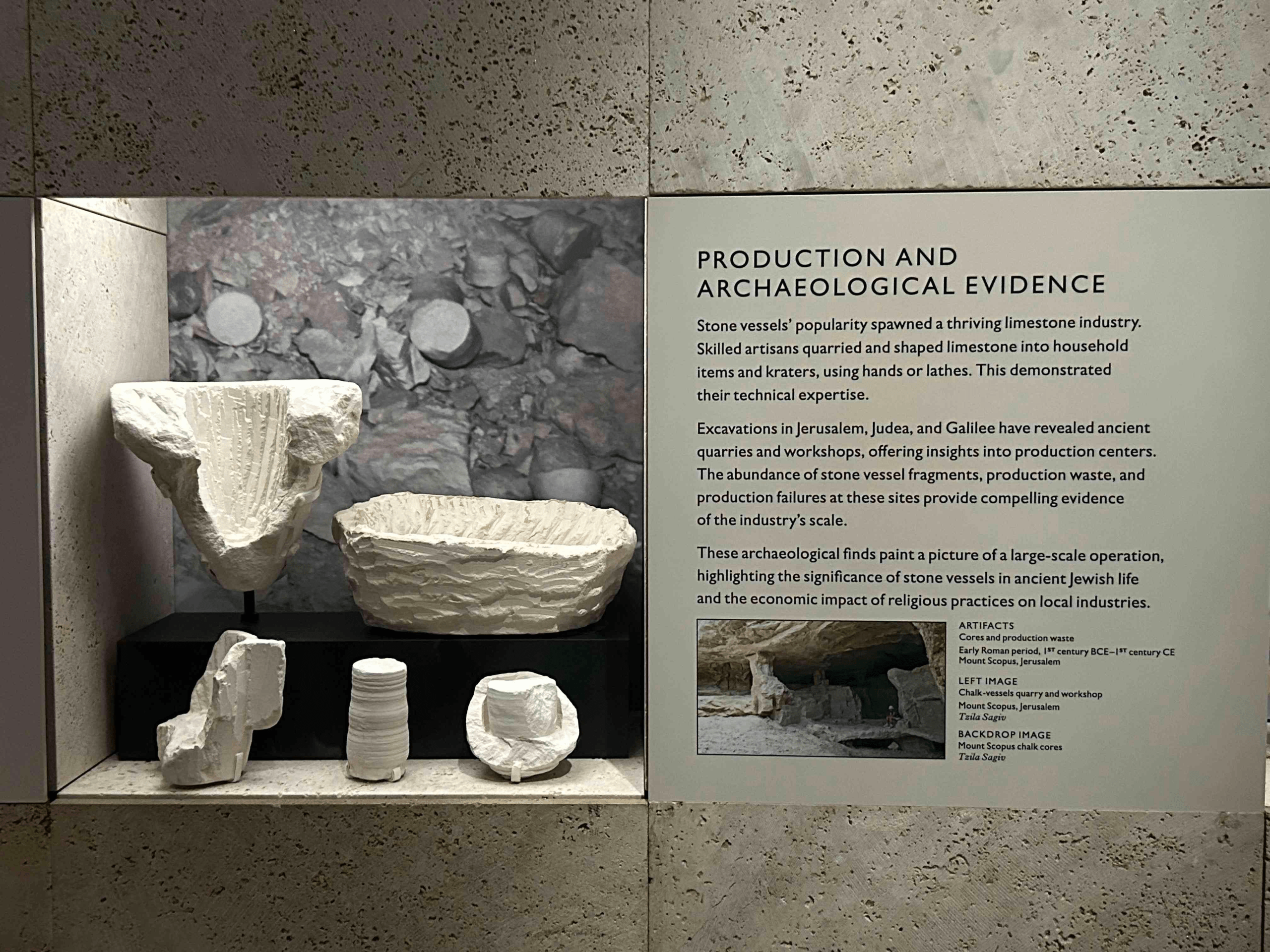
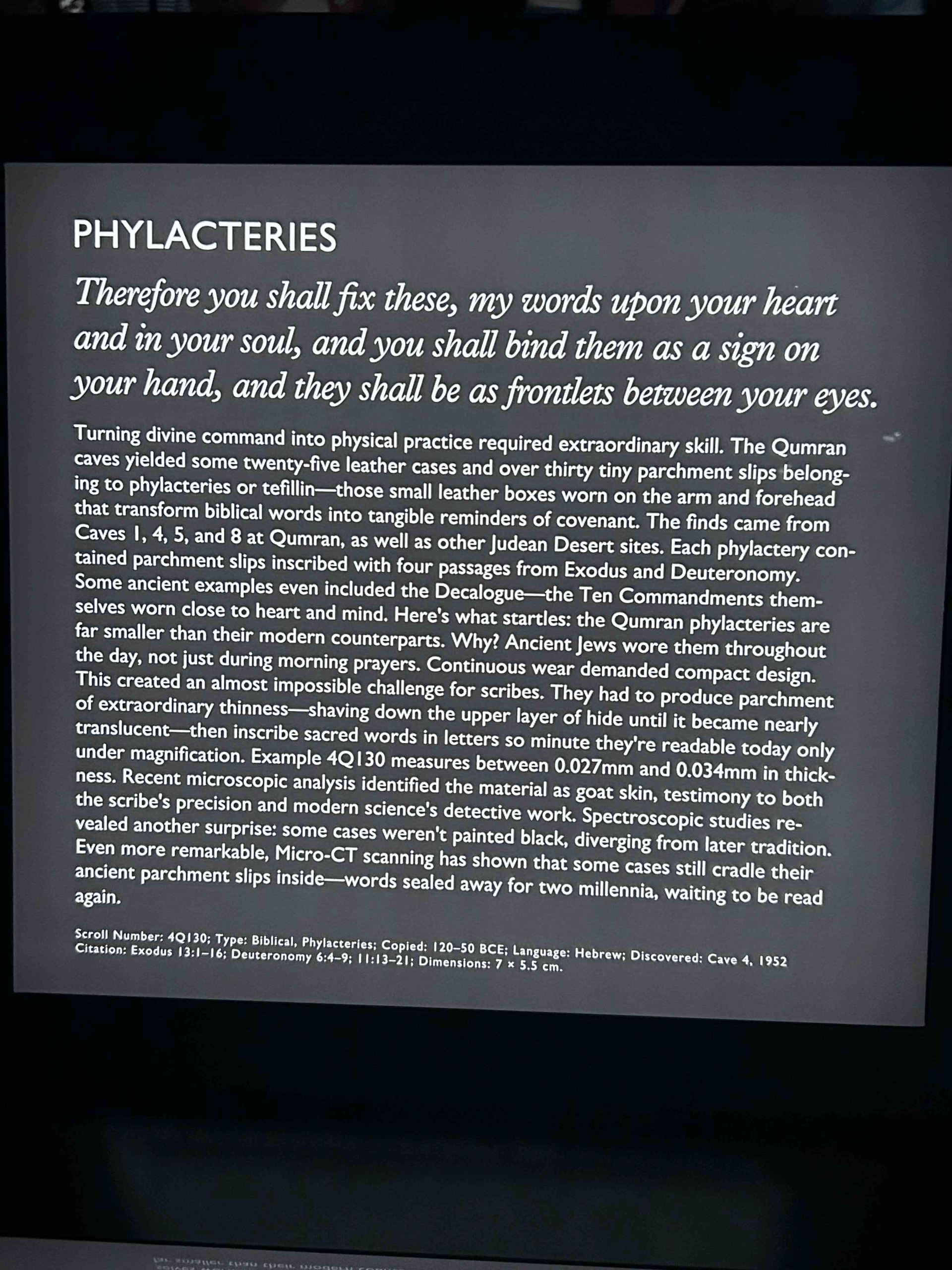
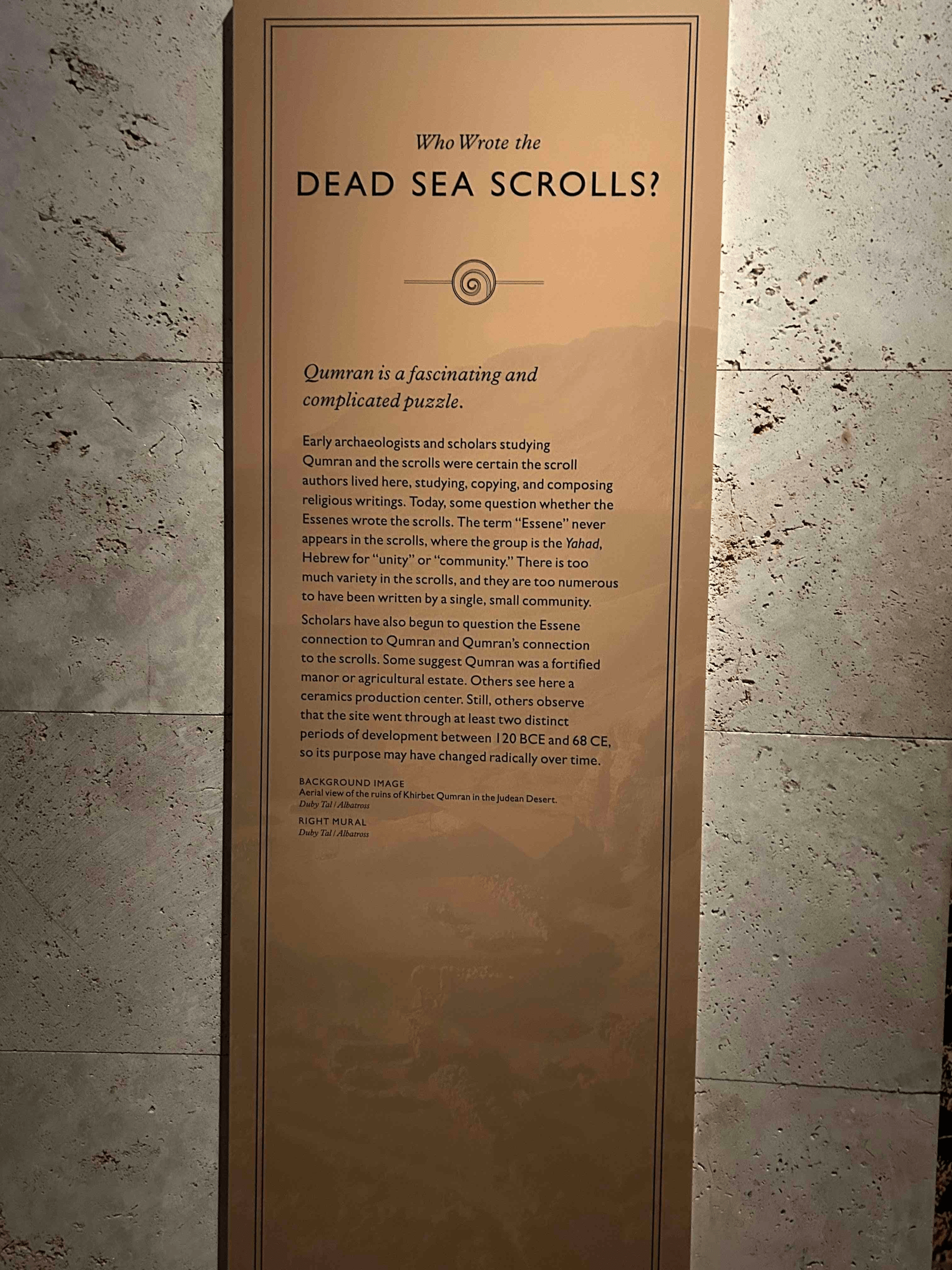
Several exhibits focused on the Dead Sea Scrolls and the Qumran community. The displays explained phylacteries, tiny parchment slips, fragments from books like Isaiah and Tobit, the Ten Commandments Scroll, Jubilees, the Community Rule, and other writings preserved for centuries. Seeing those small fragments and realizing how much history they carried was one of the most powerful parts of the visit.
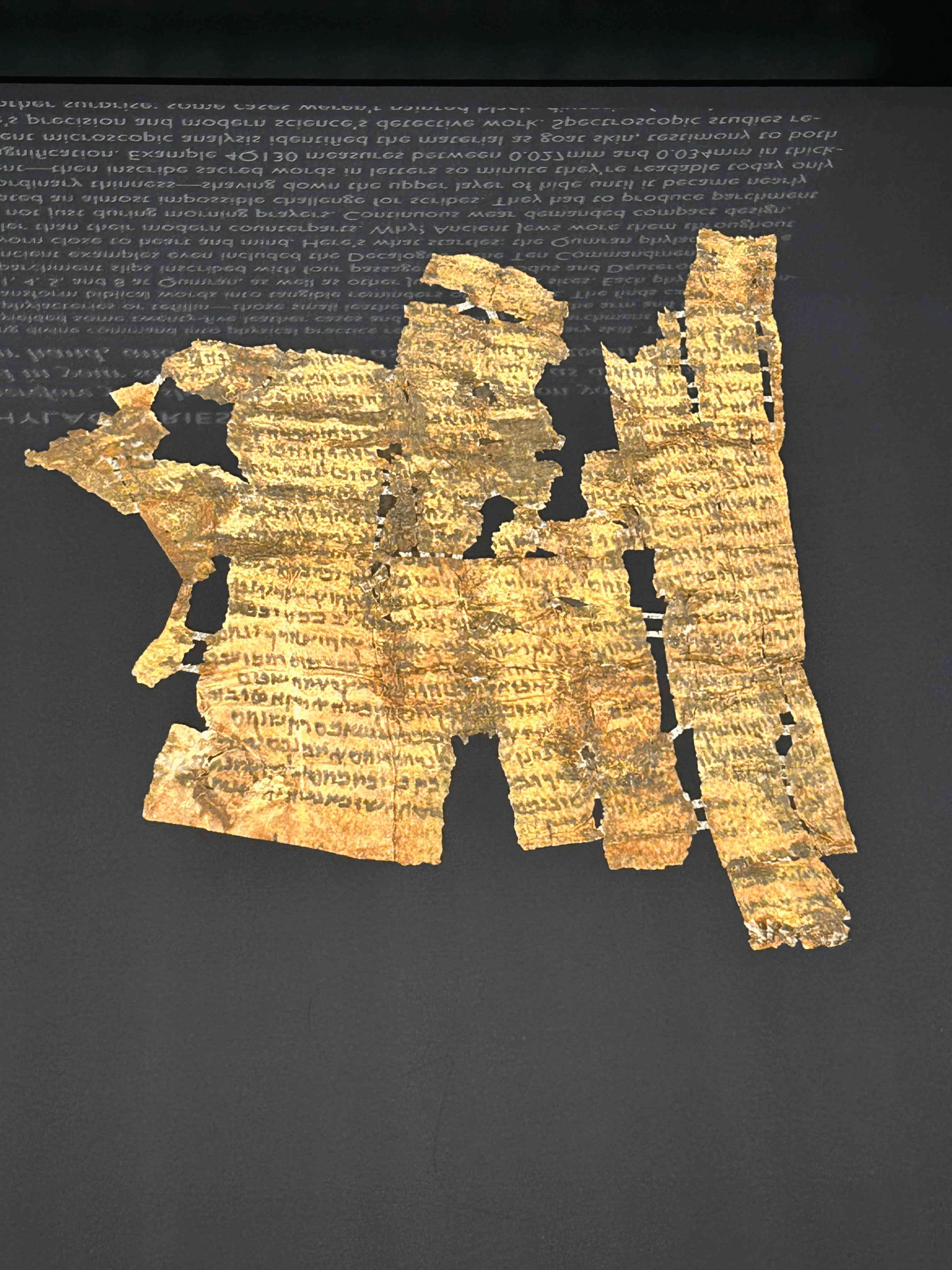
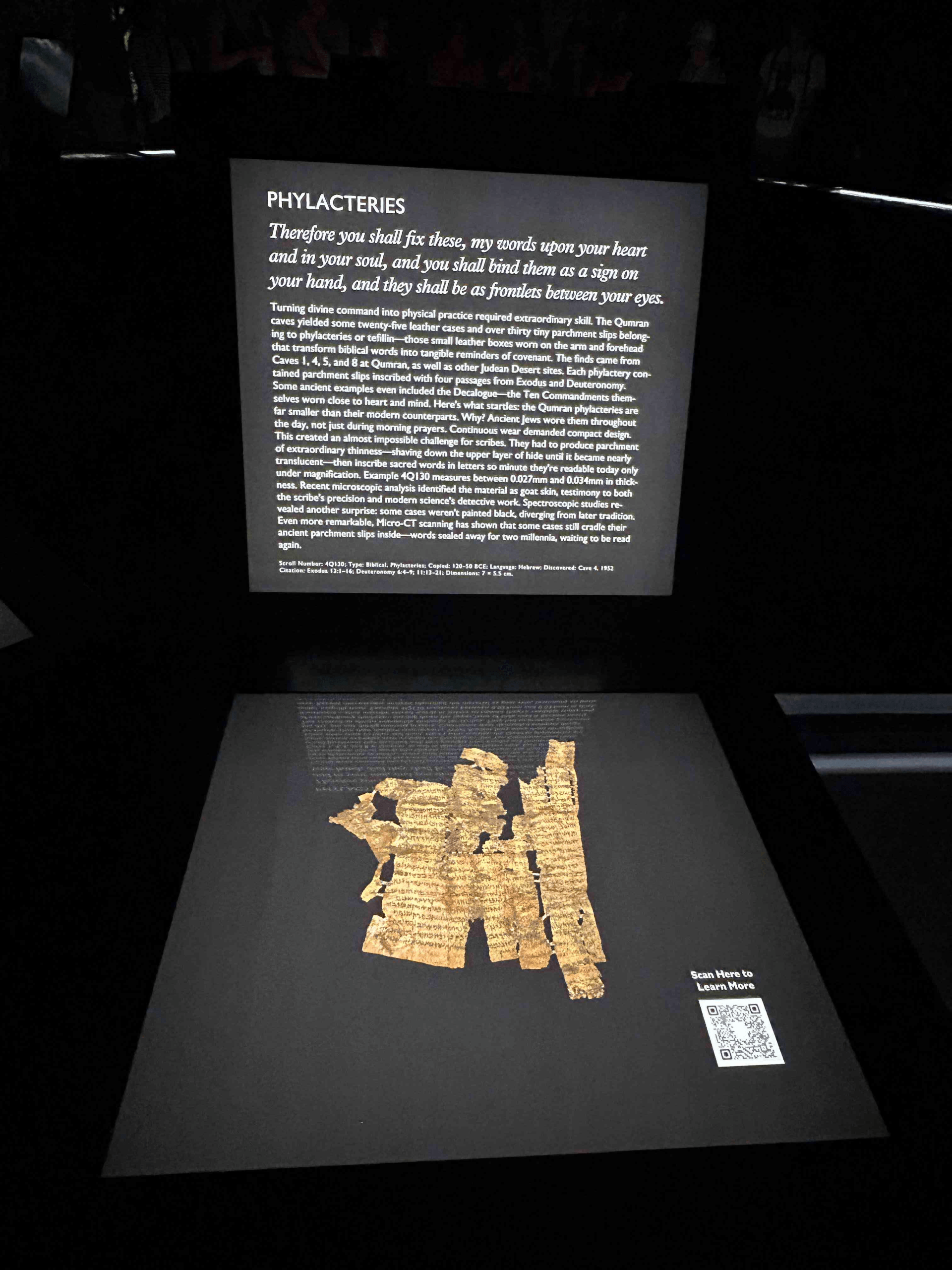
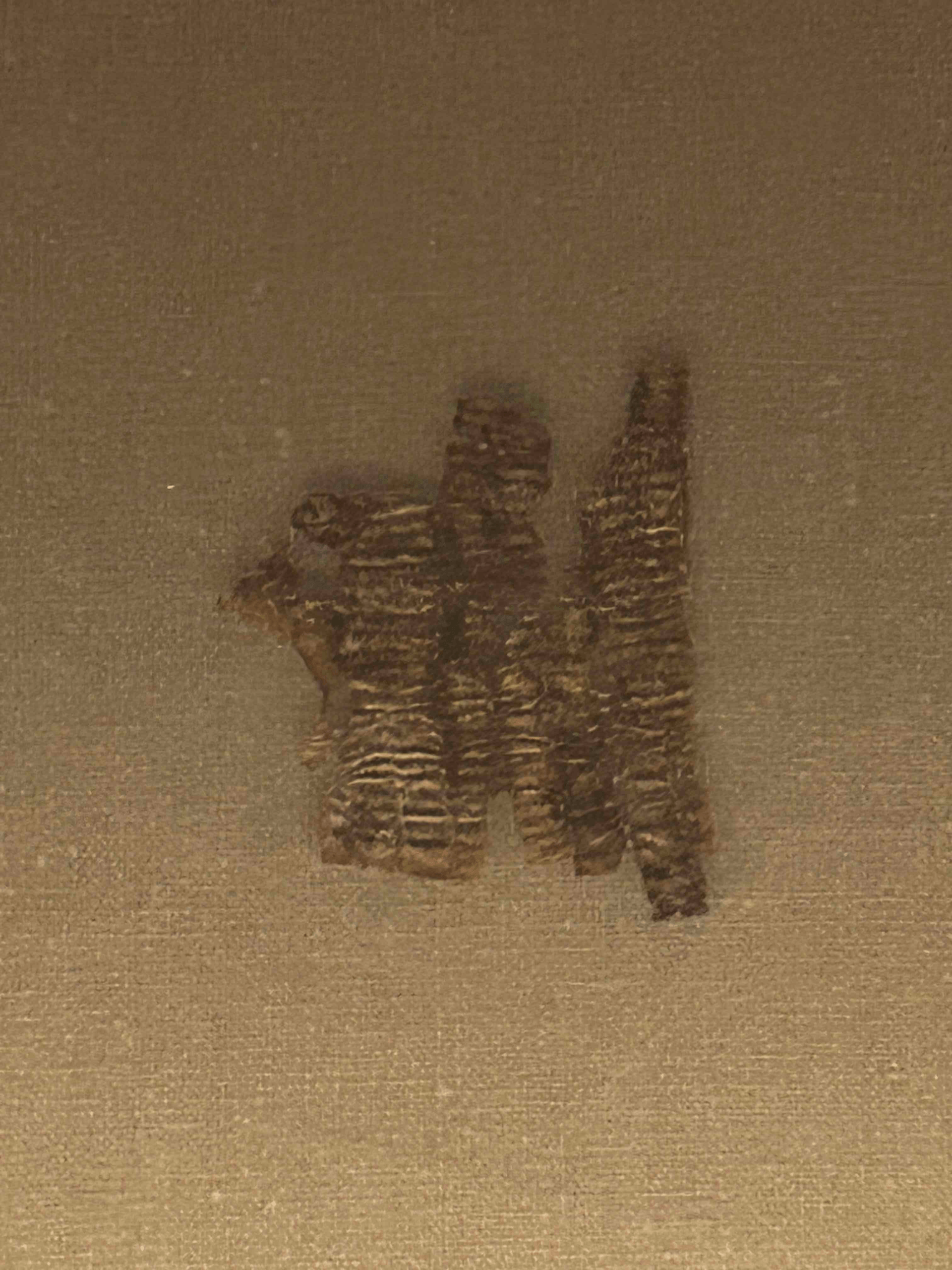
It was amazing to think about the care that went into copying, preserving, and protecting these writings. Some of the fragments were tiny, but the story behind them was enormous.
By this point, we had already taken in a lot. The Museum of the Bible is not the kind of place you simply walk through quickly. Every case, every artifact, and every sign seemed to lead to another layer of history.
One exhibit described a journey to Jerusalem, asking visitors to imagine themselves as pilgrims traveling from the hills of Galilee to the holy city. The display explained that the journey was roughly 100 miles and would have taken travelers through different landscapes, from fertile valleys to rugged highlands, eventually climbing more than 3,000 feet in elevation.
There were also displays about the ancient Pilgrimage Road in Jerusalem, a 2,000-foot stepped street dating to the first century. According to the exhibit, it served as a main route for Jewish pilgrims ascending from the Pool of Siloam to the Temple Mount.
The phylacteries display was especially interesting. It explained how small leather cases and tiny parchment slips were used to turn biblical commands into physical reminders of covenant. The exhibit noted that ancient examples from Qumran were much smaller than modern versions and that some still contained parchment slips with sacred words sealed inside.
The Isaiah display explained that Isaiah was one of the most frequently copied texts among the Dead Sea Scrolls. The famous Great Isaiah Scroll is one of the most celebrated finds, but the exhibit also showed how other Isaiah manuscripts reveal scribal activity and textual differences over time.
The Ten Commandments Scroll display showed a reproduction of what the scroll would have looked like around 2,000 years ago. The description explained that the scroll was written on leather sheets made from animal skin, with ink made from carbon and tree resin.
Standing in that room, surrounded by fragments, scrolls, and ancient writing, it was hard not to think about the long journey of these texts. They were copied by hand, preserved through centuries, hidden in caves, rediscovered, studied, and now displayed for people from all over the world to see.
Before leaving the Museum of the Bible for the day, we also spent time in the Megiddo Mosaic exhibit.
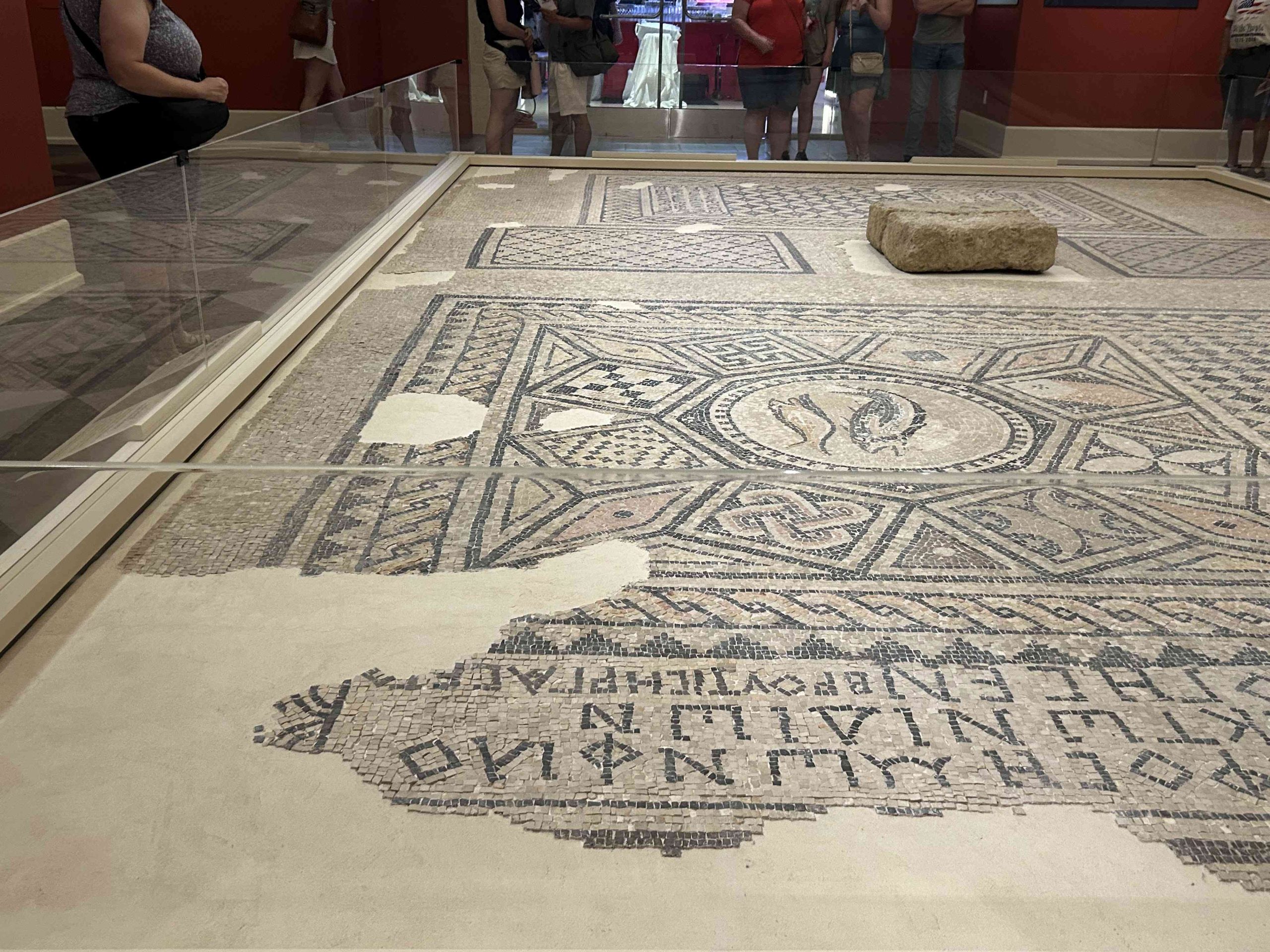
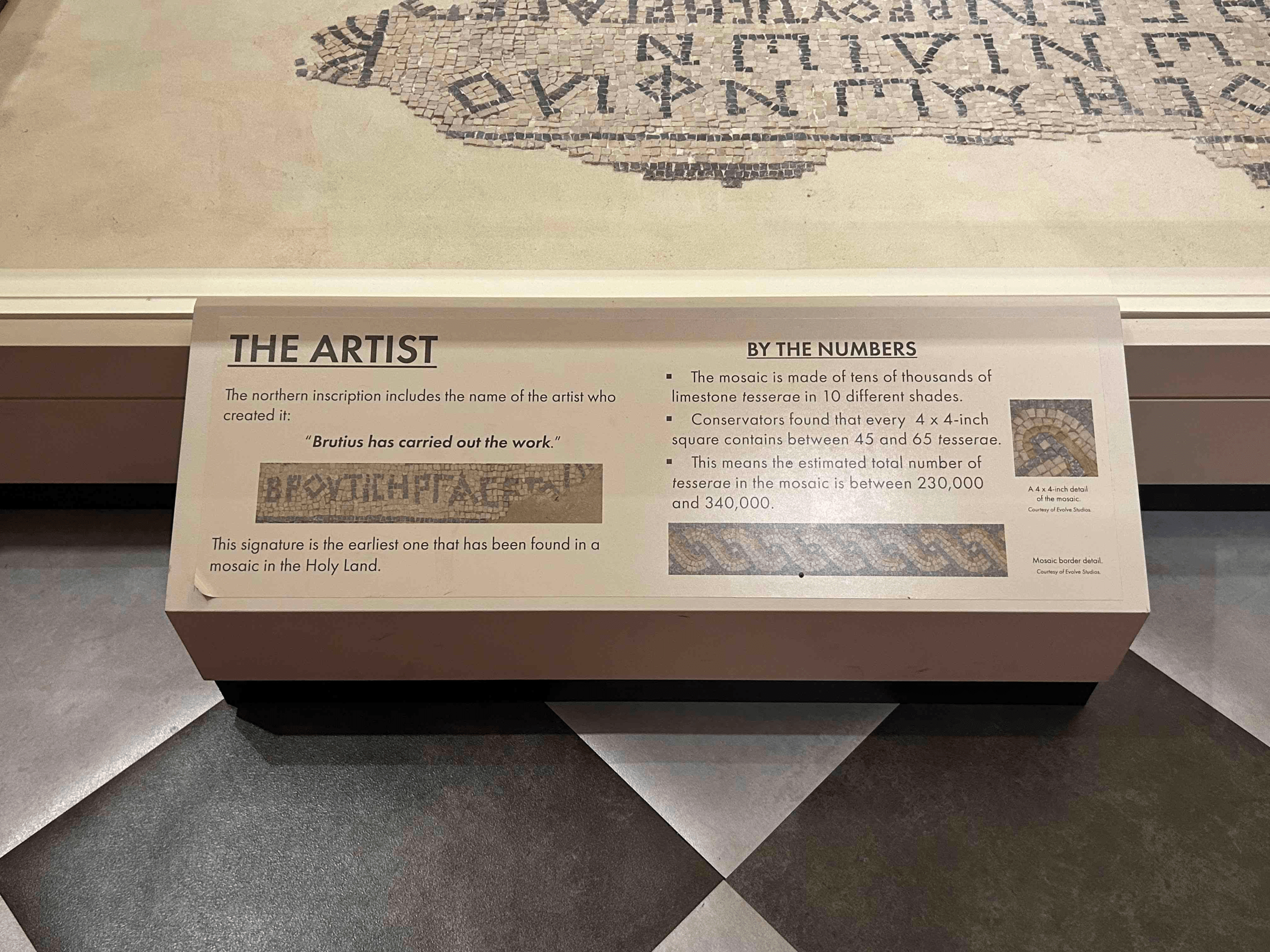
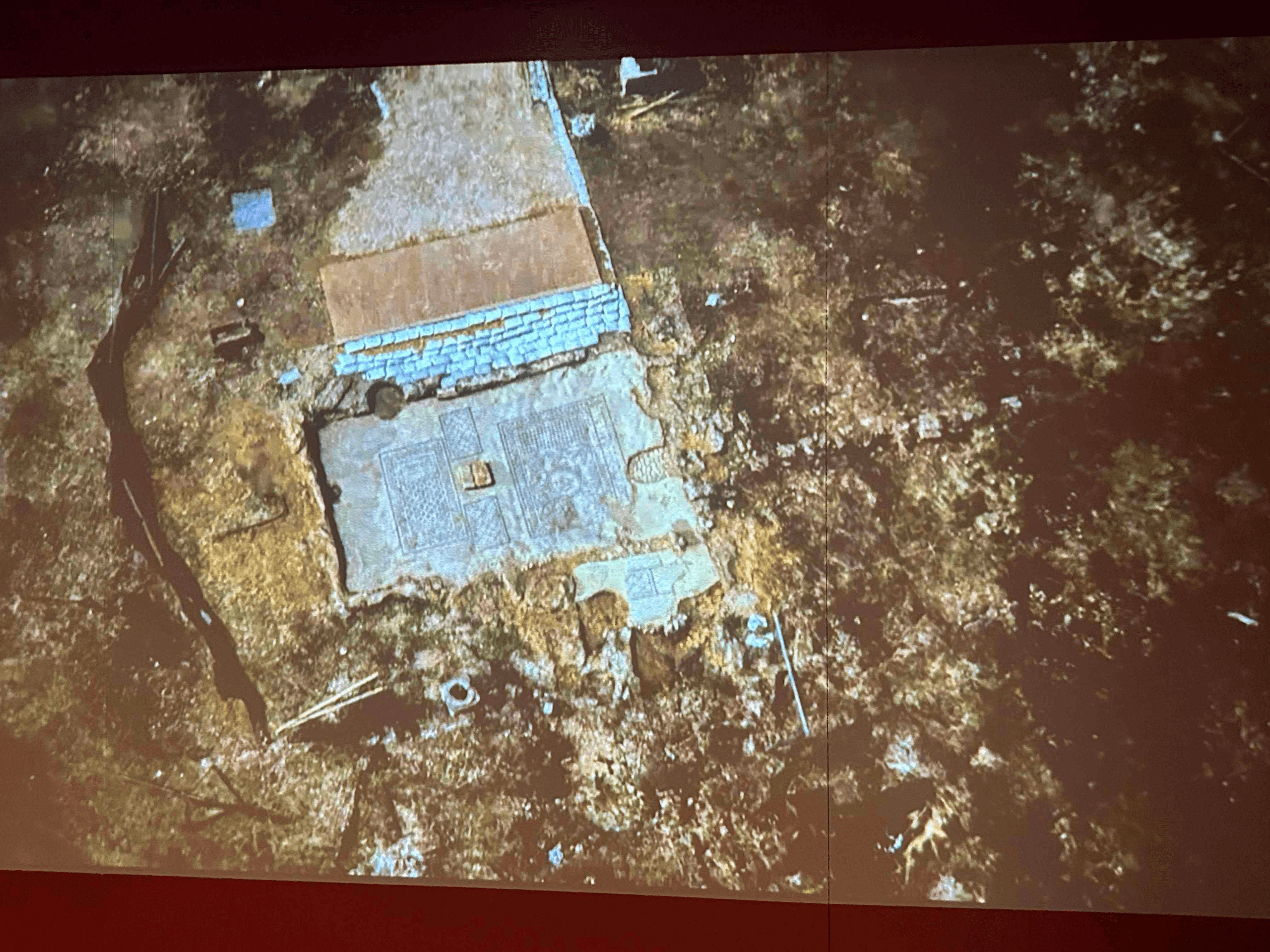
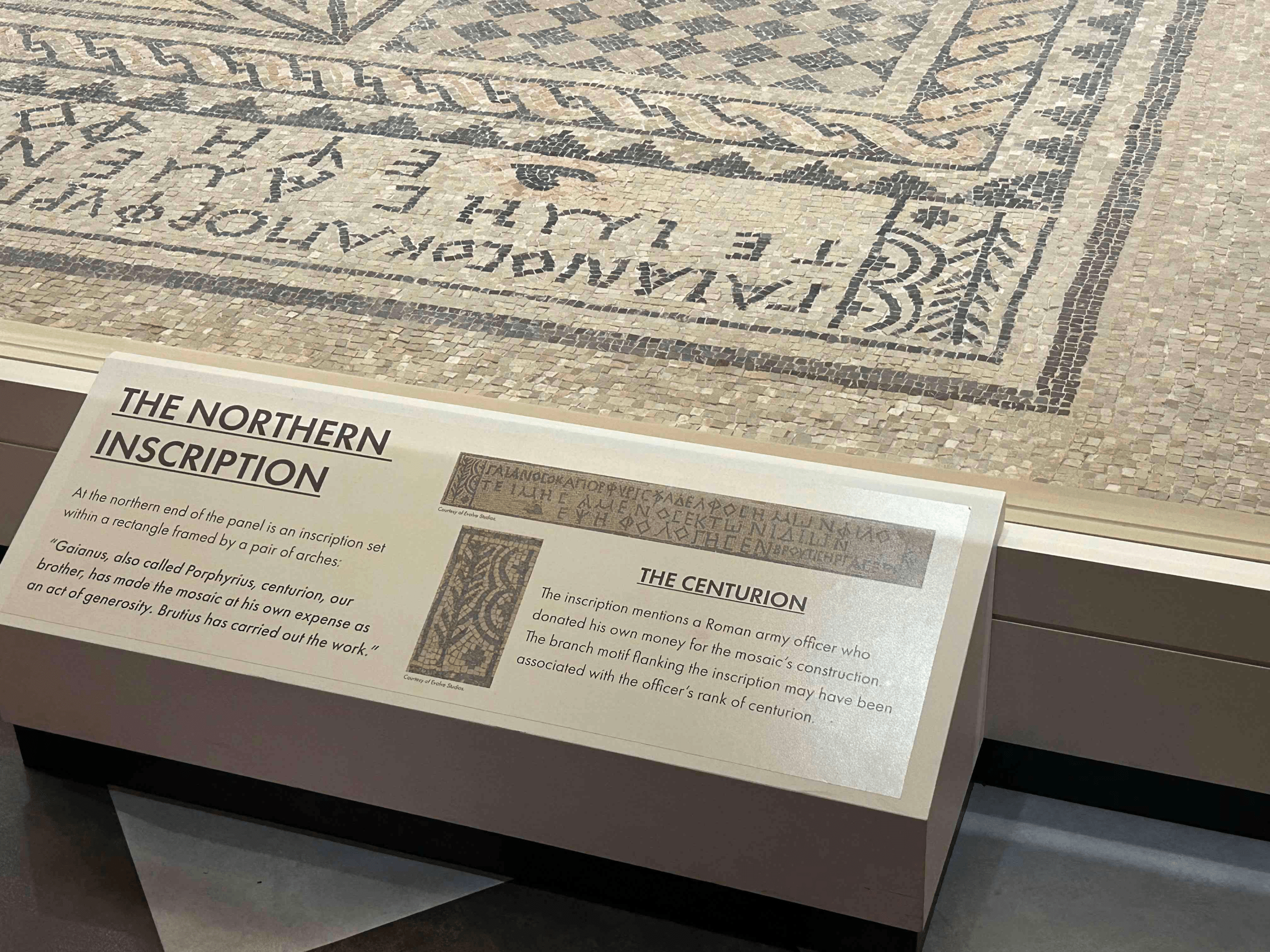
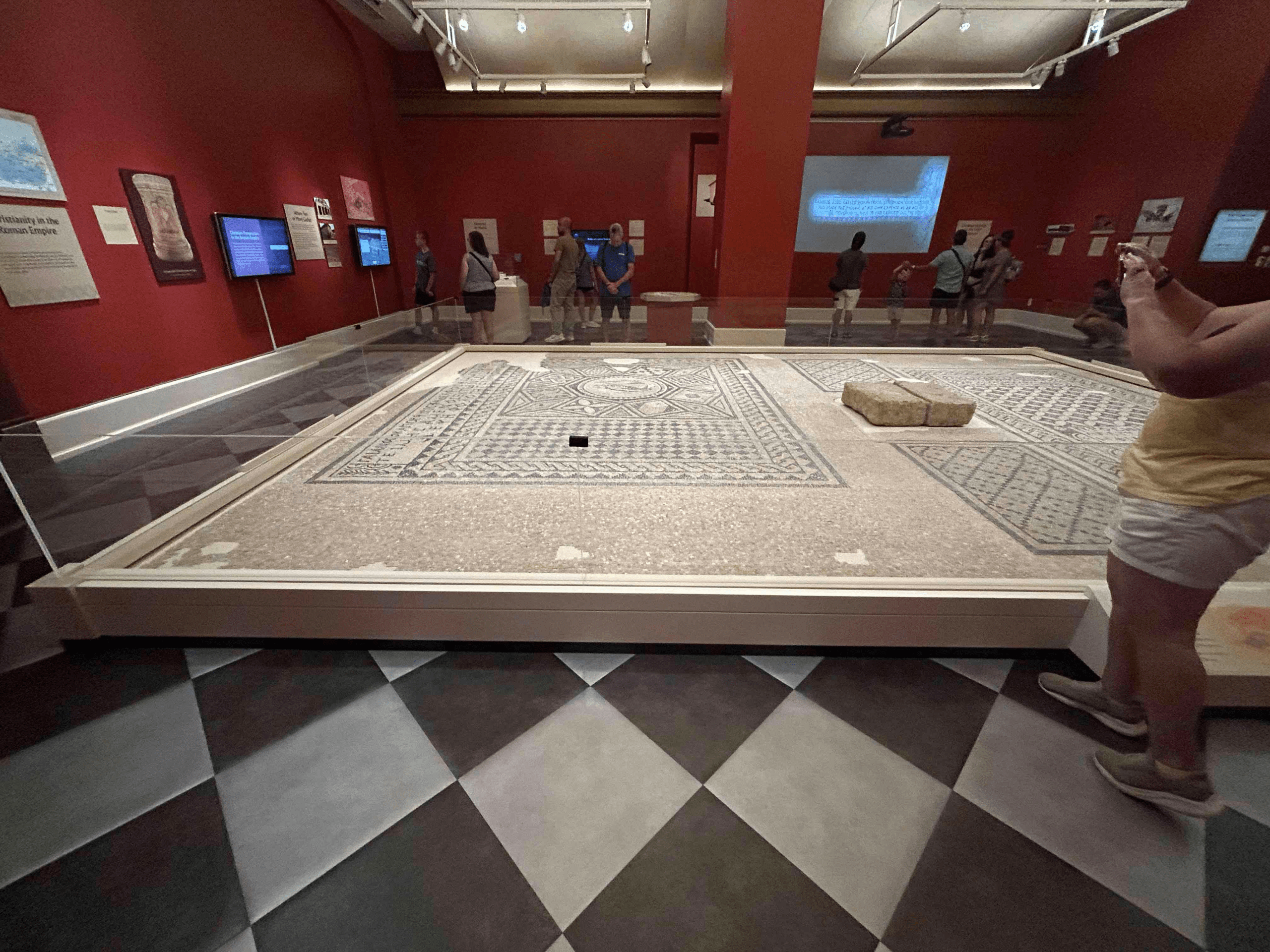
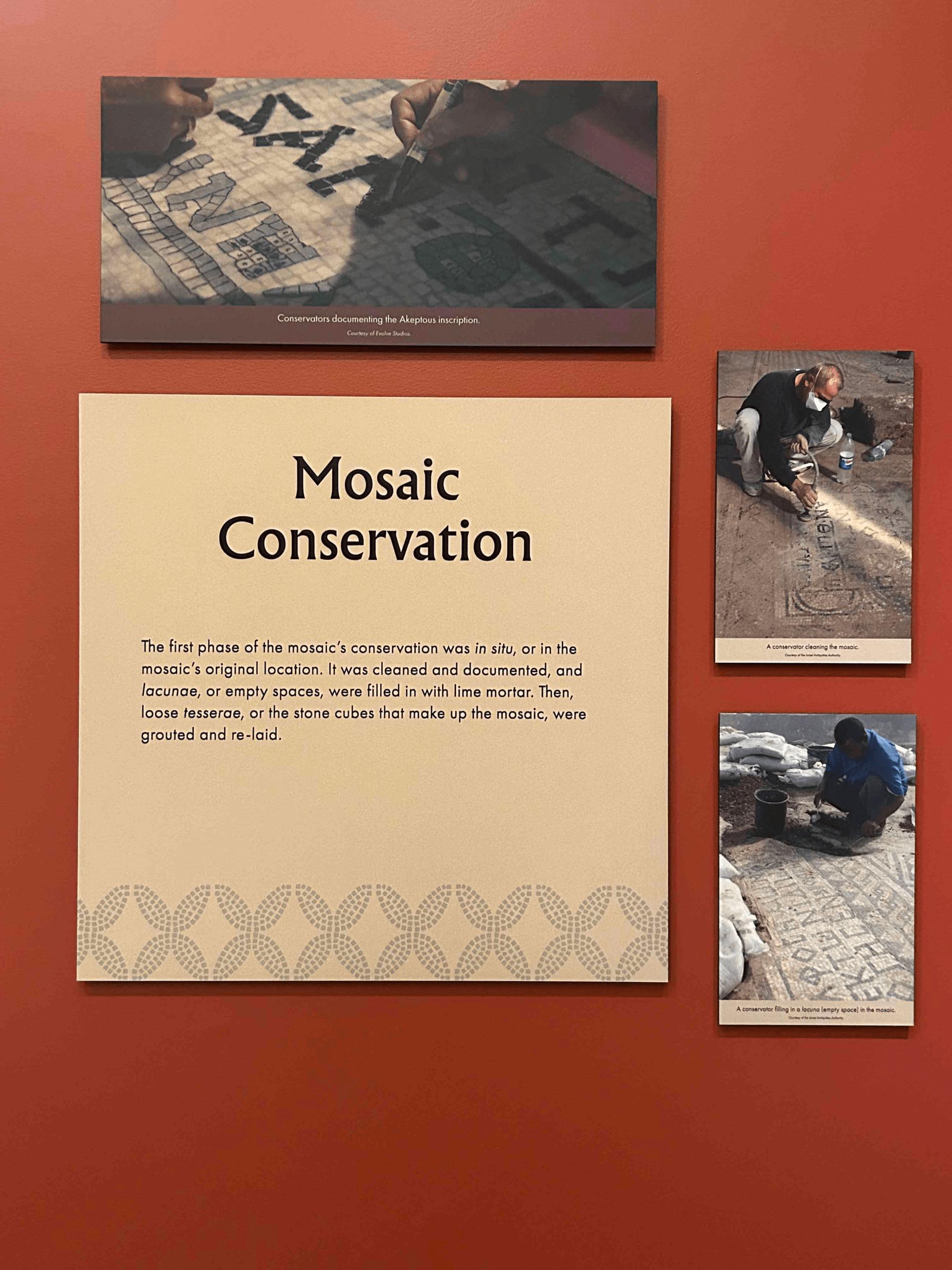
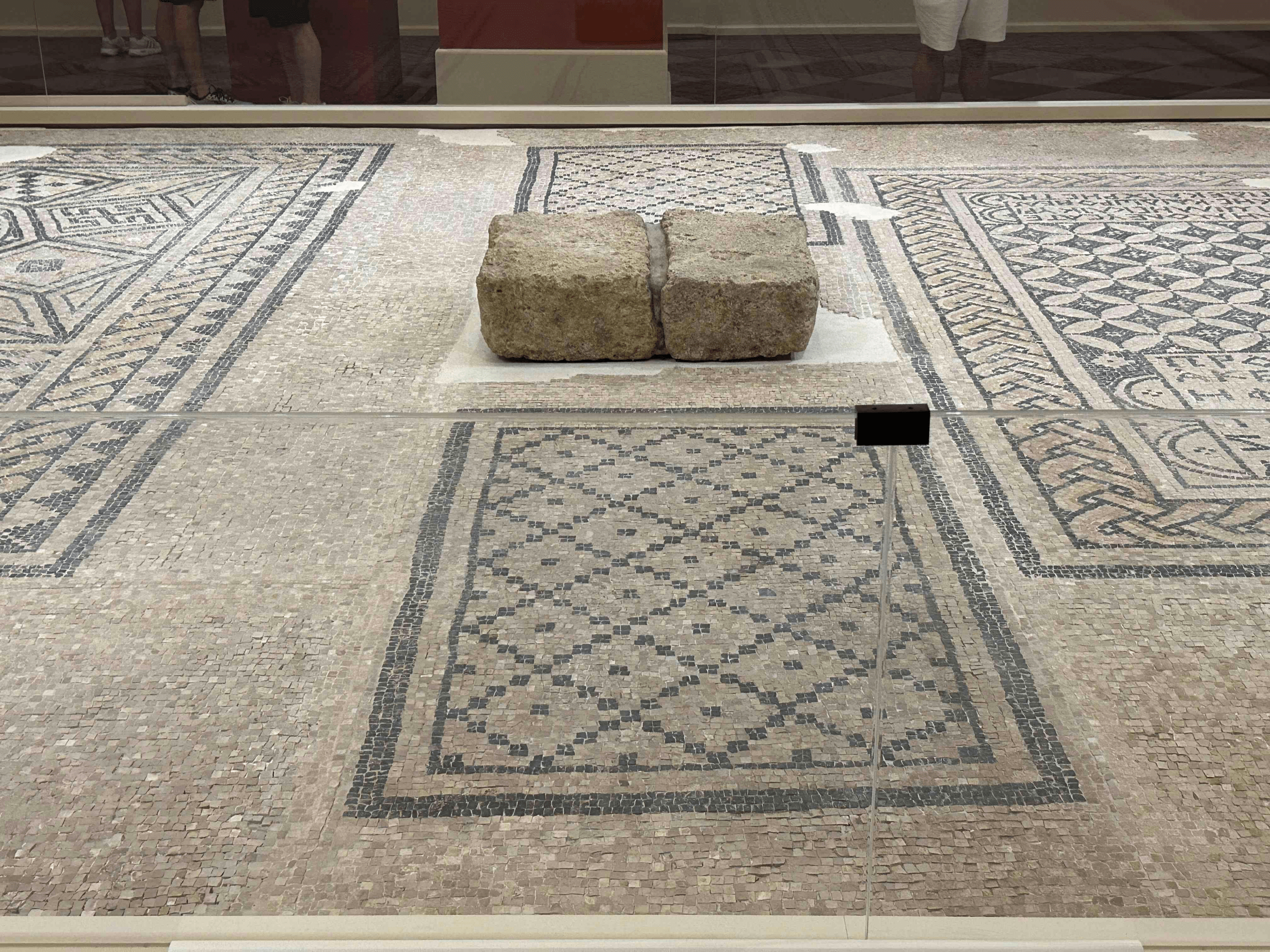
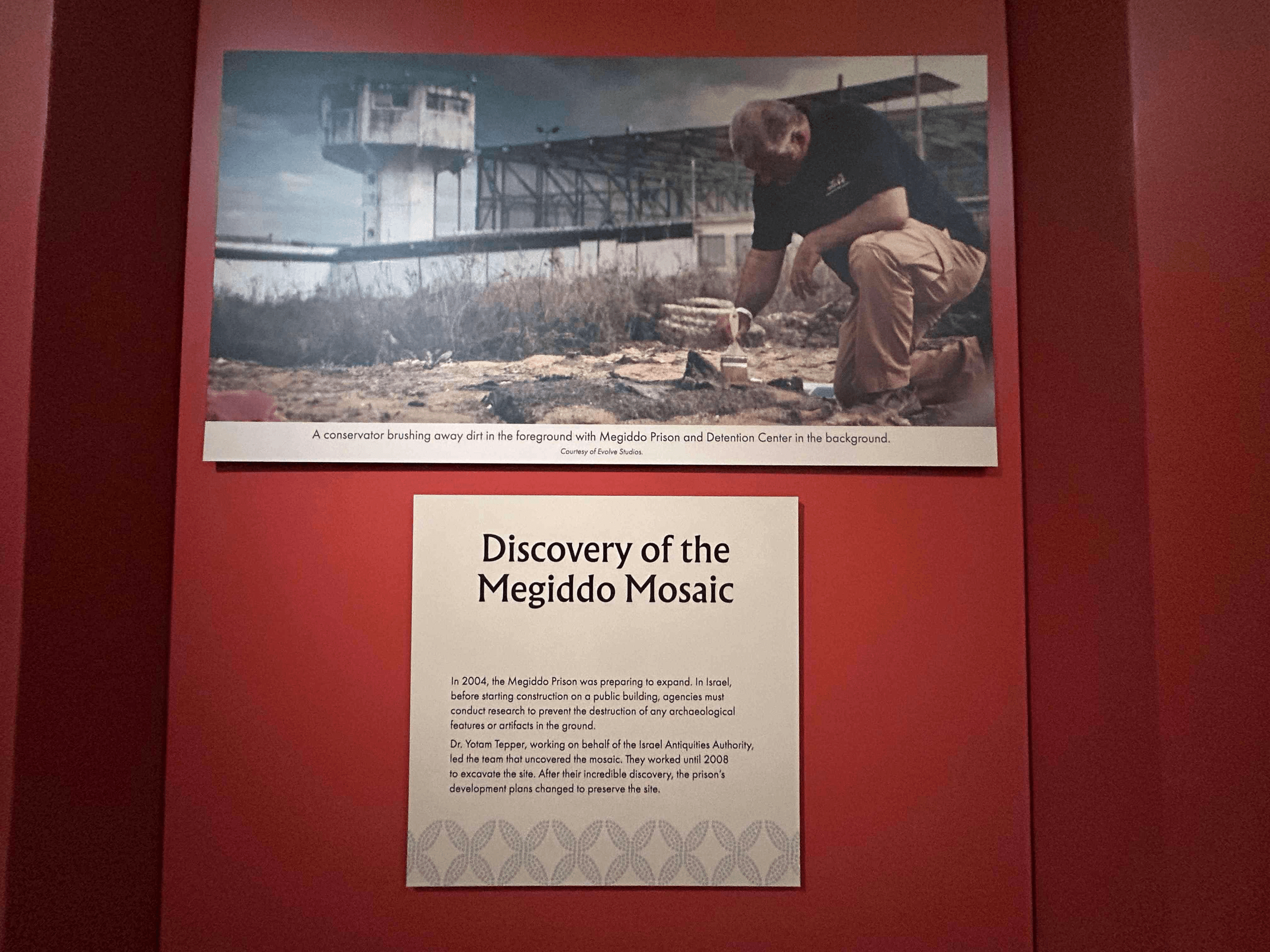
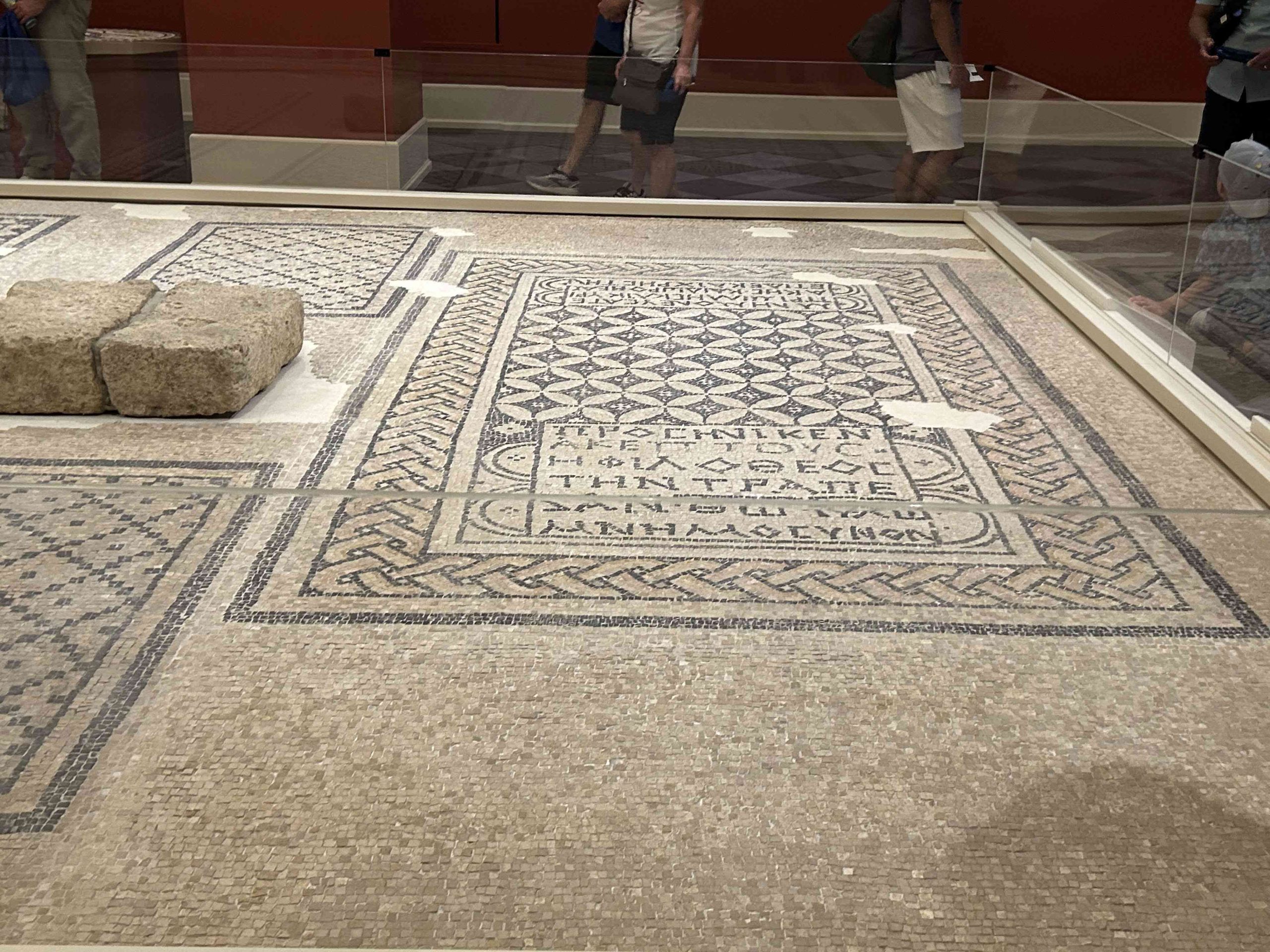
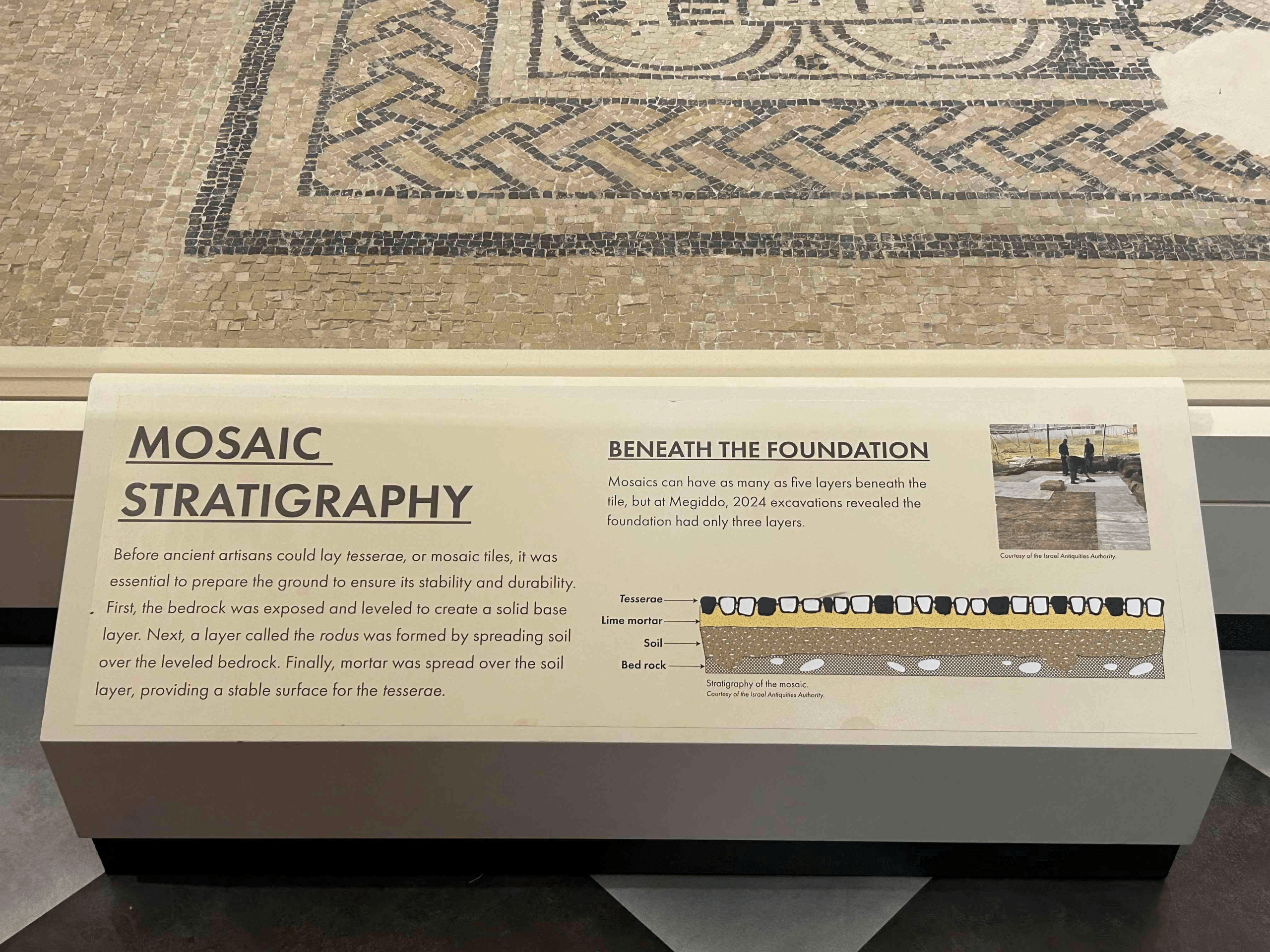
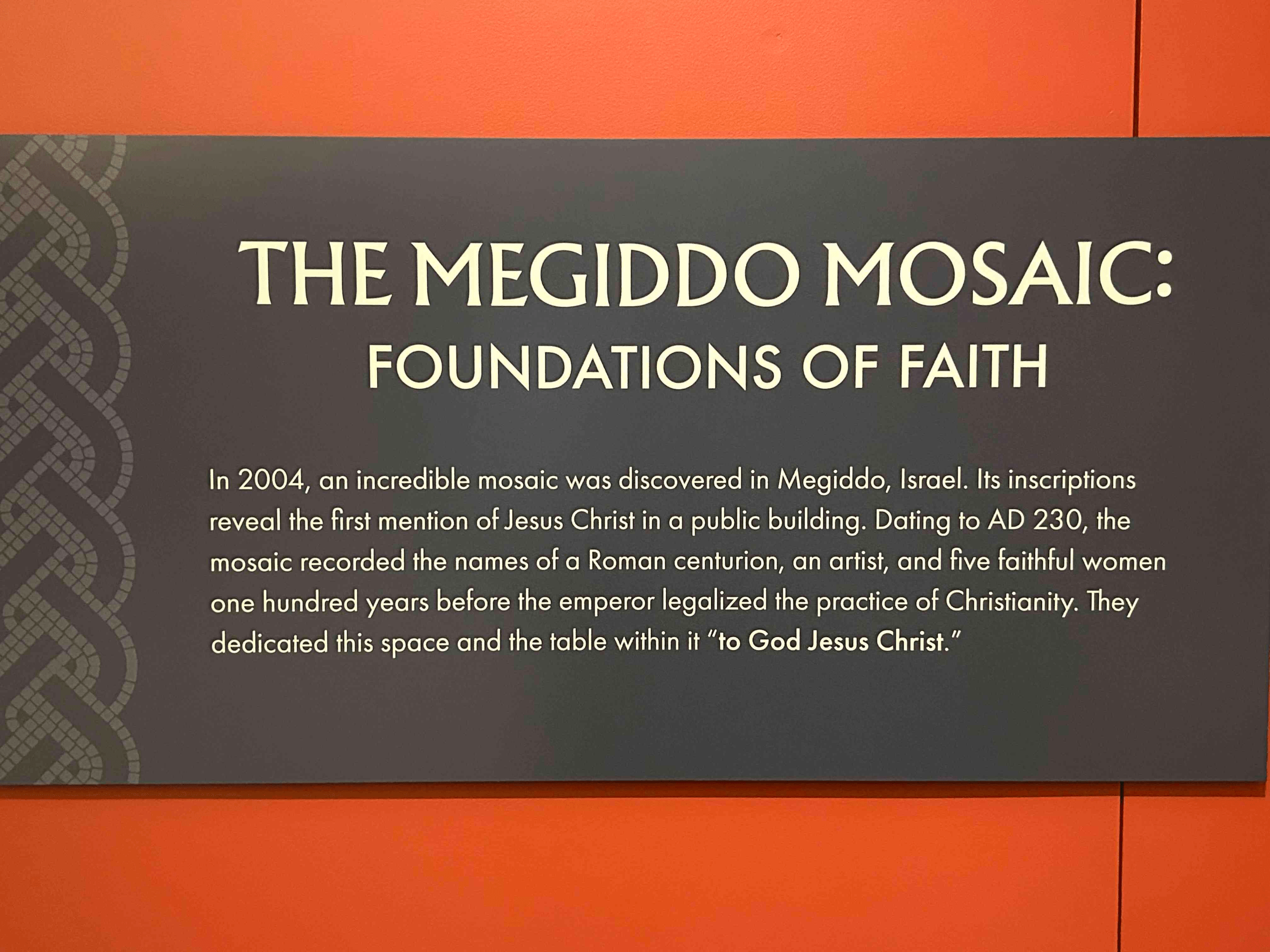
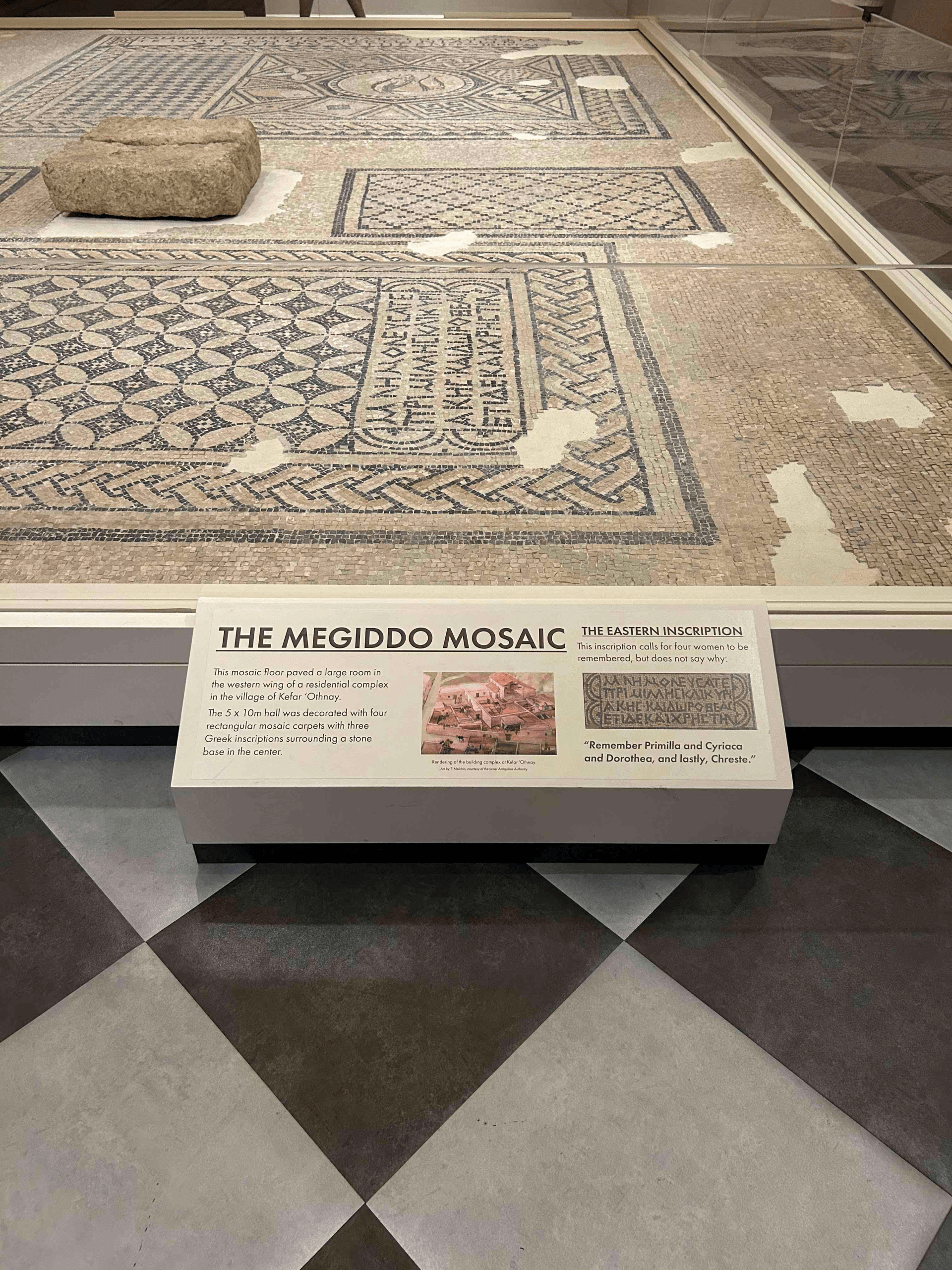
This was one of the most fascinating displays of the day. The exhibit explained that the mosaic was discovered in Megiddo, Israel, in 2004 and dates to around AD 230. Its inscriptions are especially important because they include an early public reference to Jesus Christ in a building used by Christians long before Christianity was legalized by the Roman Empire.
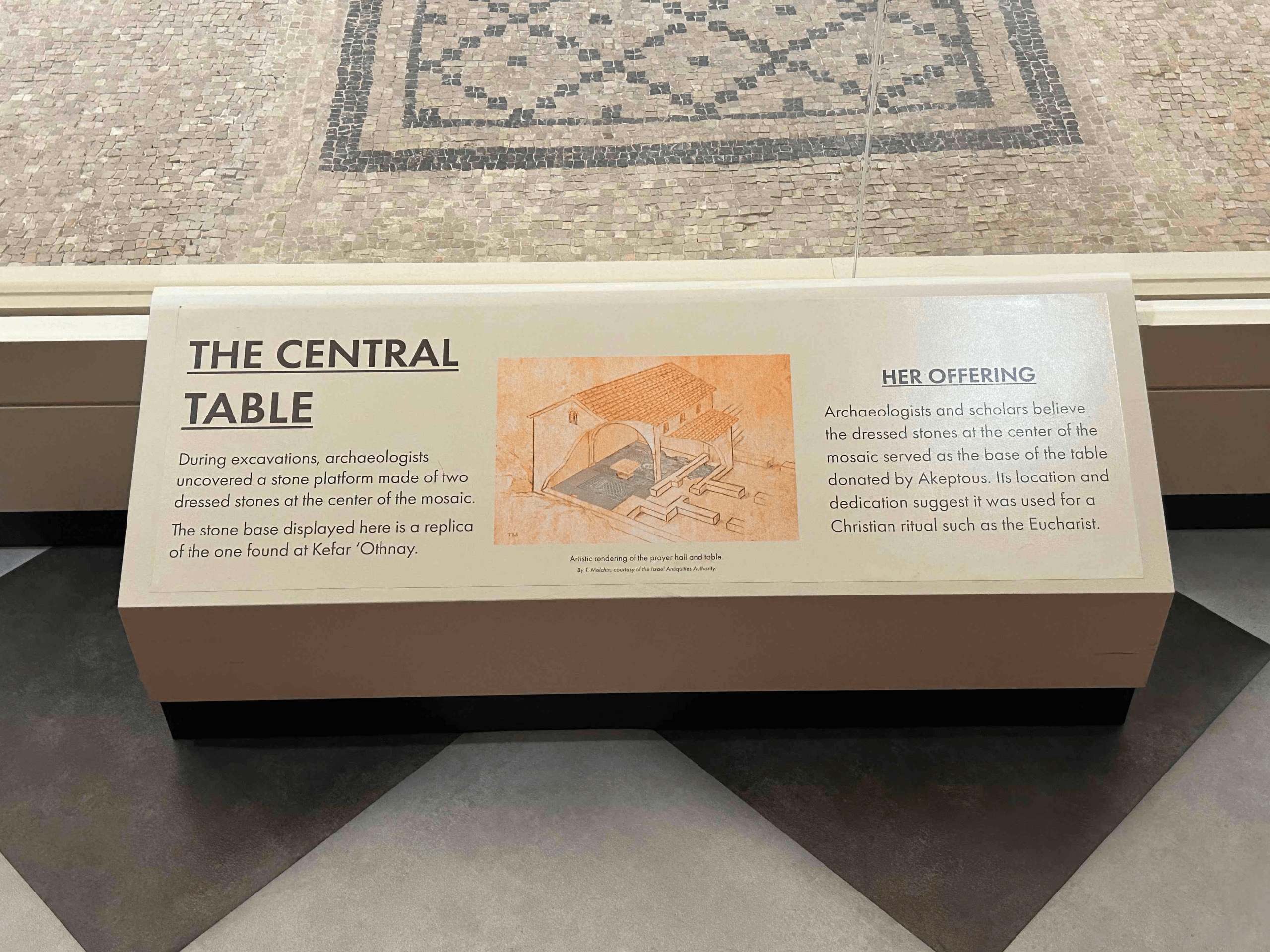
The mosaic itself was impressive, but the story behind it made it even more meaningful. The display described the foundation layers beneath the mosaic, the central table, and the inscriptions that helped identify the people connected to the space. One inscription honored a woman named Akeptous, who offered a table “to God Jesus Christ.” Another inscription mentioned a Roman centurion who helped fund the mosaic’s construction, while another preserved the name of the artist, Brutius.
One detail that stood out was the fish medallion. The display explained that the fish was one of the oldest Christian symbols, even before the cross became the more recognized symbol of Christianity. The mosaic also included signs of early Christian worship, including Scripture reading, teaching, hymns, prayers, the Eucharist, and offerings for those in need.

Standing there looking at a third-century worship space, it was hard not to think about how simple and yet familiar many of those practices still are today. People gathered, read Scripture, prayed, sang, shared communion, and gave to help others. Nearly 1,800 years later, those same basic rhythms are still part of Christian worship.
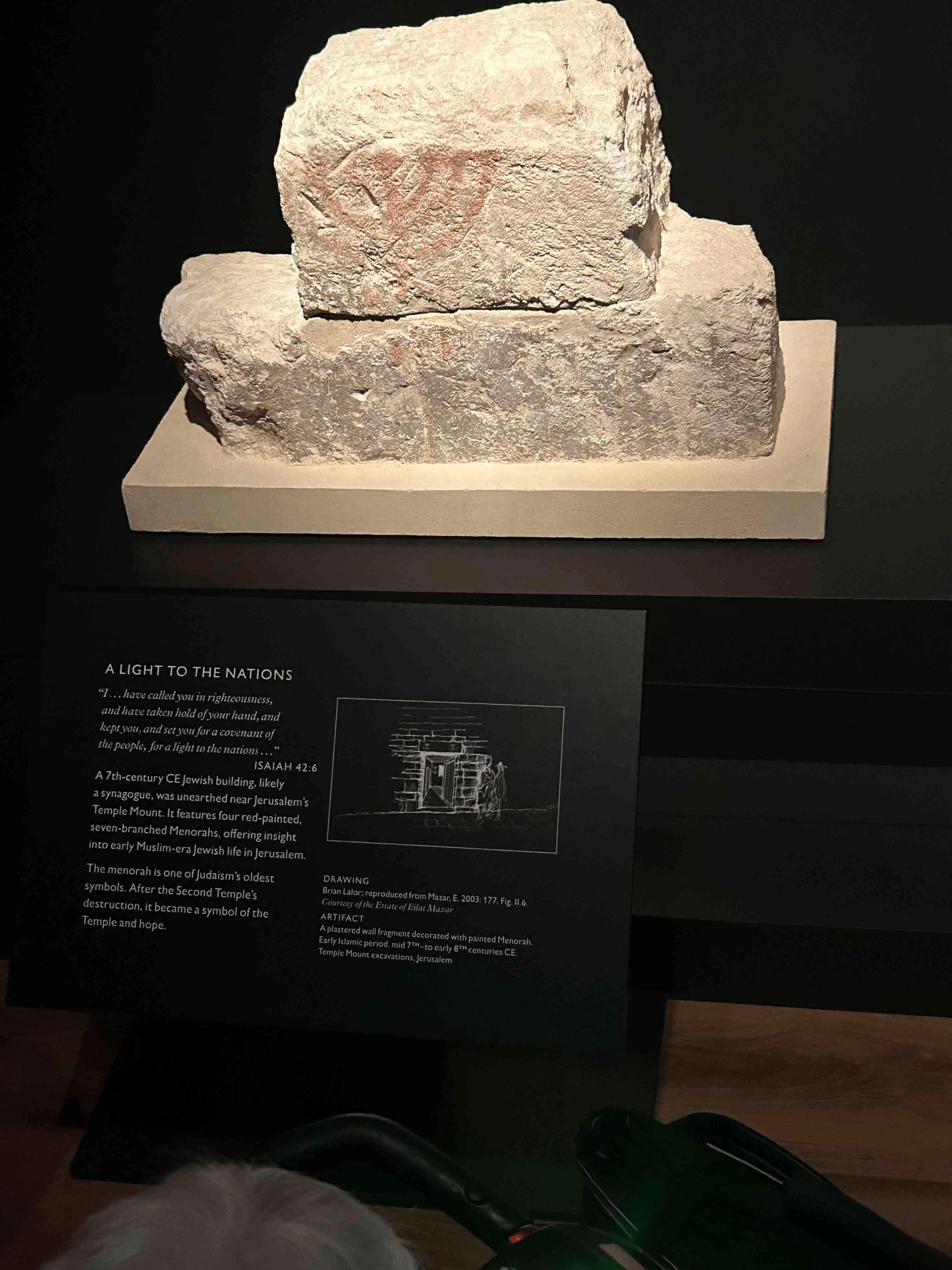
Another artifact that stood out was a plastered wall fragment from an early synagogue near Jerusalem’s Temple Mount. The display, titled A Light to the Nations, explained that the fragment included red-painted menorahs and offered insight into early Muslim-era Jewish life in Jerusalem. The menorah was described as one of Judaism’s oldest symbols. After the destruction of the Second Temple, it became a symbol of both the Temple and hope.
After several floors of exhibits, artifacts, manuscripts, and history, we were tired and ready to head back toward camp. We still had two floors left to explore, so this will have to be a return visit for another day. Some places are worth slowing down for, and the Museum of the Bible is one of those places where you could easily spend more time than you planned.
On the way out of Washington, D.C., we passed the Pentagon. After spending the day surrounded by history, faith, government, and the story of America, seeing that building from the road felt like one more reminder of how much meaning Washington, D.C. holds in such a small area.

It had been a full day, and there was more in the museum than we could fully absorb in one visit, but that is part of what made it memorable. The Museum of the Bible was not just a place to look at old books behind glass. It was a walk through history, culture, faith, government, art, archaeology, and the many ways the Bible has shaped people and nations across time.
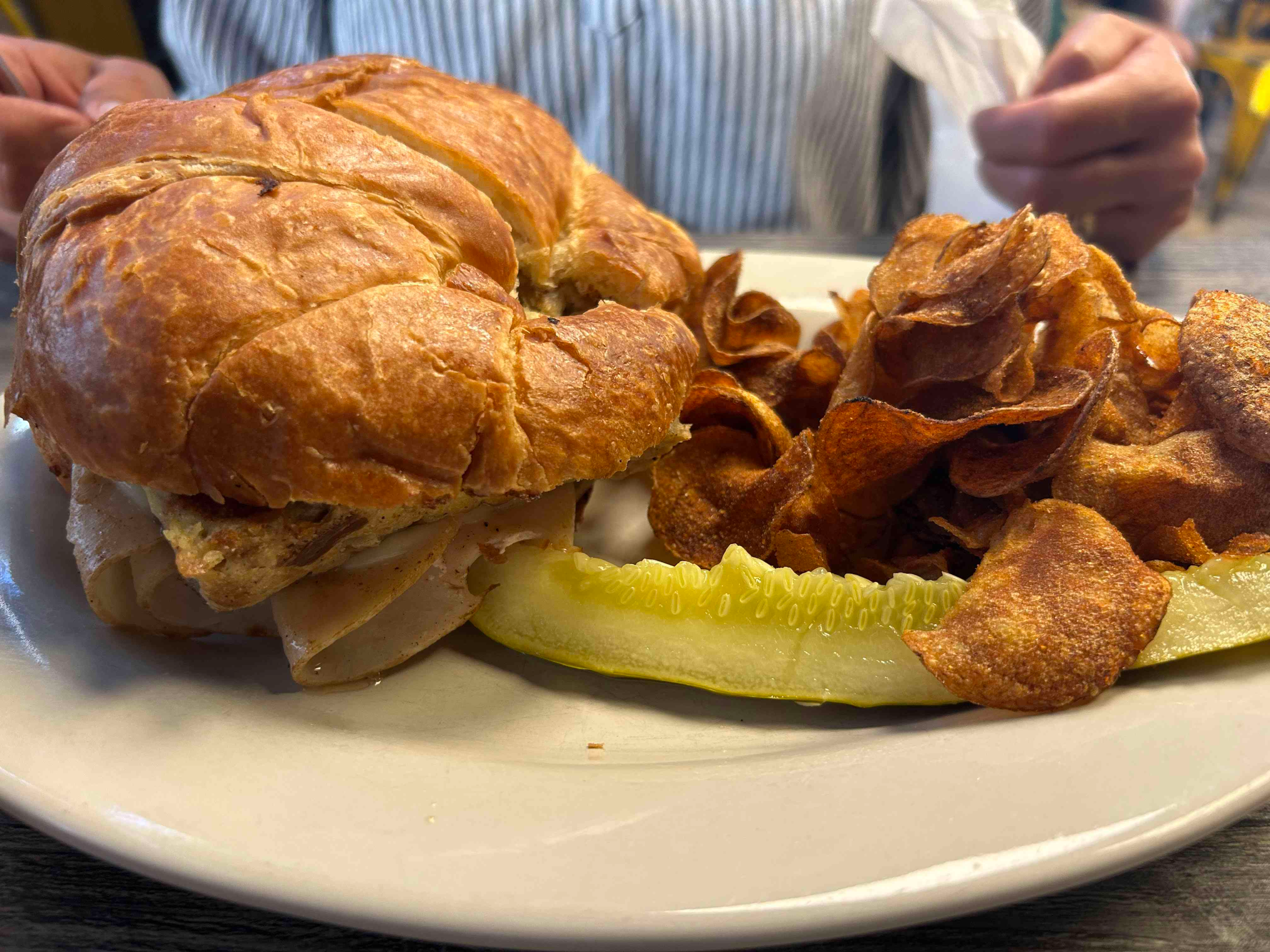
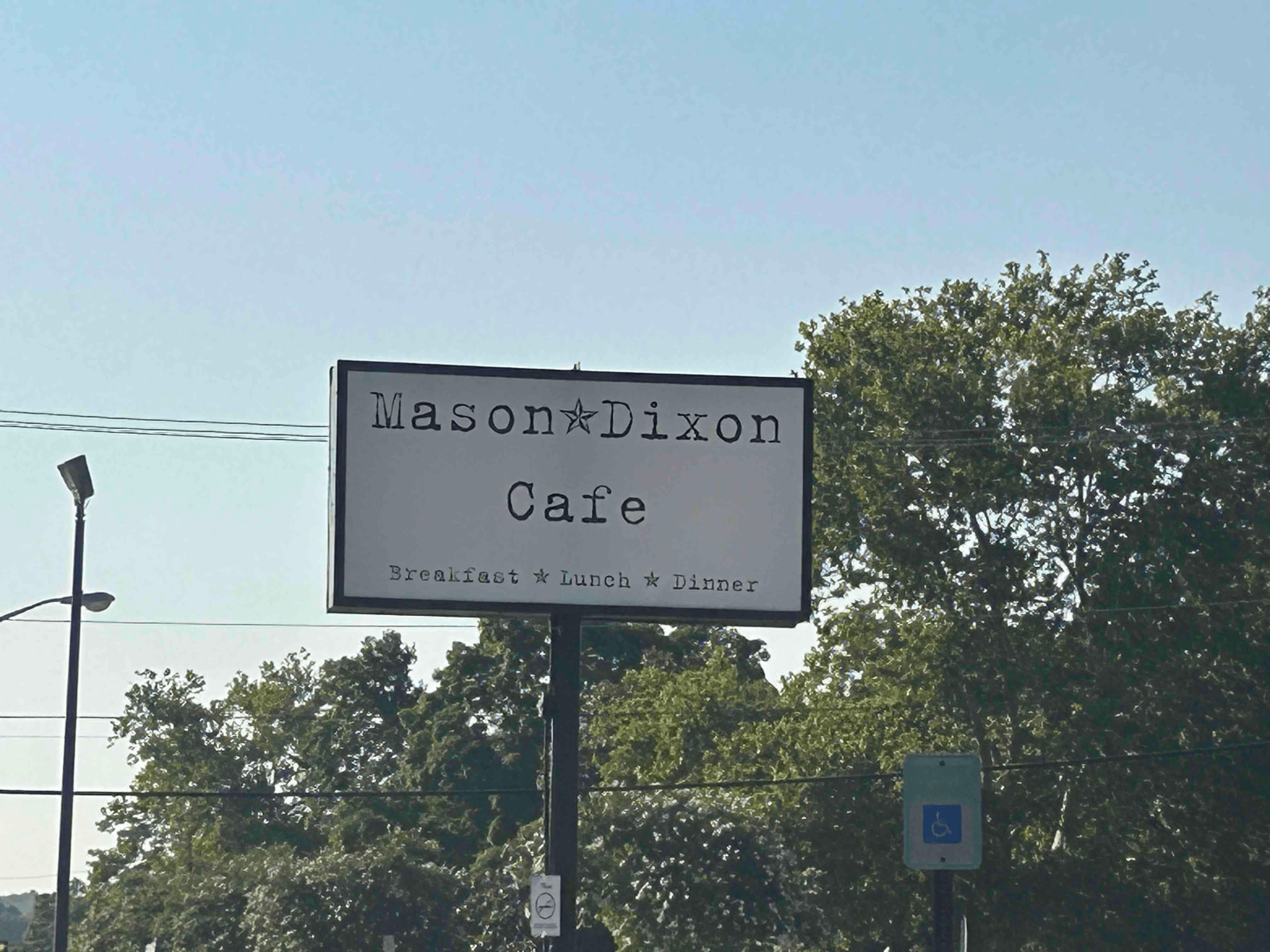
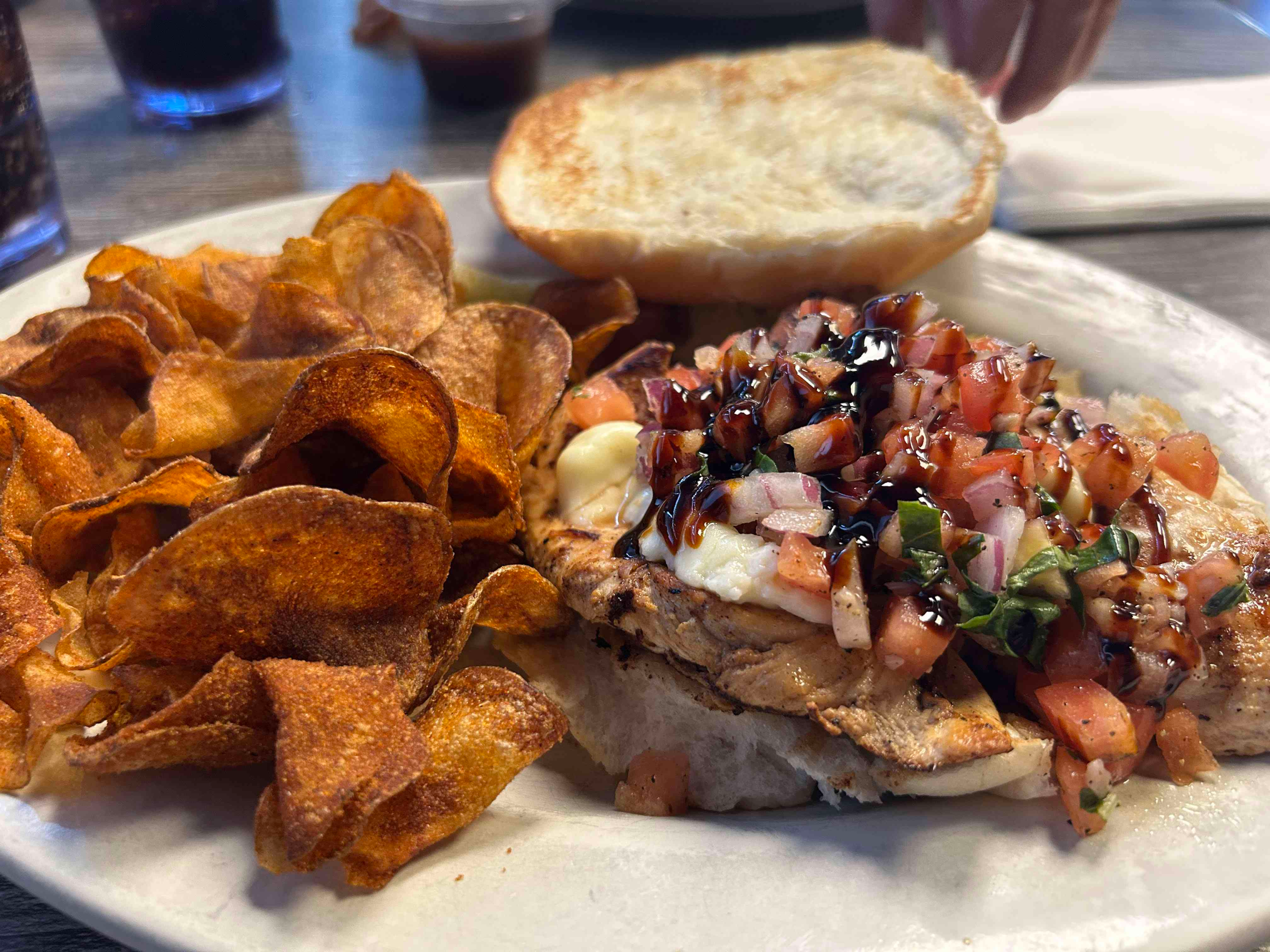
After leaving the city, we stopped at Mason-Dixon Cafe for dinner. Our minds were full, and we were ready to sit down for a meal. It gave us a chance to slow down, talk through some of what we had seen, and let the day settle before heading back to camp.